Why is North Florida Culturally The South and South Florida Vulturally The North
Luana B. Gann, Editor
7/3/2026
Why Is North Florida Culturally "The South" and South Florida Culturally "The North"?
Quick Answer: Florida is the only state in the country where the cultural map runs backwards. North Florida — the Panhandle, Tallahassee, Jacksonville's inland reaches — feels like an extension of Georgia and Alabama: Southern accents, Southern food, Southern church culture, Southern pace of life. South Florida — Miami, Fort Lauderdale, Palm Beach — feels like a transplanted piece of the Northeast fused with Latin America: fast-talking, internationally diverse, built by New York and New Jersey retirees and generations of Cuban, Caribbean, and South American immigrants. The reason is genuinely simple once you trace it: geography controlled who settled where, and who settled where determined who Florida actually became.
In This Article
The Backwards Map, Explained
What Changed Everything: Flagler's Railroad and the March South
The Backwards Map, Explained
Every other Southern state gets more Southern the deeper south you travel. Georgia gets more rural and traditional as you head toward its southern border. Same with Alabama, Mississippi, the Carolinas. Florida does the exact opposite — and it's such a consistent, well-documented pattern that geographers have formally studied and mapped it.
Drive from Pensacola to Tallahassee and you are, culturally and demographically, in the Deep South — full stop. Keep driving down I-75 or the Turnpike toward Miami, and by the time you hit Broward and Miami-Dade counties, you've entered a place that feels less like "the South" and more like a dense, cosmopolitan hybrid of the urban Northeast and the Caribbean. Somewhere around Orlando and the I-4 corridor, the two Floridas blend into each other — which is precisely why geographers often refer to I-4 as one of the most meaningful informal cultural boundaries in the country.
This isn't folklore or a lazy stereotype. Academic geographers Ary J. Lamme III and Christopher F. Meindl formally studied this exact phenomenon, building on earlier cultural mapping work by geographer Wilbur Zelinsky, in a peer-reviewed paper published in the Southeastern Geographer titled — accurately — "A Vibrant Cultural Boundary in Florida." Their research traced how this cultural line moved and evolved over time using historical maps and census data. Florida's cultural inversion is a documented, studied geographic fact — not just a vibe.
🗺️ Two Different Climate Zones, Two Different Florids It's easy to forget that Florida spans two distinct climate zones. North Florida sits in the same humid subtropical zone as the rest of the Deep South. South Florida is genuinely tropical — the only part of the continental United States with a true tropical climate. That single fact shaped centuries of settlement, agriculture, and who found the region livable in different eras, long before anyone was debating cultural identity.
North Florida: Never Really Stopped Being the Deep South
North Florida's Southern identity isn't a leftover or an accident — it's the original and most continuous thread in the state's history. Florida was the site of the first permanent European settlement in the continental United States, founded by the Spanish in St. Augustine in 1565, and its subsequent development under Spanish, British, and eventually American control tied it directly into the plantation economy and cultural fabric of the broader Deep South.
The Florida Panhandle — anchored by Pensacola, Tallahassee, and Panama City — developed economically and culturally in lockstep with Georgia and Alabama, through agriculture, timber, and later military bases. Its population growth has historically come primarily from within the region and from neighboring Southern states, rather than from the waves of Northern and international migration that transformed South Florida. The result: North Florida retained a consistent cultural throughline — Southern Baptist church culture, a genuine Southern accent, Southern culinary traditions, and small-town rural rhythms — that never really got disrupted the way South Florida's identity did.
Florida's role in the Civil War, its history of "Cracker" cattle culture, and its deep culinary and musical ties to the broader South are well documented — Deep South Magazine has made the case directly that Florida's Southern identity is often overshadowed by its tourism-driven national image, even though North Florida in particular has never stopped being culturally continuous with the rest of the region.


What Changed Everything: Flagler's Railroad and the March South
South Florida's cultural departure from the rest of the state didn't happen gradually — it happened because of a specific, identifiable set of infrastructure decisions, starting with one man: Henry Flagler.
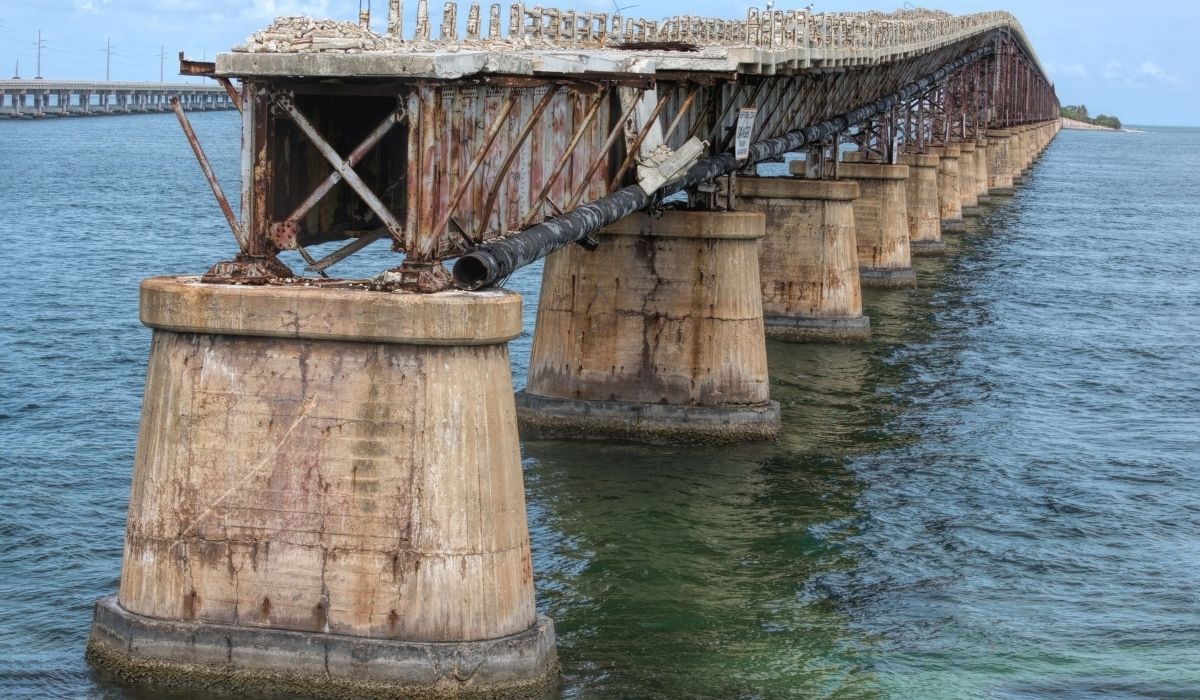
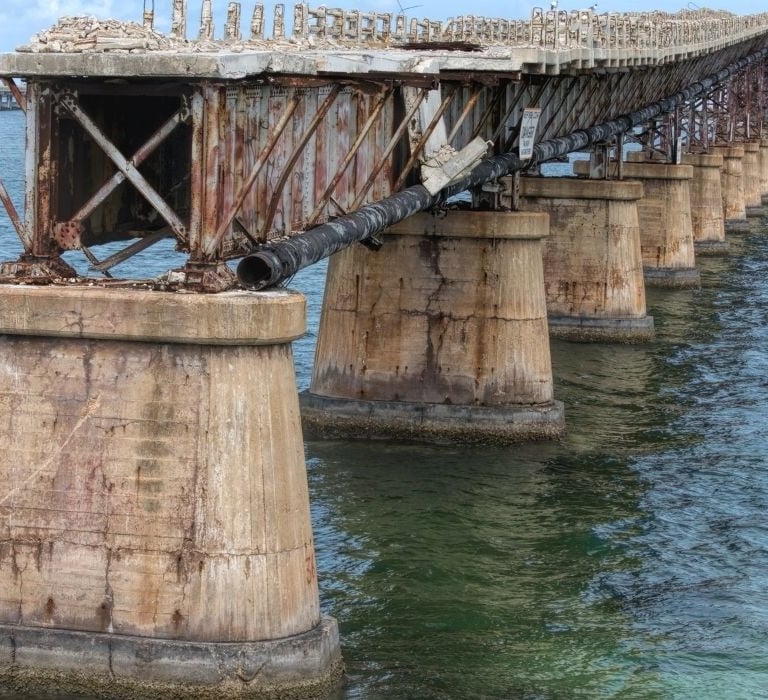
Through the late 1800s and early 1900s, Flagler extended the Florida East Coast Railway progressively southward, eventually reaching all the way to Key West by 1912. Before the railroad, South Florida was remote, difficult to reach, and sparsely populated. Flagler's railroad — paired with the grand resort hotels he built alongside it in St. Augustine, Palm Beach, and Miami — effectively manufactured South Florida as a destination almost from nothing. Miami itself was incorporated in 1896, largely because of the railroad's arrival, and its founding is credited in significant part to Julia Tuttle, who convinced Flagler to extend the line south.
This single piece of infrastructure changed who could plausibly move to South Florida and why. It opened the region to Northeastern investment, Northeastern tourism, and eventually Northeastern retirees in a way that never happened at the same scale in North Florida, which had already been settled and culturally shaped for generations before the railroad ever reached South Florida's swamps and scrubland.
Air Conditioning Rewrote the Rules Twice
If Flagler's railroad opened the door, air conditioning is what made millions of people actually walk through it and stay.
Before widespread air conditioning became available in the mid-20th century, South Florida's brutal, humid, mosquito-heavy summers made year-round living genuinely difficult for anyone not already acclimated to a tropical climate. Once residential air conditioning became affordable and common after World War II, that barrier essentially disappeared — and South Florida transformed from a seasonal winter destination into a viable, comfortable, year-round home for enormous numbers of new residents.
The timing mattered enormously. Post-World War II migration to Florida was massive, and a disproportionate share of it landed in South Florida specifically — retirees and young families from New York, New Jersey, and the broader Northeast corridor, drawn by the combination of newly bearable summers, no state income tax, and the established resort infrastructure Flagler had built decades earlier. North Florida, already culturally continuous with the Deep South and less marketed as a tropical retirement paradise, simply didn't receive the same wave.
This is the demographic engine behind why so many South Florida communities — from Century Village retirement communities in Palm Beach County to entire Broward County suburbs — built such deep, enduring cultural and even culinary ties to the New York metro area. It is genuinely possible to order a proper bagel and lox in parts of South Florida that would be difficult to find replicated with the same authenticity almost anywhere else outside the Northeast itself.
❄️ The Snowbird Effect, Made Permanent Florida's famous "snowbird" seasonal migration — Northeastern and Midwestern retirees spending winters in Florida — has existed for decades. But air conditioning, combined with Florida's tax advantages, converted a meaningful share of that seasonal pattern into permanent, year-round residency, particularly concentrated in South Florida. The seasonal habit essentially became a demographic transformation.


Miami Becomes the Capital of Latin America
The second major force reshaping South Florida's identity arrived through immigration rather than domestic migration — and it's the piece of the story that gives Miami its most distinctive, internationally recognized character.
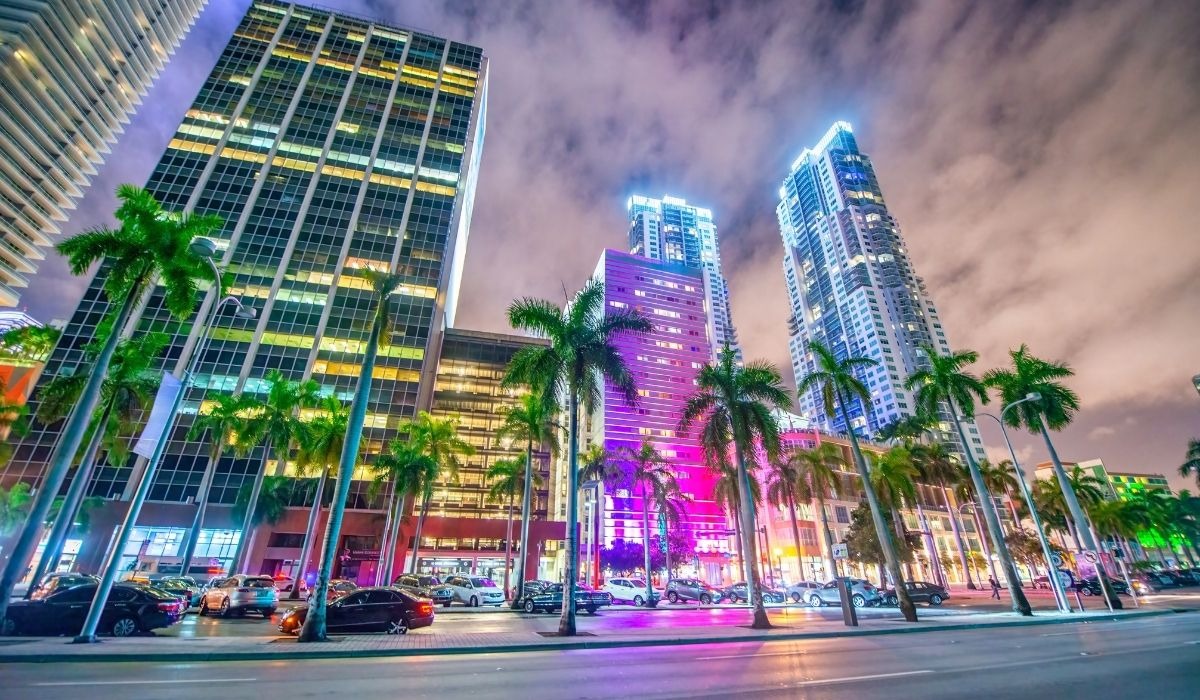
Following the Cuban Revolution in 1959, large waves of Cuban exiles settled in Miami, fundamentally and permanently reshaping the city's culture, language, cuisine, business community, and politics. Subsequent decades brought substantial immigration from across Latin America and the Caribbean — Colombia, Venezuela, Nicaragua, Haiti, the Dominican Republic, and beyond — each wave adding to Miami's identity as what is now widely and accurately nicknamed the "Capital of Latin America."
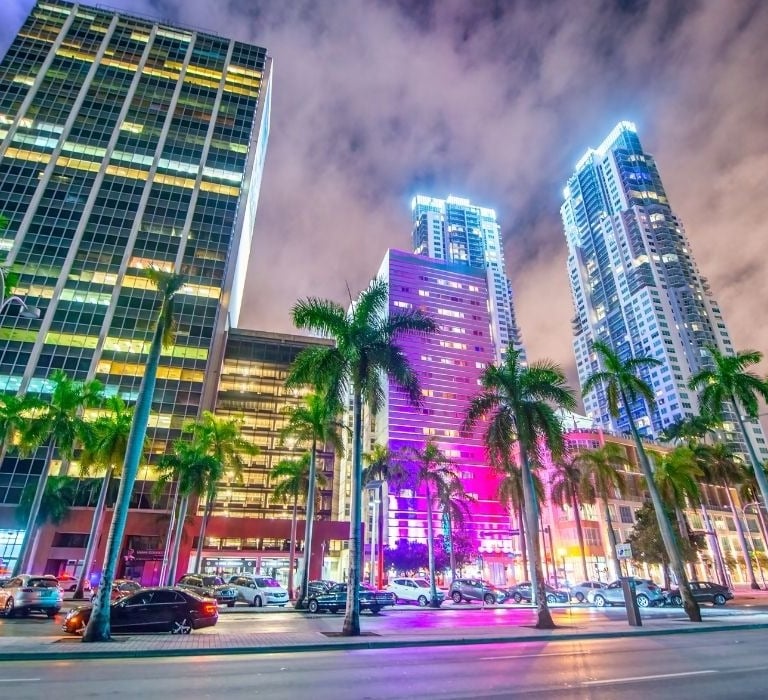
The numbers tell the story plainly: Miami's population is 70.2% Hispanic or Latino, making it the largest Hispanic-majority city in the United States. This demographic reality — layered directly on top of the earlier Northeastern retiree migration — is what makes South Florida feel so distinct from both the rest of Florida and the rest of the American South. It isn't simply "not Southern." It's genuinely its own hybrid cultural region, shaped by two entirely different migration forces arriving within a few decades of each other.
Is There an Actual Line? Geographers Say Yes
Given how sharply the two Floridas diverge, it's fair to ask whether there's an actual geographic boundary — and the surprising answer is that geographers have identified something close to one.
The Lamme and Meindl research built on decades-old work by geographer Wilbur Zelinsky, who first mapped what he described as Florida's internal cultural boundary using period census and settlement data. Their more recent analysis traced how that boundary has shifted over time, generally tracking a rough line through Central Florida — commonly associated with the I-4 corridor connecting Tampa, Orlando, and Daytona Beach — though the researchers emphasize the boundary is a genuine gradient rather than a hard line on a map.
That gradient explains why Central Florida often feels like neither fully North Florida nor fully South Florida, but a genuine blend — a transitional zone where you can find both a proper Southern Baptist church potluck and a Puerto Rican bakery within the same county, sometimes the same town. Orlando in particular has become one of the fastest-growing Puerto Rican population centers in the entire United States, adding yet another distinct cultural layer to Central Florida's identity that fits neither the "Deep South" nor the "transplanted Northeast" categories cleanly.
The practical takeaway for anyone new to Florida: don't expect the state to behave like a single cultural unit. It genuinely isn't one — and understanding why makes the whole state considerably easier to make sense of, whether you're relocating, visiting, or just trying to explain to an out-of-state friend why Pensacola and Miami feel like they're barely in the same country, let alone the same state.
Florida North and South FAQ
Is there an actual documented cultural line dividing Florida? Yes. Geographers Ary J. Lamme III and Christopher F. Meindl formally studied and mapped this phenomenon in the peer-reviewed journal Southeastern Geographer, building on earlier cultural boundary research by geographer Wilbur Zelinsky. Their work traced how the boundary has shifted historically using census and settlement data, generally locating it in the vicinity of Central Florida's I-4 corridor, while emphasizing it functions as a gradient rather than a sharp line.
Why does North Florida feel so different from South Florida? North Florida has maintained cultural continuity with the broader Deep South since its earliest Spanish, British, and American settlement periods, shaped by agriculture, timber, and regional migration from neighboring Southern states. South Florida's identity was largely built from scratch starting in the early 1900s, driven first by Henry Flagler's railroad and resort development, then by post-WWII Northeastern retiree migration, and later by major waves of Cuban and Latin American immigration.
When did South Florida become so heavily influenced by Latin American culture? The transformation accelerated significantly after the 1959 Cuban Revolution, when large numbers of Cuban exiles settled in Miami. Subsequent decades brought major immigration from across Latin America and the Caribbean. Miami's population is now 70.2% Hispanic or Latino, the highest proportion of any major U.S. city, earning it the widely used nickname "Capital of Latin America."
What role did Henry Flagler play in South Florida's development? Flagler extended the Florida East Coast Railway progressively south through the late 1800s and early 1900s, eventually reaching Key West by 1912. Combined with the resort hotels he built along the route, the railroad effectively created South Florida as a viable, accessible destination almost from nothing, opening the region to Northeastern investment and migration that had never previously reached it at scale.
How did air conditioning change Florida's development? Before widespread residential air conditioning became available after World War II, South Florida's humid subtropical and tropical summers made year-round living genuinely difficult for most transplants. Once air conditioning became common and affordable, that barrier disappeared, and South Florida shifted from a seasonal winter destination into a viable year-round home — driving a massive wave of permanent Northeastern migration that shaped the region's lasting cultural character.
Is Central Florida more Northern or Southern? Neither, definitively — Central Florida functions as a genuine cultural blend zone. Geographic research places the rough boundary between "North Florida" and "South Florida" cultural identity somewhere around the I-4 corridor connecting Tampa, Orlando, and Daytona Beach. Orlando in particular has also become one of the fastest-growing Puerto Rican population centers in the U.S., adding a further distinct cultural layer that doesn't fit neatly into either the Deep South or transplanted Northeast categories.
Sources
Lamme, Ary J. III, and Christopher F. Meindl — A Vibrant Cultural Boundary in Florida, Southeastern Geographer (JSTOR)
Deep South Magazine — Florida's Identity Crisis
Wikipedia — Florida Panhandle; Miami; History of Florida
Journal of Southern Regional Institute (Loyola) — Latino Immigration in the South: Emerging Trends and Critical Issues




Florida Current covers lifestyle, weather, outdoor life, and everything that comes with living in the Sunshine State. Browse our Florida Living section for regional guides, seasonal activity calendars, retirement guides and practical advice from people who actually live here.
Florida native Luana B. Gann brings more than 30 years of publishing, editing, and journalism experience to Florida Current. With a deep appreciation for the Sunshine State's culture, lifestyle, and ever-changing landscape, she is dedicated to helping readers discover what's new, noteworthy, and uniquely Florida.
CONTACT
Reach out for questions or feedback anytime.
contact@FLAcurrent.com
© 2026. All rights reserved.