Florida Manatees: The Real Story Behind the Sunshine State's Sea Cows
Luana B. Gann, Editor
7/14/2026


Quick Answer: Florida manatees are large, slow-moving aquatic mammals — closely related to elephants, not seals or dolphins — that spend their lives grazing on seagrass in Florida's warm coastal waters and freshwater springs. Once hunted nearly to extinction and later devastated by a starvation crisis linked to seagrass loss, Florida's manatee population has shown real signs of recovery in recent years, with an estimated 9,790 individuals as of the most recent counts. Winter, from November through March, is peak viewing season, when manatees gather in warm-water refuges like Crystal River, Blue Spring State Park, and the TECO Manatee Viewing Center — all genuinely accessible to the public, and genuinely worth the trip.
In This Article
What Exactly Is a Manatee? (And Why "Sea Cow" Fits)
From Near-Extinction to Endangered Species Protection
The Crisis That Almost Undid Decades of Progress
Where the Population Actually Stands Today
Where to See Manatees in Florida — Real, Verified Spots
How to Watch Responsibly (Because It Genuinely Matters)
Frequently Asked Questions
What Exactly Is a Manatee? (And Why "Sea Cow" Fits)
Here's a detail that surprises a lot of people: manatees are not related to seals, dolphins, or any other marine mammal you'd naturally group them with. Their closest living relatives are, genuinely, elephants. Both belong to a broader mammalian lineage that shares surprising anatomical similarities — including toenails on their flippers, in the manatee's case, a genuinely charming leftover from their evolutionary history on land millions of years ago.
Manatees belong to the order Sirenia, and according to the Natural History Museum's overview of the species, there are three manatee species worldwide — the West Indian, African, and Amazonian manatee — plus the dugong, a related but distinct species found in the Indo-Pacific. The manatees Floridians know and love belong specifically to the West Indian manatee (Trichechus manatus), and more specifically to the Florida manatee subspecies (Trichechus manatus latirostris), which ranges from Florida down through the Caribbean and into parts of South America, according to Wikipedia's detailed species overview.
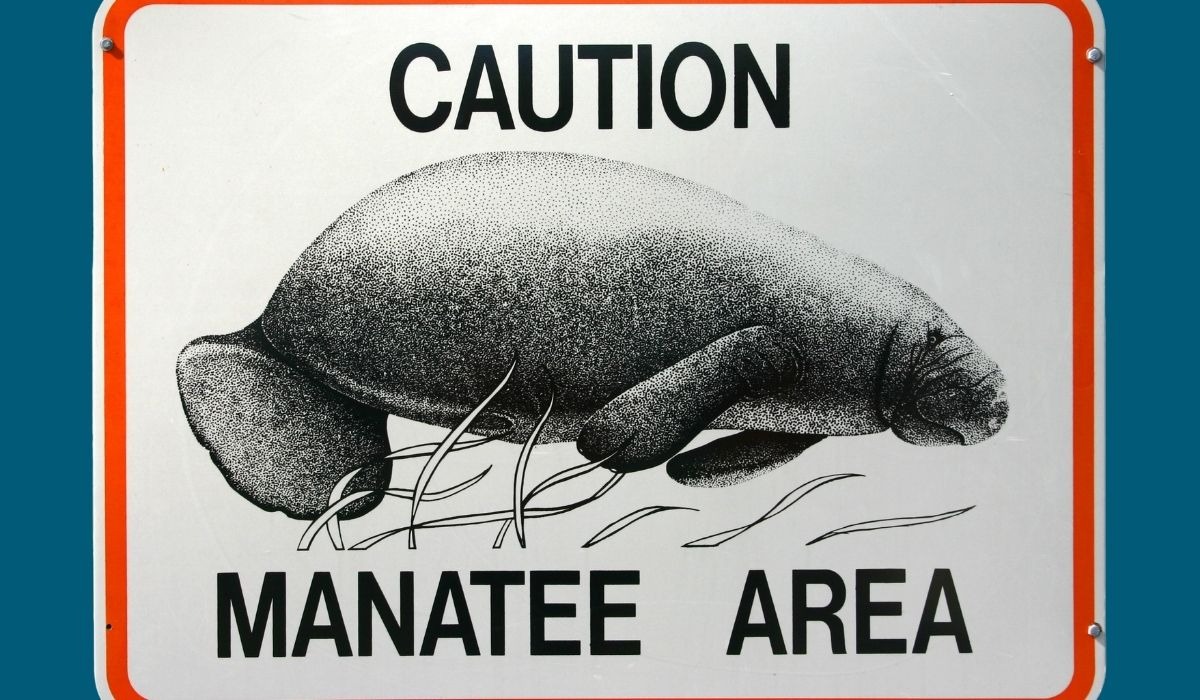
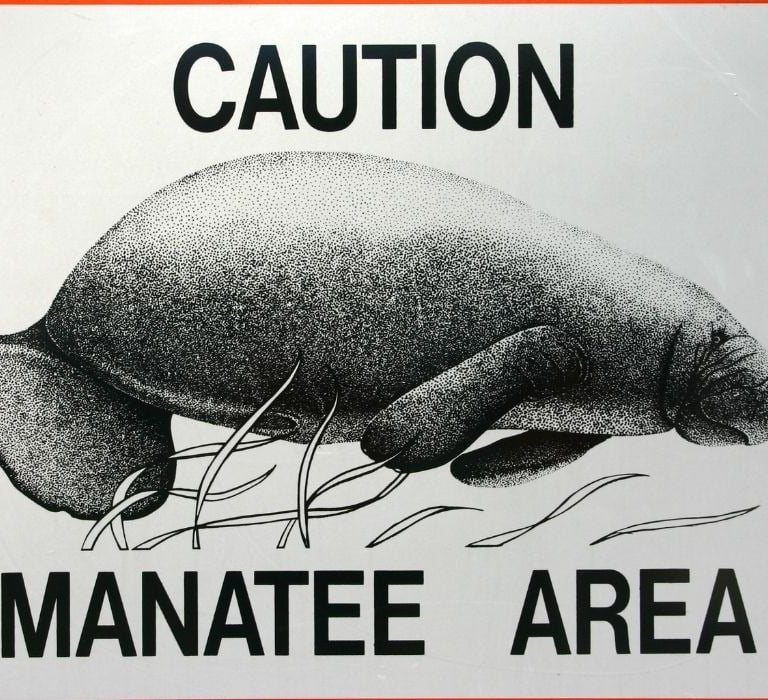
The "sea cow" nickname earns its keep. Adult manatees typically measure 9 to 11.5 feet long and weigh between 440 and 1,300 pounds, and they spend the overwhelming majority of their day doing exactly one thing: grazing on seagrass and other aquatic vegetation, much like a cow grazes a pasture. An adult manatee can eat up to 10% of its body weight in vegetation daily — a genuinely enormous amount of seagrass for one animal to consume, and a fact that matters enormously to the survival story we'll get to shortly.
Manatees are also surprisingly capable swimmers despite their reputation for being slow. While their typical cruising speed is a leisurely few miles per hour, they can burst up to roughly 15 miles per hour in short sprints when genuinely motivated — a fact that tends to surprise people who've only ever seen manatees float placidly near a dock.
🐘 The Elephant Connection, Explained Manatees and elephants share a common evolutionary ancestor from tens of millions of years ago, and the family resemblance shows up in some genuinely unexpected places — manatees, like elephants, continually regrow and replace their molars throughout their lives as older teeth wear down from constant chewing, a trait almost no other mammal shares. It's one of evolutionary biology's more delightful surprises: Florida's gentle river giants are, distantly, cousins of the largest land animal on Earth.
From Near-Extinction to Endangered Species Protection
Florida's relationship with its manatees has a real history — and it's not a uniformly gentle one. For much of the state's early history, manatees were hunted for meat, hide, and oil, and their populations declined significantly as a result. Florida took an early, genuinely progressive step for the era: state law made it illegal to hunt manatees all the way back in 1893 — a remarkably early protection for a wildlife species by American standards of that time.
That early protection wasn't enough on its own to reverse the decline, however, as Florida's coastal development, boat traffic, and habitat loss continued to mount through the 20th century. In 1966, manatees received a much stronger layer of federal protection when they were listed as an endangered species — a designation that would remain in place for the next 51 years.
The turning point came in 2017, when the U.S. Fish and Wildlife Service officially downgraded the Florida manatee's status from endangered to threatened, according to the Marine Mammal Commission's official species overview. This reclassification reflected real, measurable population growth — the manatee population had grown from roughly 8,810 individuals to an estimated 9,790 in the years leading up to the change, a genuinely encouraging trajectory that represented decades of conservation investment finally paying off.

The Crisis That Almost Undid Decades of Progress
Just a few years after that hard-won reclassification, Florida's manatees faced one of the most serious threats in their modern history — and it's a story that deserves to be told honestly, not glossed over.
Beginning in December 2020 and continuing through April 2022, Florida experienced what wildlife officials formally designated an Unusual Mortality Event (UME) — a federally recognized crisis-level die-off. According to the Florida Fish and Wildlife Conservation Commission's official UME report, this event resulted in 1,255 documented manatee deaths and required 137 rescue interventions, with the crisis hitting hardest during the winters of 2020–2021 and 2021–2022.
The cause traced directly back to the manatee's most basic need: food. Severe seagrass loss — driven by harmful algal blooms fueled by nutrient pollution, particularly in the Indian River Lagoon — left manatees with dramatically reduced access to their primary food source. According to Save the Manatee Club's detailed analysis of the crisis, manatees were essentially starving in one of the most ecologically important waterways in the state, a genuinely alarming situation that prompted an unprecedented emergency response, including supplemental feeding trials — wildlife officials literally hand-feeding lettuce to wild manatees in an effort to keep them alive during the worst of the crisis.
The response effort worked, at least in the near term. According to reporting on the UME's official closure, no starvation-related manatee deaths have been recorded since March 2023, and researchers have observed manatees resuming normal mating and reproductive behavior — a genuinely hopeful sign after such a difficult stretch. The UME was formally and officially closed on March 14, 2025.
⚖️ A Milestone, Not a Victory Save the Manatee Club's own language on this deserves to be quoted directly, because it captures the situation honestly: the end of the UME is "a milestone, not a victory." Seagrass loss continues in parts of Florida due to ongoing pollution and climate pressures, and manatees remain classified as threatened, not fully recovered. A federal court ruling has since required the state to seek permits aimed at reducing future water pollution — a real, if incomplete, step toward addressing the root cause rather than just managing the symptoms.
Where the Population Actually Stands Today
It's worth being precise here rather than painting an overly rosy or overly grim picture, because both extremes miss the real, complicated truth.
The most recent comprehensive population estimate places Florida's manatee population at roughly 9,790 individuals — a number that reflects genuine long-term recovery from historic lows, even accounting for the devastating UME years. However, annual mortality counts remain a genuine area of concern: Florida's manatee mortality count surpassed 600 deaths in 2025, with Brevard County — home to much of the affected Indian River Lagoon — recording the highest county-level death toll, according to local news reporting on FWC data. Some conservation researchers and advocacy groups have raised the question of whether manatees should be reclassified back to endangered status given ongoing mortality pressures, though no such change has been made as of this writing.
The honest summary: Florida's manatees are in meaningfully better shape than they were at their historic population lows, and the emergency starvation crisis of 2020–2022 has genuinely stabilized. But the underlying environmental pressures — water quality, seagrass health, boat traffic, and warm-water habitat availability — remain real, ongoing challenges that will determine whether this recovery holds over the coming decades.

Where to See Manatees in Florida — Real, Verified Spots
Winter is peak manatee-viewing season in Florida — specifically mid-November through March — because manatees are genuinely cold-sensitive animals that seek out warm water refuges when Gulf and ocean temperatures drop. Here are the destinations most consistently recommended by Florida's own wildlife agency and verified tourism sources:
Crystal River / Three Sisters Springs (Citrus County): The single most famous manatee destination in Florida, and — remarkably — the only place in the state where swimming with manatees in the wild is permitted, according to Discover Crystal River's official visitor guide. The crystal-clear spring water here provides genuinely exceptional visibility, and hundreds of manatees can gather here during peak winter cold snaps.
Blue Spring State Park (Volusia County): Consistently cited by Florida residents and visitors alike — including a Reddit thread specifically on this topic — as one of the most reliable spots for high manatee counts, with clear spring water that makes viewing genuinely easy. Manatees gather here in large numbers during cold weather, drawn by the spring's constant 72-degree water temperature.
TECO Manatee Viewing Center (Apollo Beach, Hillsborough County): A genuinely unique setup — manatees gather here because of warm water discharged from a Tampa Electric power station, and the viewing center is free to visit, according to multiple verified sources including the FWC's own guide.
Ellie Schiller Homosassa Springs Wildlife State Park (Citrus County): Offers an underwater observatory that lets visitors watch manatees below the surface, alongside broader wildlife exhibits and a manatee rehabilitation center on-site.
Manatee Lagoon – An FPL Eco-Discovery Center (Riviera Beach): A free, family-friendly education center built around warm-water discharge, offering both indoor exhibits and outdoor viewing decks.
Lee County Manatee Park (Fort Myers): Another warm-water discharge site, free to the public, with a genuinely well-regarded educational component for families.
Additional verified spots according to Florida Fish and Wildlife's official guide include the Merritt Island National Wildlife Refuge, Edward Ball Wakulla Springs State Park, Fanning Springs State Park, and — for a guaranteed year-round sighting rather than a seasonal one — rehabilitation and aquarium facilities including ZooTampa, Mote Marine Laboratory, and Clearwater Marine Aquarium, all of which house rescued manatees receiving care.

How to Watch Responsibly (Because It Genuinely Matters)
Manatees are still legally protected wildlife, and the Florida Fish and Wildlife Conservation Commission has clear, sensible guidelines for observing them respectfully:
Observe from a distance, ideally with binoculars, rather than approaching closely — especially when manatees appear to be resting.
Never chase, touch, feed, or give water to wild manatees. These actions are not just discouraged — they're illegal under federal protection laws, and for good reason: habituating manatees to human contact can genuinely endanger them by making them less wary of boats and other real threats.
If swimming near manatees where it's permitted (Crystal River specifically), follow all posted guidelines, including maintaining passive observation and never separating a mother from her calf.
Report sick, injured, or distressed manatees to Florida's wildlife hotline rather than attempting to intervene yourself — trained rescue teams are equipped to help in a way well-meaning bystanders often aren't.
Practice safe, slow boating in posted manatee zones. Vessel strikes remain one of the leading causes of manatee mortality and injury statewide, and slow-speed zones exist specifically because they measurably reduce fatal collisions.
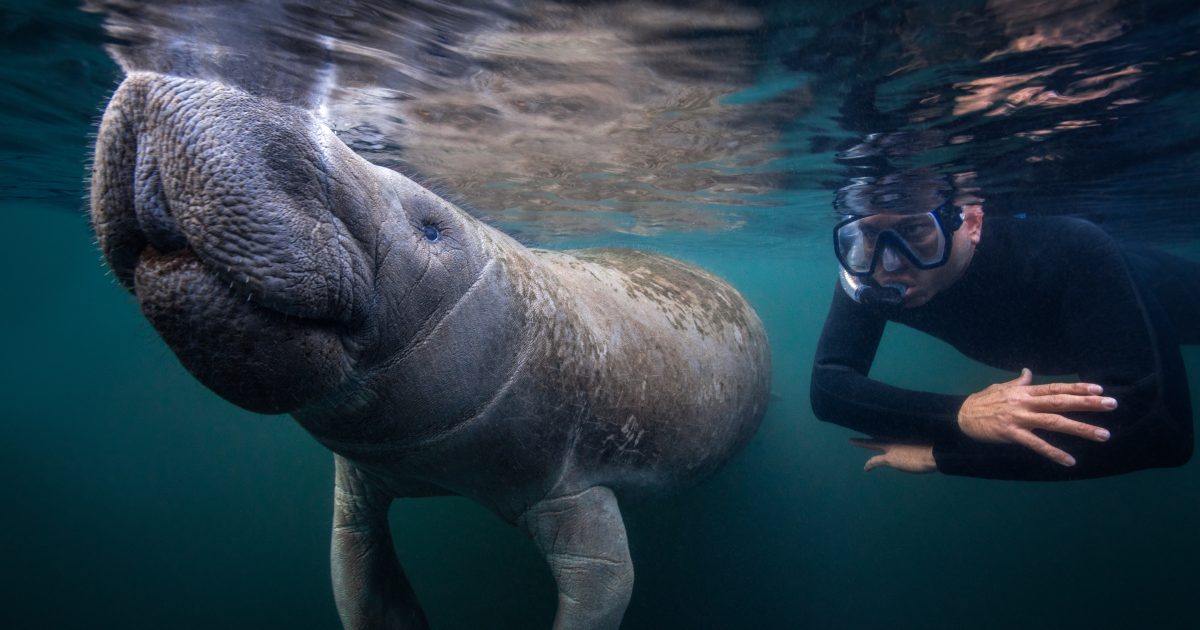
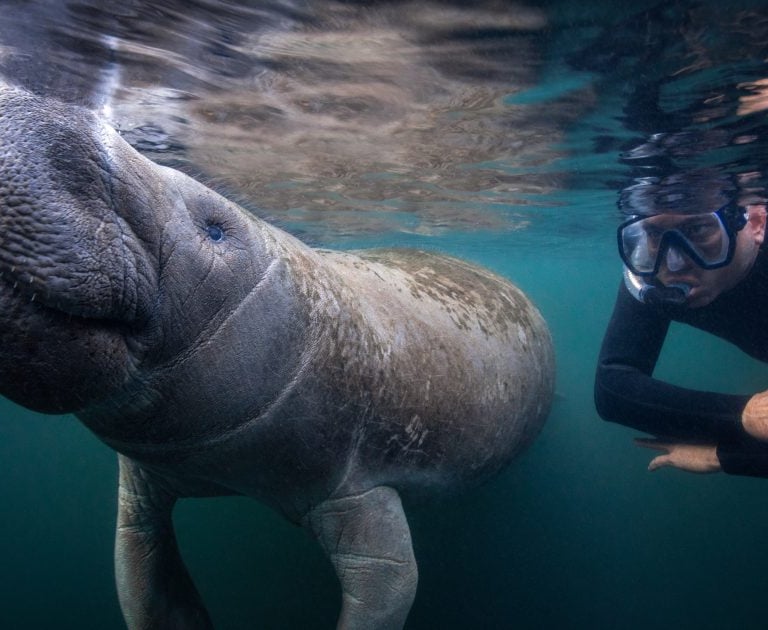
Look, but don't touch.
Florida Manatee FAQ
Are manatees endangered in Florida? Florida manatees are currently classified as "threatened" rather than "endangered," following a 2017 federal reclassification driven by population growth. However, they remain a protected species under both federal and Florida law, and some conservation advocates have raised questions about whether ongoing mortality pressures warrant reconsidering that classification.
Why did so many manatees die between 2020 and 2022? Florida experienced a federally designated Unusual Mortality Event driven primarily by starvation. Severe seagrass loss, caused by harmful algal blooms fueled by nutrient pollution — especially in the Indian River Lagoon — left manatees without enough of their primary food source. The event resulted in 1,255 documented deaths and 137 rescues before improved conditions led to its official closure in March 2025.
Where is the best place to see manatees in Florida? Crystal River and its Three Sisters Springs are widely considered Florida's premier manatee destination, and it's the only place in the state where swimming with wild manatees is permitted. Blue Spring State Park, the TECO Manatee Viewing Center, Ellie Schiller Homosassa Springs Wildlife State Park, and Manatee Lagoon in Riviera Beach are also consistently recommended, verified viewing locations.
When is the best time of year to see manatees in Florida? Peak viewing season runs from mid-November through March, when manatees seek out warm-water refuges like natural springs and power plant discharge sites as ocean and Gulf temperatures drop. Some locations, particularly rehabilitation centers and aquariums, allow year-round viewing of resident manatees.
Is it legal to swim with or touch manatees in Florida? Touching, feeding, or giving water to wild manatees is illegal under federal protection laws, regardless of location. Crystal River is the only place in Florida where swimming near wild manatees is permitted, and even there, strict passive-observation guidelines apply — no chasing, touching, or separating a mother from her calf.
How many manatees are there in Florida today? The most recent comprehensive estimate places Florida's manatee population at roughly 9,790 individuals, reflecting substantial long-term recovery from historic lows. However, annual mortality remains a genuine concern, with more than 600 recorded deaths in 2025 alone, underscoring that recovery, while real, remains fragile.
A Quick Note: Manatee population data, mortality figures, and conservation status reflect publicly reported information current as of the publish date and are subject to change as new counts and research become available. This article is for general informational purposes. For the most current data, refer directly to the Florida Fish and Wildlife Conservation Commission.

Sources
Florida Fish and Wildlife Conservation Commission (FWC) — Closed Manatee Mortality Event Along the East Coast; Where Can I See Manatees in Florida?
Save the Manatee Club — After the UME: A Milestone, Not a Victory
Marine Mammal Commission — Florida Manatee species overview
CF Public (NPR) — Positive Manatee Trend Triggers Official End to Unusual Mortality Event
Clearwater Marine Aquarium — Manatee Unusual Mortality Event
Natural History Museum (UK) — Manatees: What Is a Sea Cow?
Wikipedia — West Indian Manatee
Visit Florida — Where and How to See Manatees in Florida
Discover Crystal River — A Guide to Seeing Manatees in Crystal River, FL


Florida Current covers lifestyle, weather, outdoor life, and everything that comes with living in the Sunshine State. Browse our Florida Living section for regional guides, seasonal activity calendars, retirement guides and practical advice from people who actually live here.
Florida native Luana B. Gann brings more than 30 years of publishing, editing, and journalism experience to Florida Current. With a deep appreciation for the Sunshine State's culture, lifestyle, and ever-changing landscape, she is dedicated to helping readers discover what's new, noteworthy, and uniquely Florida.
CONTACT
Reach out for questions or feedback anytime.
contact@FLAcurrent.com
© 2026. All rights reserved.