Red Tide in Florida: What It Is, Why It Happens, and What It Means for Your Beach Day
Luana B. Gann, Editor
6/17/2026
Quick Answer Red tide in Florida is a naturally occurring bloom of Karenia brevis, a microscopic algae that produces powerful toxins. It is not safe to swim in active red tide — the toxins cause skin and eye irritation, and the aerosols produced by breaking surf can trigger respiratory symptoms on the beach even if you never enter the water. Eating locally harvested shellfish during a bloom is a genuine health risk. Always check the Florida Fish and Wildlife Conservation Commission's current status map before any Gulf Coast beach day.
Table of Contents
What Red Tide Actually Is — And What It Isn't
Red tide sounds like something from a science fiction film — the ocean turning crimson, everything dying. The reality is more complicated and, in some ways, more interesting than the headline version.
Florida's red tide is caused by Karenia brevis, a single-celled microscopic organism called a dinoflagellate that lives naturally in the Gulf of Mexico in low concentrations year-round. Under normal conditions, K. brevis is simply part of the ocean's background biology — present, unremarkable, and outnumbered by everything else in the water.
Problems begin when conditions align to produce a bloom — an explosive population surge in which K. brevis concentrations reach millions of cells per liter of seawater. At those concentrations, the organism's natural toxins, called brevetoxins, accumulate to levels that affect fish, shellfish, marine mammals, seabirds, and humans. That's red tide.
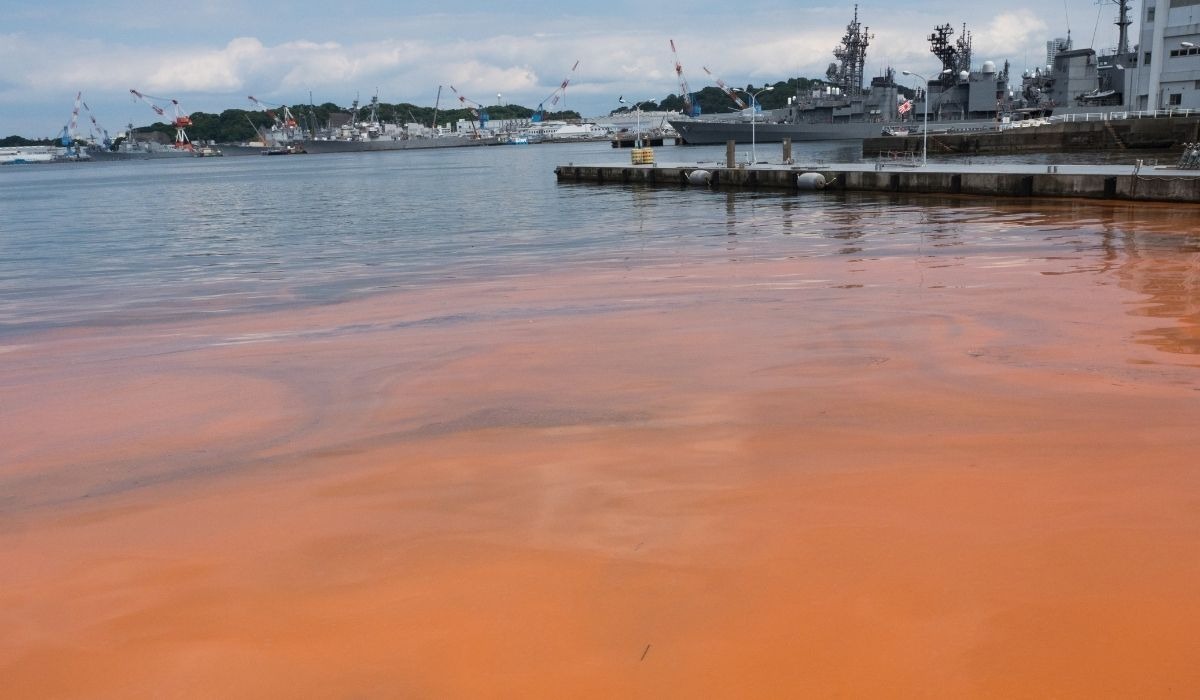
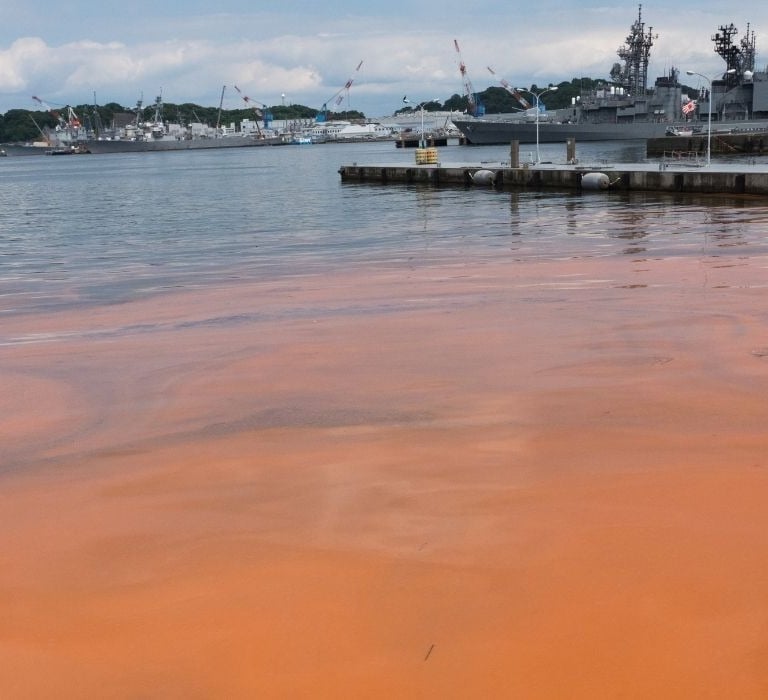
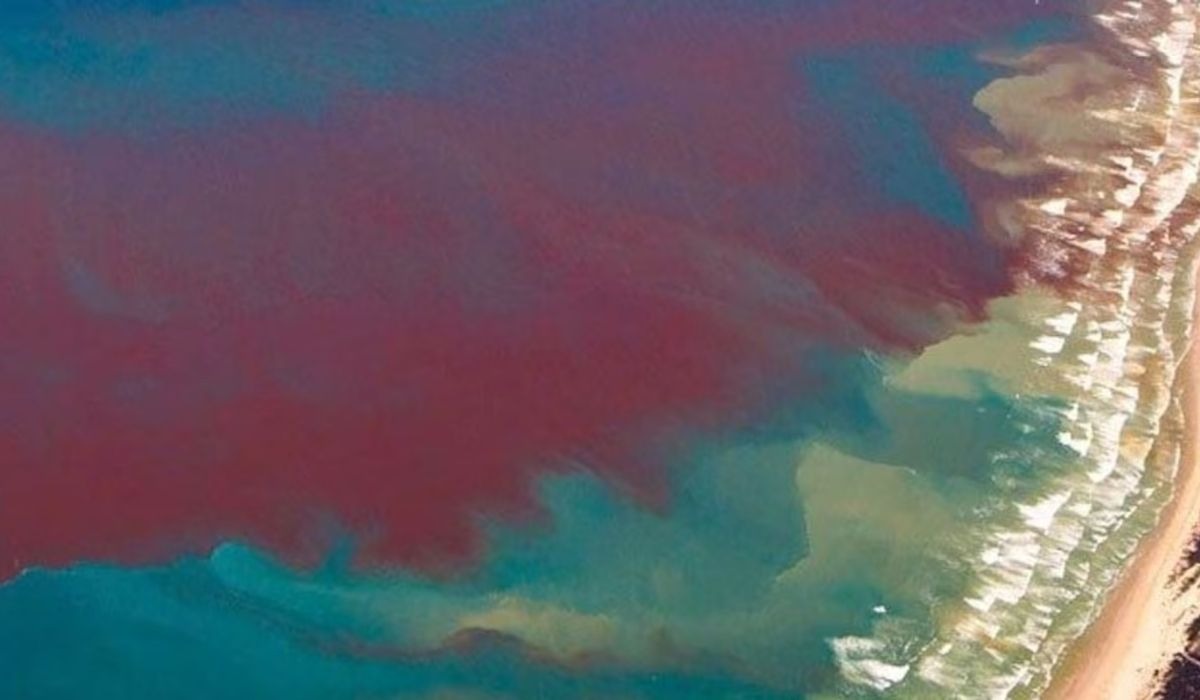
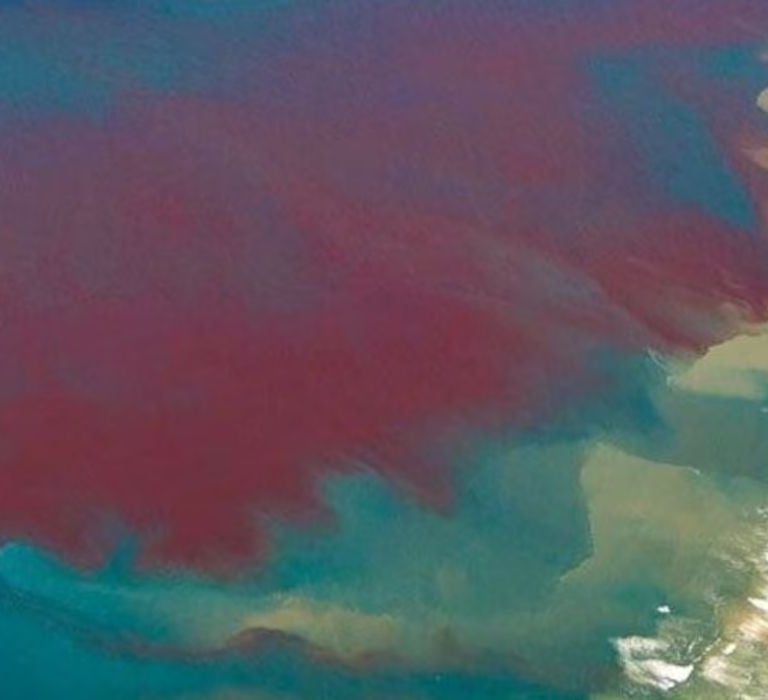
The name itself is misleading in two important ways. First, the water doesn't always turn red. Depending on the concentration of cells and the play of light, affected water can appear brownish, rust-colored, olive green, or completely normal in appearance. Second, it has nothing to do with the tide. The "tide" in the name is a historical artifact from observers who noticed coastal discoloration and connected it to tidal patterns. The bloom moves with winds and currents, not tidal cycles.
Red tide is not a new phenomenon and it is not unique to Florida. K. brevis blooms have been documented in the Gulf of Mexico since Spanish explorers recorded fish kills along the Florida coast in the 1500s. What has changed over the centuries is the frequency, duration, and scale of blooms — trends that researchers are actively studying in connection with water temperature, nutrient conditions, and broader environmental changes.
Florida Current Note Red tide is a natural phenomenon, but "natural" doesn't mean harmless. The same word applies to hurricanes and lightning. Understanding what you're dealing with is the starting point for making smart decisions about when and where to go to the beach — which is entirely the point of this article.
Why Florida's Gulf Coast Gets Hit — and When
The Gulf Coast vs. the Atlantic Coast
Florida's red tide problem is primarily a Gulf Coast story. Karenia brevis blooms originate in the offshore waters of the Gulf of Mexico — typically 10 to 40 miles from shore — and are then carried toward the coast by winds, currents, and coastal circulation patterns. The Gulf's relatively calm, warm, shallow waters create conditions that favor bloom development in ways that the Atlantic side of Florida does not replicate with the same frequency.
Southwest Florida — Collier, Lee, Charlotte, and Sarasota counties — is the most consistently affected region in the state. The Sarasota-based Mote Marine Laboratory, one of the nation's leading red tide research institutions, has been monitoring and studying K. brevis blooms in this region for decades. Their real-time data, public outreach, and ongoing research into bloom prediction and mitigation are among the most important resources available on this topic.
Atlantic coast beaches can experience red tide, but significantly less often and typically with less intensity than Gulf Coast locations.
When Red Tide Season Peaks
Blooms can technically occur at any time of year, but they follow a general seasonal pattern that Floridians and beachgoers should know. Late summer through fall — August through November — represents peak risk, driven by water temperatures, wind patterns, and offshore current dynamics that favor bloom development and onshore transport during those months.
This timing creates a meaningful planning consideration. Florida's Gulf Coast beaches in September and October are some of the most beautiful and least crowded of the entire year — the summer families have gone home, the snowbirds haven't arrived, the weather is often stunning, and hotel rates drop considerably. Those same months carry the highest statistical red tide risk. That doesn't mean every October beach day is affected, and checking current conditions before you go handles this entirely.
What Makes Blooms Worse
K. brevis needs three things to bloom: warm water, calm conditions, and nutrients. The first two are largely functions of natural seasonality and weather patterns. The third is where human activity enters the conversation.
Nutrient-rich water — carrying nitrogen and phosphorus from fertilizers, agricultural runoff, and inadequately treated wastewater — feeds algal growth when it reaches coastal waters. Florida's rapid development, intensive agriculture, and significant lawn fertilizer use all contribute to nutrient loading in the watershed. While scientists continue to study the precise relationship between nutrient pollution and K. brevis bloom intensity, the general direction of the evidence suggests that cleaner water supports shorter, less intense blooms. Managing nutrient runoff is good for Florida's coastal ecosystems regardless of that debate's final resolution.
Florida Current Reminder Checking the Florida Fish and Wildlife Conservation Commission's Red Tide Status Map before any Gulf Coast beach day is the single most practical thing anyone can do. The map is updated regularly with sample data from monitoring stations across the coast and gives real-time concentration levels by location.
What It Looks Like, Smells Like, and Feels Like
If you have never been near an active red tide bloom, there are several ways you may know before you even see the water.
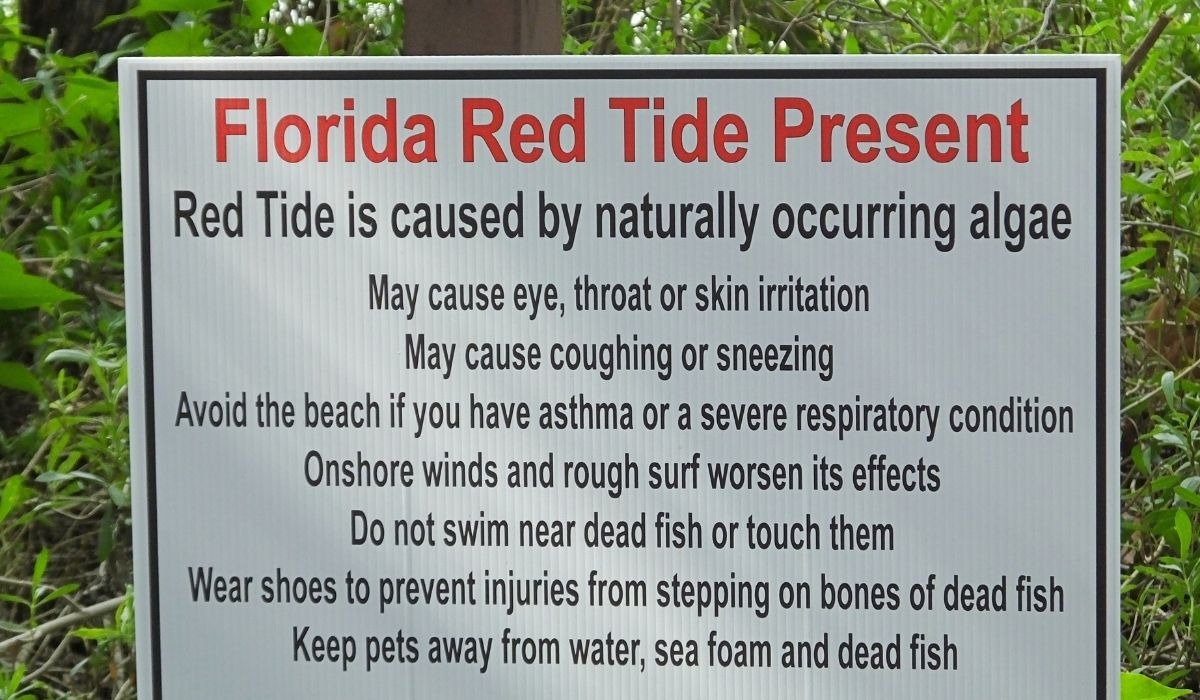
Your throat tells you first. The aerosol effect of red tide — produced when surf breaks apart K. brevis cells and releases brevetoxins into the air — can cause a distinctive tickling, coughing sensation in the throat before you've reached the shoreline. Some people notice it from the parking lot. Others experience eye irritation and a runny nose that begins on the beach approach. This respiratory irritation is the most consistent early indicator that red tide concentrations are present.
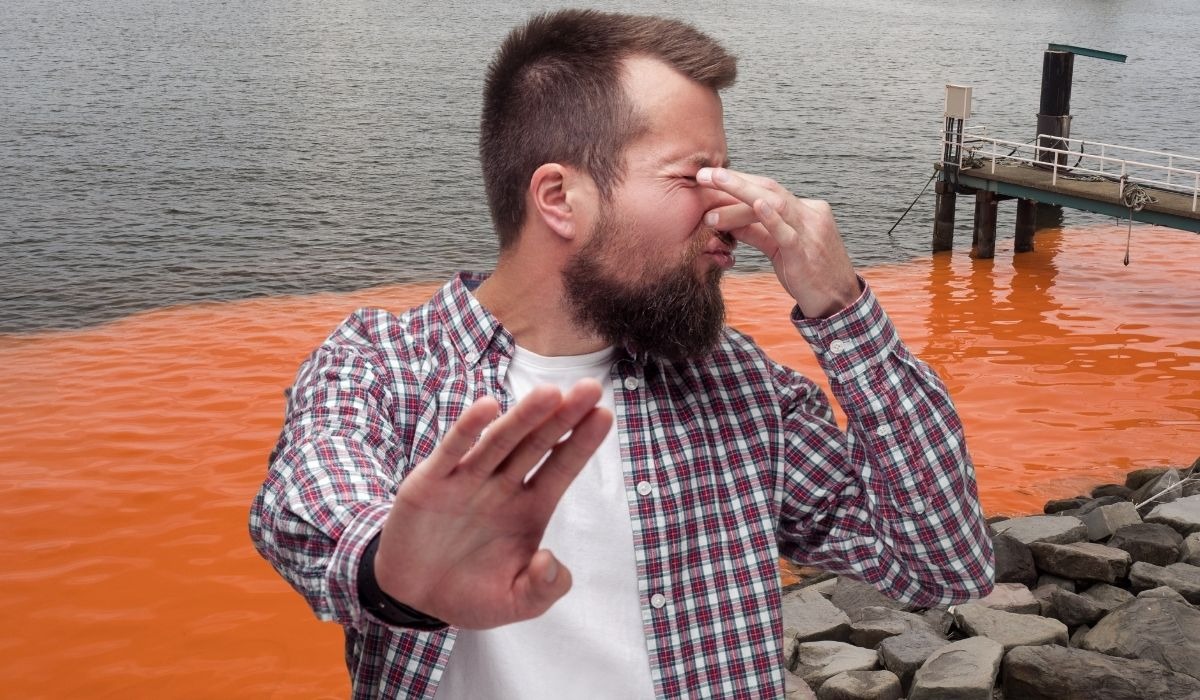
The smell. An active bloom, particularly one accompanied by significant fish kills, has a notable odor. The death and decomposition of large numbers of fish on and near the shore produces a strong, unmistakable smell. Not everyone describes it the same way, but it is not subtle.
The water. Visible discoloration is present in moderate to high concentration blooms — brownish or rust-colored patches, sometimes extending for miles offshore. Foam or brownish "mousse" along the tide line is common. In lower concentrations, the water may appear completely normal, which is why checking the FWC map matters even when nothing looks wrong at first glance.
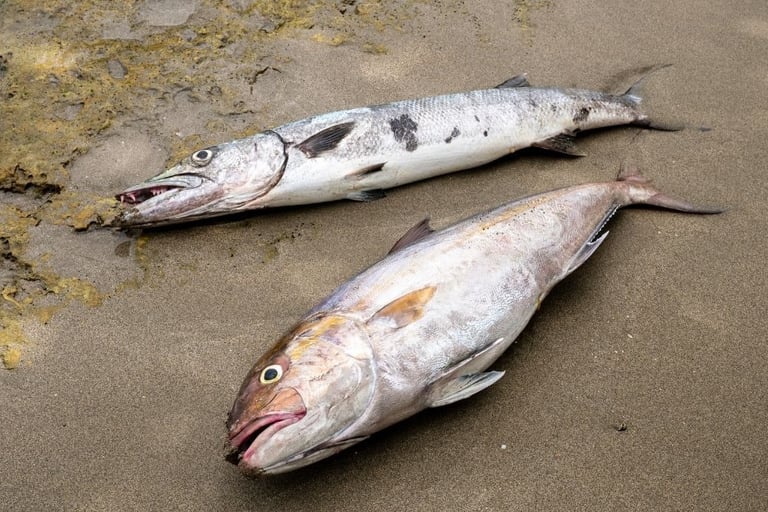
Dead fish. Fish kills associated with red tide can be dramatic — hundreds of thousands of fish washed ashore across miles of beach. This is perhaps the most visceral and immediately obvious indicator of an active bloom in the area. Local governments and the Florida Fish and Wildlife Conservation Commission mobilize cleanup crews when significant kills occur, but in the immediate aftermath of a kill event, affected beaches can be difficult to be near regardless of safety protocols.
Is It Safe to Swim, Breathe the Air, or Eat the Seafood?
This is the section that actually matters for most people, so let's be precise.
Swimming: The Honest Answer
For healthy adults without respiratory conditions, brief exposure to mild red tide water is unlikely to cause serious harm. That is not the same as saying it's safe or a good idea. K. brevis brevetoxins cause skin rash, eye and throat irritation, and respiratory symptoms in many people who enter affected water. The intensity of the reaction depends on the bloom concentration, your individual sensitivity, and the length of exposure.
For people with asthma, chronic obstructive pulmonary disease (COPD), or other respiratory conditions, this is not a gray area — the Florida Department of Health is explicit that these individuals should avoid beaches during active red tide blooms. The aerosolized toxins that reach the beach from breaking surf can trigger asthma attacks without any direct water contact.
Children, whose respiratory systems are still developing, warrant extra caution as well.
Shellfish: The Most Serious Risk
If there is one non-negotiable in the red tide safety conversation, it is this: do not eat shellfish you harvest yourself — oysters, clams, mussels, scallops — from areas experiencing red tide blooms. Shellfish are filter feeders that pull water through their bodies continuously. In doing so, they concentrate brevetoxins to levels far beyond what is present in the surrounding water. Cooking does not destroy brevetoxins. Normal smell and appearance give no indication of contamination.
Eating contaminated shellfish causes Neurotoxic Shellfish Poisoning (NSP) — symptoms include nausea, vomiting, tingling and numbness of the lips, tongue, throat, and extremities, reversal of temperature sensation (hot feels cold and cold feels hot), and in more serious cases, respiratory difficulty. NSP is rarely fatal in healthy adults, but it is genuinely miserable and can require medical attention.
Commercially sold shellfish at restaurants and grocery stores is a different matter. The Florida Department of Agriculture and Consumer Services maintains active shellfish harvesting closures when red tide is present and tests commercially harvested shellfish for brevetoxin contamination. The commercial supply chain has safety monitoring that your own bucket and a low tide do not.
Florida Current Take The shellfish rule is simple: when red tide is present in your area, eat shellfish from the restaurant or grocery store, not from the water in front of you. This single rule covers the most serious human health risk red tide presents. Everything else is manageable with awareness and common sense.

What Red Tide Does to Marine Life
Understanding red tide's effects on Florida's marine ecosystem matters for anyone who cares about what makes this coastline worth visiting in the first place.
Fish Kills
K. brevis produces toxins that affect the nervous systems of fish, causing massive, rapid die-offs when bloom concentrations are high. A significant red tide event can kill millions of fish across hundreds of miles of coastline. The fish kills are not selective — snook, redfish, grouper, snapper, tarpon, and dozens of other species die alongside the less-glamorous bottom fish. Charter fishing captains, recreational anglers, and the broader fishing economy feel the effects immediately and sometimes for seasons afterward as populations recover.
The 2018 red tide event along Southwest Florida lasted approximately 15 months and was among the most destructive in recorded history for that region. Millions of fish, along with sea turtles, dolphins, and manatees, were killed. The economic and ecological damage took years to fully assess.
Sea Turtles, Dolphins, and Manatees
These species accumulate brevetoxins through the food chain — eating fish and other organisms that have already been exposed. Sea turtles are particularly vulnerable, and red tide events regularly strand dozens to hundreds of sea turtles along affected coastlines. The Mote Marine Laboratory and Florida Fish and Wildlife Conservation Commission coordinate rescue and rehabilitation efforts during significant bloom events.
Manatees eat seagrass, and brevetoxins can accumulate on seagrass blades during blooms. A 2021 bloom event contributed to one of the worst years on record for manatee deaths in Florida, compounding pressure on a species already stressed by boat strikes and loss of seagrass habitat.
Dolphins are highly intelligent, long-lived animals that accumulate toxins through repeated exposure over many bloom events. Research has documented neurological effects in dolphin populations from persistent brevetoxin exposure in Southwest Florida waters.
Seabirds
Pelicans, cormorants, gulls, and other coastal seabirds eat fish affected by red tide. During significant bloom events, seabird strandings and deaths increase in affected areas. Wildlife rehabilitation centers in Southwest Florida maintain year-round capacity to respond to these events.
How to Check Before You Go — and What to Do If You're Already There
Before You Leave Home
The Florida Fish and Wildlife Conservation Commission Red Tide Current Status page is the definitive real-time resource. Updated regularly with data from water sampling stations across Florida's coast, it shows bloom concentrations by location — from background (no bloom) through low, medium, and high — and indicates whether conditions are improving, stable, or worsening.
NOAA's Harmful Algal Bloom Observing System provides additional forecasting tools and satellite imagery that can help project where blooms may move in coming days.
Mote Marine Laboratory's Red Tide Hotline serves the Southwest Florida coast specifically and is a trusted local resource for current conditions and historical data.
Local county beach management offices — Lee County, Collier County, Sarasota County, Charlotte County — also post beach condition information that includes red tide status. Calling the beach directly is never a bad option.
If You're Already at the Beach
If you arrive at a beach and notice coughing, throat irritation, or eye irritation beginning, those are your body's signals to move upwind or leave. Walking to the windward side of the beach — away from the direction the surf is breaking — reduces aerosol exposure. If symptoms persist after moving, leave.
Do not enter the water if fish are visibly distressed or dead in the surf. Do not touch dead fish. Do not let children or pets play near dead fish on the beach.
If you or someone with you experiences significant respiratory distress, call 911. People with asthma can experience serious attacks triggered by red tide aerosol even in relatively short beach exposures.
Showering after any beach visit during red tide conditions helps remove toxins from skin and hair. Thoroughly rinse swimsuits before wearing again.
Report unusual marine animal strandings — sea turtles, dolphins, manatees — to the FWC Wildlife Alert Hotline at 1-888-404-FWCC. Early reporting helps response teams reach animals while rehabilitation is still possible.
Our Is Florida Safe for Tourists? article addresses red tide alongside other beach hazards as part of its broader safety overview, which is worth reading if you're planning a first Gulf Coast visit.
Florida Current Tip Red tide conditions can change within hours based on wind shifts and current patterns. A beach that read "background" on Monday morning can be affected by Tuesday afternoon if offshore conditions shift bloom concentrations shoreward. Check the FWC map the day of your visit, not just the day before, and recheck if conditions at the beach feel different from what you expected.
Florida Red Tide FAQ
Is red tide dangerous to humans? Red tide poses real health risks, though severity depends on the activity and the person. Swimming in active red tide can cause skin irritation, eye irritation, and respiratory symptoms. Being on the beach during a bloom can cause coughing and throat irritation from aerosolized toxins in the surf. People with asthma or chronic respiratory conditions face the highest risk and should avoid affected beaches entirely. Eating locally harvested shellfish from affected areas is the most serious risk — it can cause Neurotoxic Shellfish Poisoning, which is genuinely dangerous and not something to chance.
Can you eat seafood caught during red tide? It depends on the seafood. Shellfish — oysters, clams, mussels, scallops — should never be eaten if you harvested them from a red tide area. They concentrate brevetoxins to dangerous levels and cooking does not destroy the toxin. Commercially sold shellfish from restaurants and grocery stores is actively tested and monitored and is generally safe. Well-cleaned finfish from lightly affected areas is generally considered safe — the toxin concentrates in gills and organs, not the flesh — but avoid fish from heavily affected areas entirely.
How long does red tide last in Florida? Duration varies enormously — from a few days to many months. A bloom's lifespan depends on water temperature, wind patterns, nutrient availability, and currents. Some significant Southwest Florida blooms have persisted for over a year. Blooms also move — a beach heavily affected one week may be clear the next if winds shift the bloom offshore. This is why checking current conditions the day of your visit matters, not just at the start of your trip.
Is red tide worse on Florida's Gulf Coast than the Atlantic Coast? Yes, significantly. Karenia brevis blooms originate in the Gulf of Mexico and are carried to Gulf shores by winds and currents. Southwest Florida — Collier, Lee, Charlotte, and Sarasota counties — experiences the most frequent and intense blooms. Florida's Atlantic coast sees red tide occasionally but far less frequently and typically with less intensity than the Gulf side.
What should I do if I accidentally swim in red tide? Leave the water promptly, rinse off with fresh water as soon as possible, and remove and rinse your swimsuit. Remove contact lenses and rinse your eyes with clean water. If you experience significant respiratory symptoms, skin reactions, or symptoms that worsen after leaving the beach, seek medical attention. Most healthy adults recover from brief accidental exposure without serious complications, but symptoms that persist or worsen deserve evaluation.
Are dogs safe at the beach during red tide? No — keep dogs out of red tide water and away from dead fish on the beach. Dogs that swim in affected water and then groom themselves can ingest brevetoxins, causing drooling, muscle tremors, difficulty walking, and in serious cases, seizures. If your dog enters red tide water, rinse them thoroughly with fresh water immediately and prevent them from licking their coat. Contact a veterinarian if any symptoms develop.
How do I check if red tide is affecting a specific Florida beach? The Florida Fish and Wildlife Conservation Commission's Red Tide Status Map is the most reliable real-time resource — updated regularly with water sample data and bloom concentration levels by location. Mote Marine Laboratory covers Southwest Florida specifically with exceptional detail. NOAA's Harmful Algal Bloom Observing System provides additional forecasting. Check the day of your visit — conditions can shift within hours based on wind patterns.
Sources
Florida Fish and Wildlife Conservation Commission, Red Tide — myfwc.com/research/redtide
Mote Marine Laboratory, Red Tide Research — mote.org
Florida Department of Health, Red Tide Information — floridahealth.gov
Florida Department of Agriculture and Consumer Services, Shellfish Safety — fdacs.gov
NOAA Harmful Algal Bloom Observing System — habsos.noaa.gov
Centers for Disease Control and Prevention, Harmful Algal Bloom-Associated Illness — cdc.gov
Woods Hole Oceanographic Institution, Harmful Algal Blooms — whoi.edu
Florida Department of Environmental Protection — floridadep.gov
Recommended Reading
Florida Hurricane Season Explained: What Residents and Visitors Really Need to Know
Florida State Parks: The Hidden Gems Most People Drive Right Past
Information current as of June 2026.
Florida Current covers weather, lifestyle, outdoor life, and everything that comes with living in the Sunshine State. Browse our Florida Living section for regional guides, seasonal activity calendars, retirement guides and practical advice from people who actually live here.
Florida native Luana B. Gann brings more than 30 years of publishing, editing, and journalism experience to Florida Current. With a deep appreciation for the Sunshine State's culture, lifestyle, and ever-changing landscape, she is dedicated to helping readers discover what's new, noteworthy, and uniquely Florida.
CONTACT
Reach out for questions or feedback anytime.
contact@FLAcurrent.com
© 2026. All rights reserved.