
The Fountain of Youth in Florida: Legend, History, and the Real Story
Luana B. Gann, Editor
6/19/2026
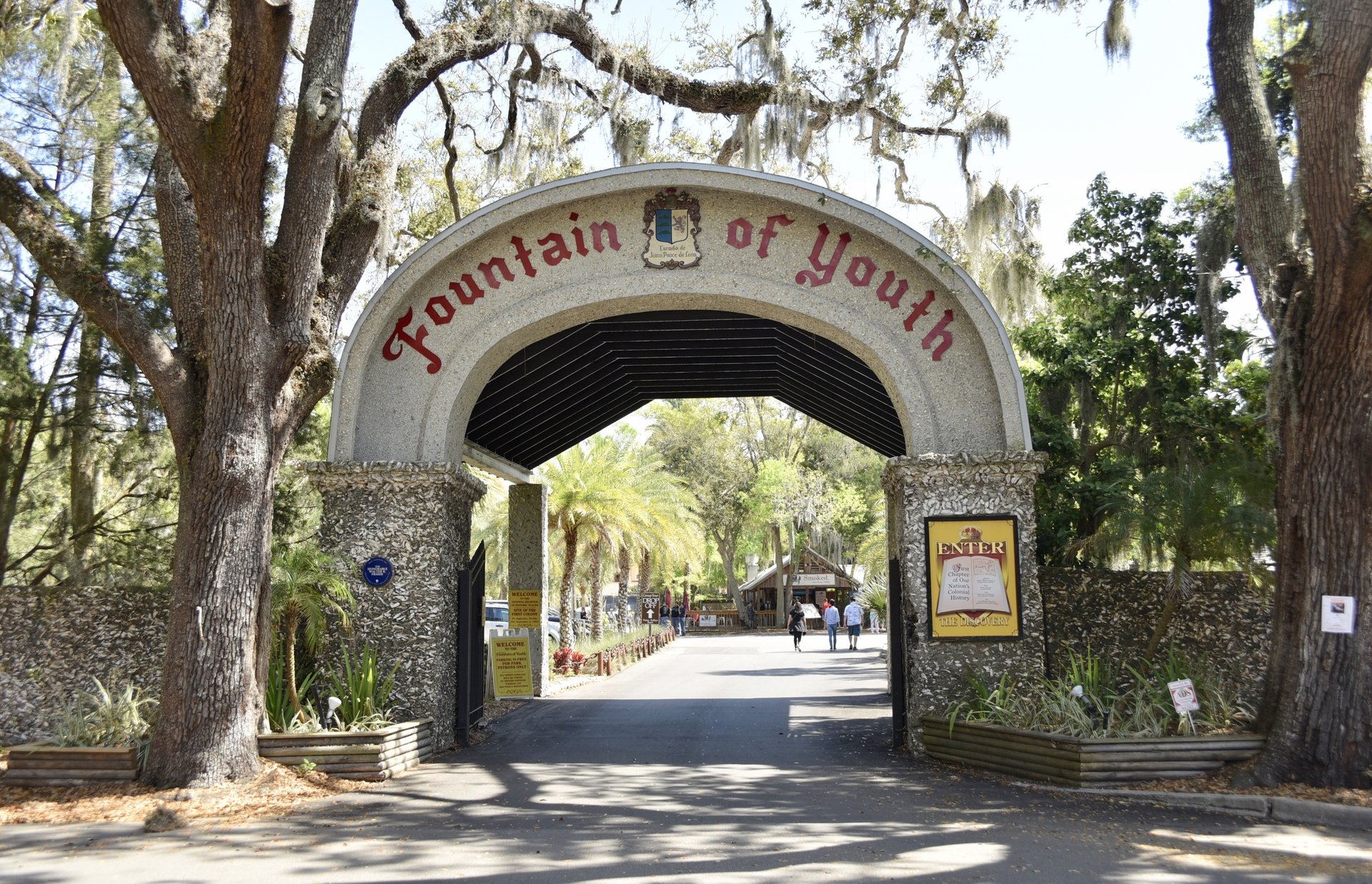
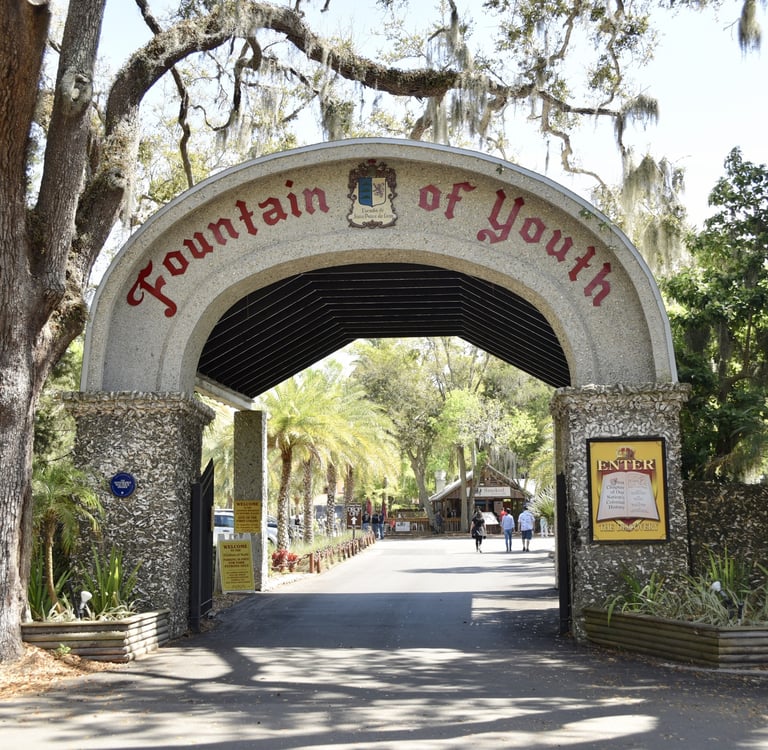
Quick Answer The Fountain of Youth — a magical spring said to restore youth to anyone who drinks from it — is Florida's oldest and most enduring legend, tied to Spanish explorer Juan Ponce de León's 1513 arrival on Florida's shores. There's just one complication: most historians believe Ponce de León was never actually searching for a Fountain of Youth. He was looking for land and wealth. The legend was attached to him later, grew for centuries, and eventually settled permanently in St. Augustine, where you can still visit the Fountain of Youth Archaeological Park and drink the water yourself. It tastes like sulfur. You will not feel younger. The history, however, is genuinely fascinating.
Table of Contents
The Legend Before the Legend: Where the Myth Actually Comes From
Who Was Ponce de León — and What Was He Actually Looking For?
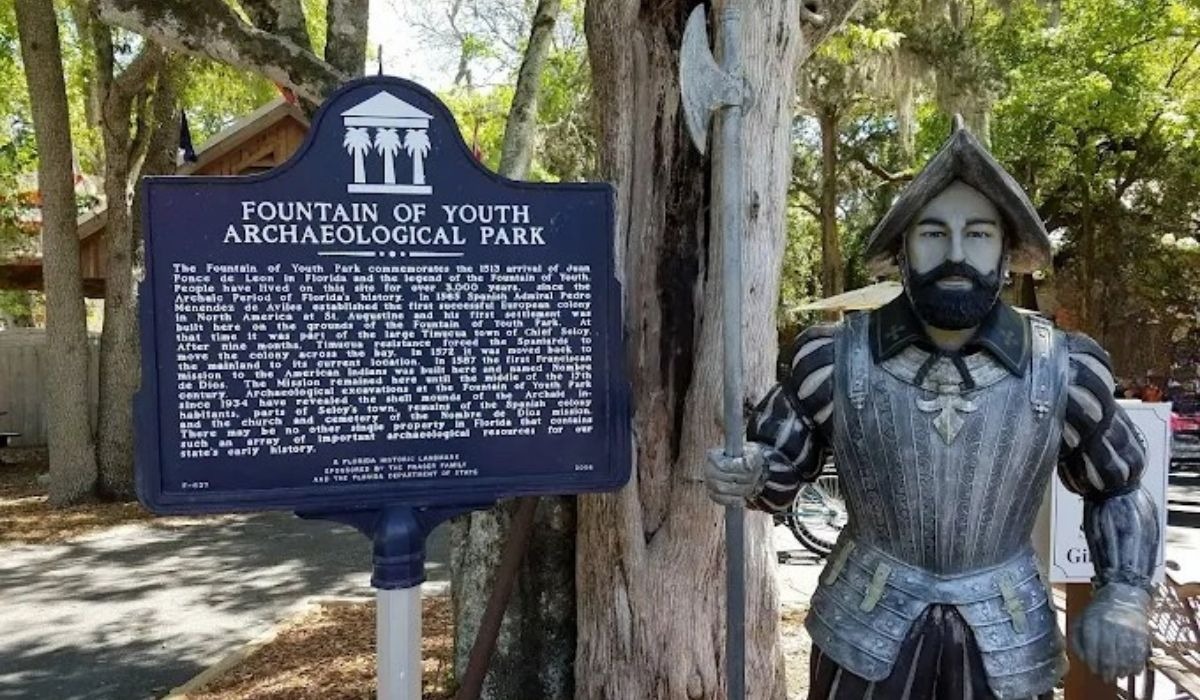
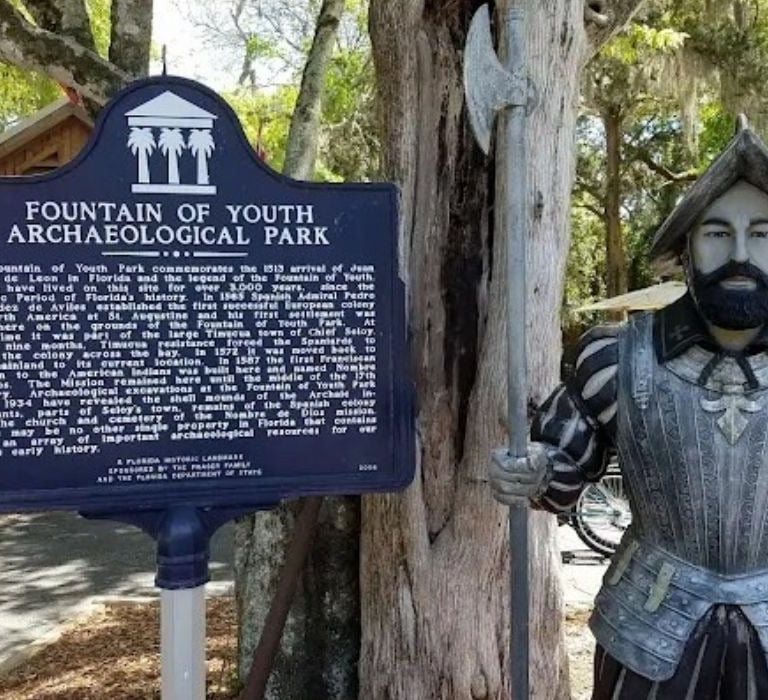
Ponce de León's Fountain of Youth Archaeological Park: What's Actually There
Florida Has Always Been Good at Selling a Dream
Before the theme parks, the retirement communities, the real estate brochures, and the tourism campaigns, Florida was selling something more fundamental: the idea that this place could give you something you couldn't get anywhere else. Warmth. Youth. A fresh start. The promise that arriving in Florida would change things.
That pitch is at least 500 years old. It started with a story about a spring.
The Fountain of Youth legend is probably the most famous thing about Florida's earliest European history, taught in schools, printed on postcards, referenced in advertisements, and celebrated in a 15-acre archaeological park on the waterfront in St. Augustine. It is deeply embedded in how Florida sees itself and how the rest of the world sees Florida.
It is also, at least in its most dramatic form, substantially a myth — and understanding where the myth came from, why it attached to Florida, and what the real history underneath it looks like is a much better story than the legend itself.
The Legend Before the Legend: Where the Myth Actually Comes From
The idea of a magical spring or body of water that restores youth is not a Florida invention. It is one of the oldest recurring themes in human mythology, appearing across cultures and centuries long before any European explorer set foot in the Americas.
The ancient Greek historian Herodotus wrote about a spring in Ethiopia whose waters were said to give Ethiopians their exceptional longevity. The Alexander Romance — a collection of legendary tales about Alexander the Great — includes a quest for the Water of Life. Prester John, the legendary Christian king whose mythical kingdom was sought by medieval European explorers, was said to rule near a Fountain of Youth. Similar traditions appear in Hindu texts, in Celtic mythology, in early Islamic literature. The human desire to find a place where time could be reversed is, apparently, universal and ancient.
The specific version of the legend that attaches to Florida emerged in the context of early Spanish exploration of the Caribbean and the Americas — an era of genuine geographical wonder, when Europeans were encountering lands that Europeans had never seen before and when almost anything seemed possible. Into that environment of possibility, stories of magical places flourished. The island of Bimini, somewhere in the Bahamas, was said to hold a spring with restorative waters. And the explorer who became associated with that story was Juan Ponce de León.
Florida Current Note The Fountain of Youth legend's deep roots across world cultures actually make it more interesting, not less. The fact that humans in ancient Greece, medieval Europe, and the pre-Columbian Americas all independently imagined some version of magical restorative waters says something about what people have always wanted. Florida just happened to become the place where that universal desire landed on the map.
Who Was Ponce de León — and What Was He Actually Looking For?
Juan Ponce de León was a Spanish conquistador born around 1474 in the Spanish region of Valladolid. He served as a soldier, sailed with Columbus on his second voyage to the Americas, became the first governor of Puerto Rico, and in April 1513 led an expedition that landed on the northeastern coast of what we now call Florida. He named it La Florida — Land of Flowers — because he arrived during the season of Easter, which the Spanish called Pascua Florida.
He was looking for land. Specifically, he was looking for new territories to claim for Spain, new populations to subjugate, and the island of Bimini, which was rumored to hold great wealth. His royal contract — the actual document from the Spanish Crown authorizing his expedition — makes no mention of any Fountain of Youth. His personal letters from the period contain no reference to a search for magical waters. His navigational logs describe coastlines and anchorages, not springs.
The connection between Ponce de León and the Fountain of Youth appears to have been constructed after his death, primarily by a Spanish historian named Gonzalo Fernández de Oviedo, who wrote in the 1530s that Ponce had been motivated by the search for a rejuvenating spring. Most historians now believe Oviedo was either embellishing, mistaken, or deliberately mocking Ponce de León — the account reads more like a sneer at a vain old man than a reliable historical record.
The legend grew over the subsequent centuries, fueled by writers, artists, and — after Florida was ceded to the United States in 1819 — by the promotional instincts of a young state eager to attract settlers and visitors. By the 19th century, the Fountain of Youth story was firmly attached to Florida, and by the 20th century it had an archaeological park built around it in St. Augustine. As History.com notes in its analysis of the myth, the legend tells us more about human hope than about anything Ponce de León actually did.


How Florida Got the Fountain of Youth Story
Even if Ponce de León wasn't searching for magical waters, his 1513 landing is historically significant for a reason that needs no embellishment: it was the first documented European contact with what would become the continental United States. He named Florida. He explored its coast. He returned in 1521 with colonists, was wounded in a skirmish with the Calusa people near present-day Charlotte Harbor, and died in Cuba from his injuries. The land he named outlasted him by centuries.
St. Augustine's connection to the legend is somewhat separate from Ponce's actual landing — historians generally believe he came ashore farther south, near present-day Melbourne or Cape Canaveral, not at St. Augustine. But St. Augustine has the stronger historical claim in another sense: it is the site of the oldest permanent European settlement in the United States, established in 1565 by Spanish admiral Pedro Menéndez de Avilés — 52 years after Ponce's first landing. The city itself is the real historical landmark.
The Fountain of Youth story attached itself to St. Augustine over time because St. Augustine needed it, and because a spring already existed there. By the early 20th century, the spring site had been developed into a tourist attraction. It remains one today, and the archaeological work done on the property over the decades has produced genuinely important findings about the Timucua people who lived there before Spanish arrival and about the early mission period — findings that have nothing to do with magical water but a great deal to do with real history.
Florida Current Take Florida has always been good at turning legend into location. The Fountain of Youth is the original version of that talent — a 500-year-old marketing move that created one of the state's most durable tourist draws. The fact that it's built on a historically significant archaeological site makes it better, not worse. You go for the legend. You stay for the actual history.

Ponce de León's Fountain of Youth Archaeological Park: What's Actually There
The park is located at 11 Magnolia Avenue in St. Augustine, on 15 waterfront acres along the Matanzas River. It is open daily from 9 a.m. to 6 p.m., with the last admission ticket sold at 5 p.m. Admission is $22.95 for adults, $20.95 for seniors, and $9.95 for children ages 6 to 12. Children under 5 enter free. Parking is free. Visit fountainofyouthflorida.com for current information and online ticket purchasing.
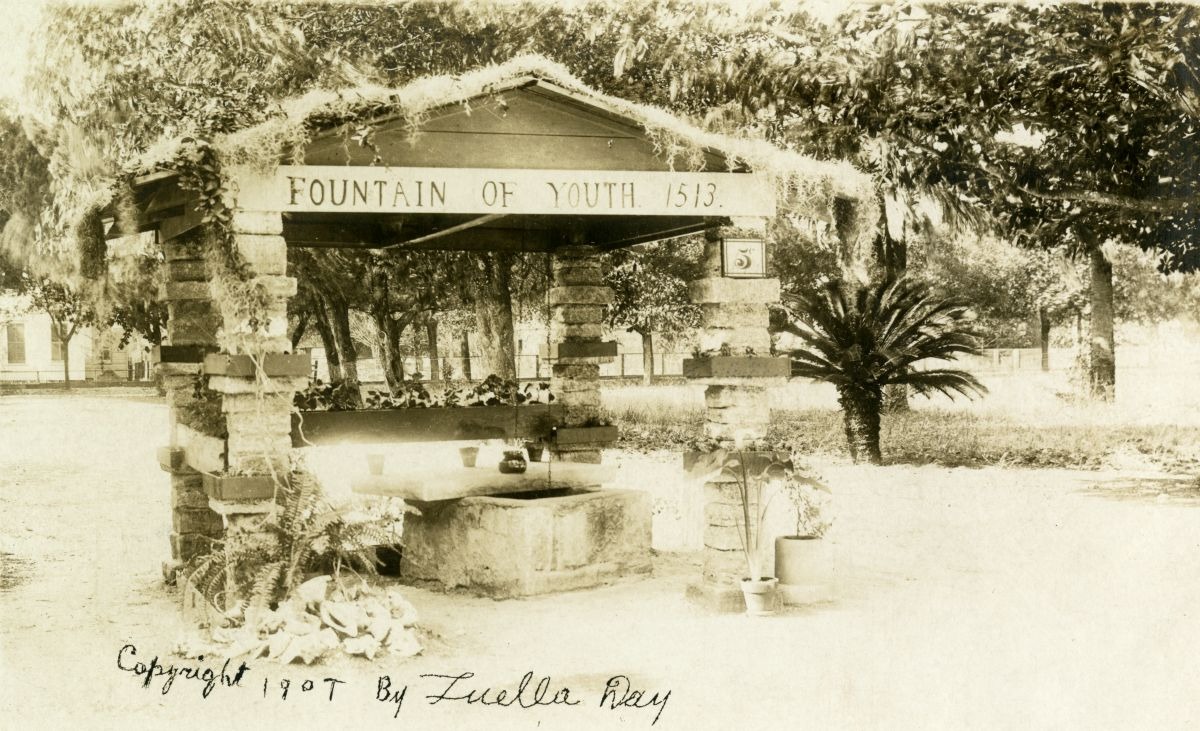
The Spring — Yes, you can drink the water. Guests line up at the spring house and drink from small cups of water drawn from the original spring on the property. Fair warning: it tastes like sulfur. Distinctly and unmistakably like sulfur. No one has reported feeling younger afterward, though visitors have been reporting that same non-result for well over a century and the line continues to form. Some experiences are worth having purely for the story you get to tell afterward.
The Archaeology — This is the genuinely significant part of the park. The site contains evidence of Timucua settlements predating Spanish arrival, the remains of one of the earliest Catholic missions established in North America, and Timucua burial grounds. The archaeological findings here have contributed meaningfully to the historical record of early Florida and early Spanish colonial activity. The park's exhibits walk visitors through the layered history of the site in a way that goes well beyond the legend.
Living History Demonstrations — The park offers cannon firings, historical reenactments of Spanish colonial life, and costumed interpreters who explain what the earliest European settlement of this region actually looked like.
The Planetarium — A small on-site planetarium offers shows about navigation and celestial observation, connecting visitors to the real tools Ponce de León and his contemporaries used to find their way across an ocean.
The Peacocks — Free-roaming peacocks wander the grounds. This is not historically significant. It is, however, delightful, and the peacocks have no opinions about the sulfur water.
For more on what to expect when visiting St. Augustine, our Florida tourist guide covers what first-time visitors should know about exploring the state's historic areas.
Is There a Real Fountain of Youth in Florida?
Depends on what you mean by the question.
If you mean a magical spring that reverses aging: no. The water at the park in St. Augustine is sulfurous groundwater. It is not harmful. It is not magical. It has been tested. People have been drinking it and not feeling younger for well over a century.
If you mean a reason why Florida has long attracted people who want a fresh start, a second act, a place where the weight of wherever they came from feels lighter: that is something else entirely, and the answer might genuinely be yes.
Florida is the state that people move to when they want to reinvent themselves — retirees starting the chapter they've looked forward to for thirty years, families seeking a different pace, people who simply decided that cold winters were optional and acted on that decision. The state's retirement communities are built around the idea that life doesn't slow down because you've reached a certain age — it just changes its shape. The year-round sun, the outdoor access, the social communities, the lower cost of living relative to the Northeast — these things are not magic, but their combined effect on people's health, activity levels, and general disposition is well-documented and genuinely meaningful.
Ponce de León may not have found his Fountain of Youth in Florida. But 65 million people visit the state every year, and several million more move here permanently, all chasing something. That feels like the legend landing somewhere close to true.

Fountain of Youth FAQ
Did Ponce de León really search for the Fountain of Youth in Florida? Most historians say no. His royal contract and personal correspondence make no mention of a Fountain of Youth. The connection appears to have been invented or embellished by later writers — primarily a Spanish historian named Oviedo, writing in the 1530s after Ponce's death. The legend grew over centuries, fueled by writers and the promotional instincts of a young Florida territory after 1819.
Where is the Fountain of Youth in Florida? The Fountain of Youth Archaeological Park is at 11 Magnolia Avenue in St. Augustine. Open daily 9 a.m. to 6 p.m., $22.95 for adults, free parking. You can drink from the spring. It tastes like sulfur. The archaeological sites on the property — Timucua burial grounds, early mission remains — are the genuinely significant historical features.
What does the Fountain of Youth water taste like? Sulfur. Distinctly and unmistakably sulfur. It is safe to drink in small amounts. It has not been documented to reverse aging in anyone. People drink it anyway, because this is Florida and some experiences are worth having for the story.
Is St. Augustine really the oldest city in the United States? Yes — founded in 1565 by Spanish admiral Pedro Menéndez de Avilés, making it the oldest continuously occupied European-established settlement in the continental United States. Older than Jamestown by 42 years. The city doesn't need the Fountain of Youth legend to be historically significant. It already is.
Is the Fountain of Youth Archaeological Park worth visiting? For history lovers and families, yes. The Timucua archaeological sites, historical demonstrations, planetarium, cannon firings, and free-roaming peacocks make it a genuine one-to-two-hour experience. Drink the water. Take the picture. Read the actual history. It's a better story than the legend.
Where did Ponce de León actually land in Florida? Historians believe most likely somewhere along Florida's northeast Atlantic coast — possibly near present-day Melbourne or Cape Canaveral — not at St. Augustine. The exact landing site remains debated. He named the land La Florida, explored portions of the coast, and returned to Cuba. He came back in 1521 with colonists, was wounded in battle with the Calusa people near present-day Charlotte Harbor, and died in Cuba from his wounds.
How old is the Fountain of Youth legend? Ancient. Versions of the restorative waters myth appear in ancient Greek texts, medieval Alexander legends, and cultures across the globe — long before Ponce de León was born. The specific Florida version dates to the 16th century, though it was likely embellished after Ponce's death. The story as most people know it today is largely a product of 19th and 20th century popular culture and Florida tourism.
Sources
Fountain of Youth Archaeological Park — fountainofyouthflorida.com
History.com — "The Myth of Ponce de León and the Fountain of Youth" — history.com
National Geographic — "Finding the Mythical Fountain of Youth" — nationalgeographic.com
Wikipedia — "Fountain of Youth" — en.wikipedia.org
MyNews13 — "St. Augustine's Fountain of Youth Park Offers More Than Just a Legendary Sip" — mynews13.com
Florida's Historic Coast — floridashistoriccoast.com
Ghosts & Gravestones St. Augustine — ghostsandgravestones.com
Recommended Reading
Is Florida Safe for Tourists? What to Know Before You Go
Tarpon Springs: Florida's Sponge Capital and the Greek Town That Time Forgot to Change
Walt Disney's Big Florida Secret: How He Changed the Sunshine State Forever
Information current as of June 2026. Admission prices and park hours are subject to change — verify current information at fountainofyouthflorida.com before visiting.
Florida Current covers weather, lifestyle, outdoor life, and everything that comes with living in the Sunshine State. Browse our Florida Living section for regional guides, seasonal activity calendars, retirement guides and practical advice from people who actually live here.
Florida native Luana B. Gann brings more than 30 years of publishing, editing, and journalism experience to Florida Current. With a deep appreciation for the Sunshine State's culture, lifestyle, and ever-changing landscape, she is dedicated to helping readers discover what's new, noteworthy, and uniquely Florida.
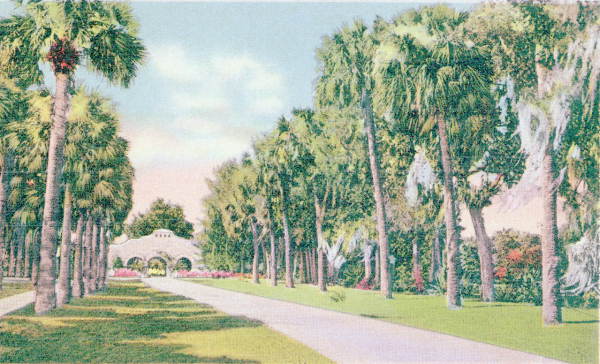
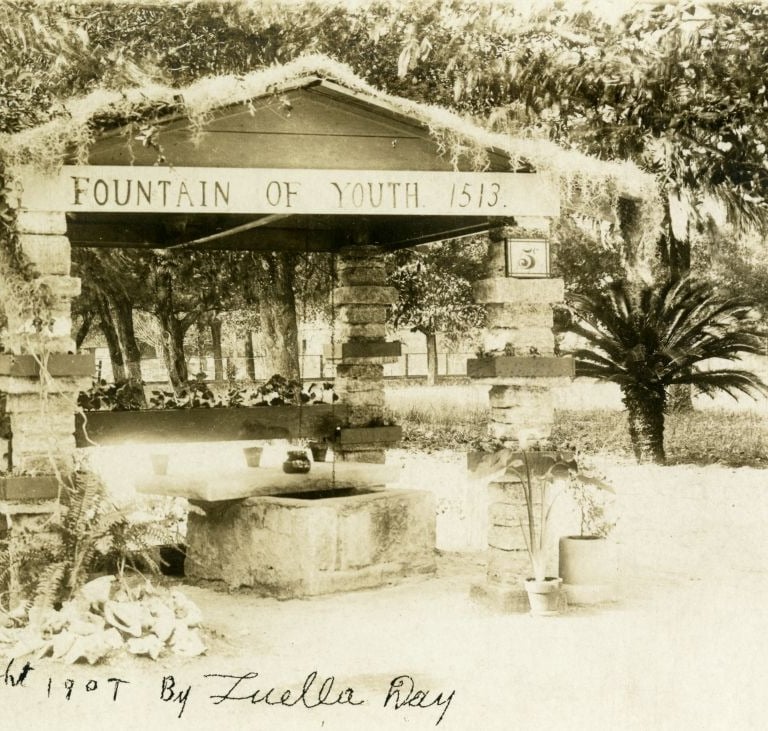
Old postcard of entrance
CONTACT
Reach out for questions or feedback anytime.
contact@FLAcurrent.com
© 2026. All rights reserved.