Walt Disney's Big Florida Secret: How He Changed the Sunshine State Forever
Luana B. Gann, Editor
6/18/2026
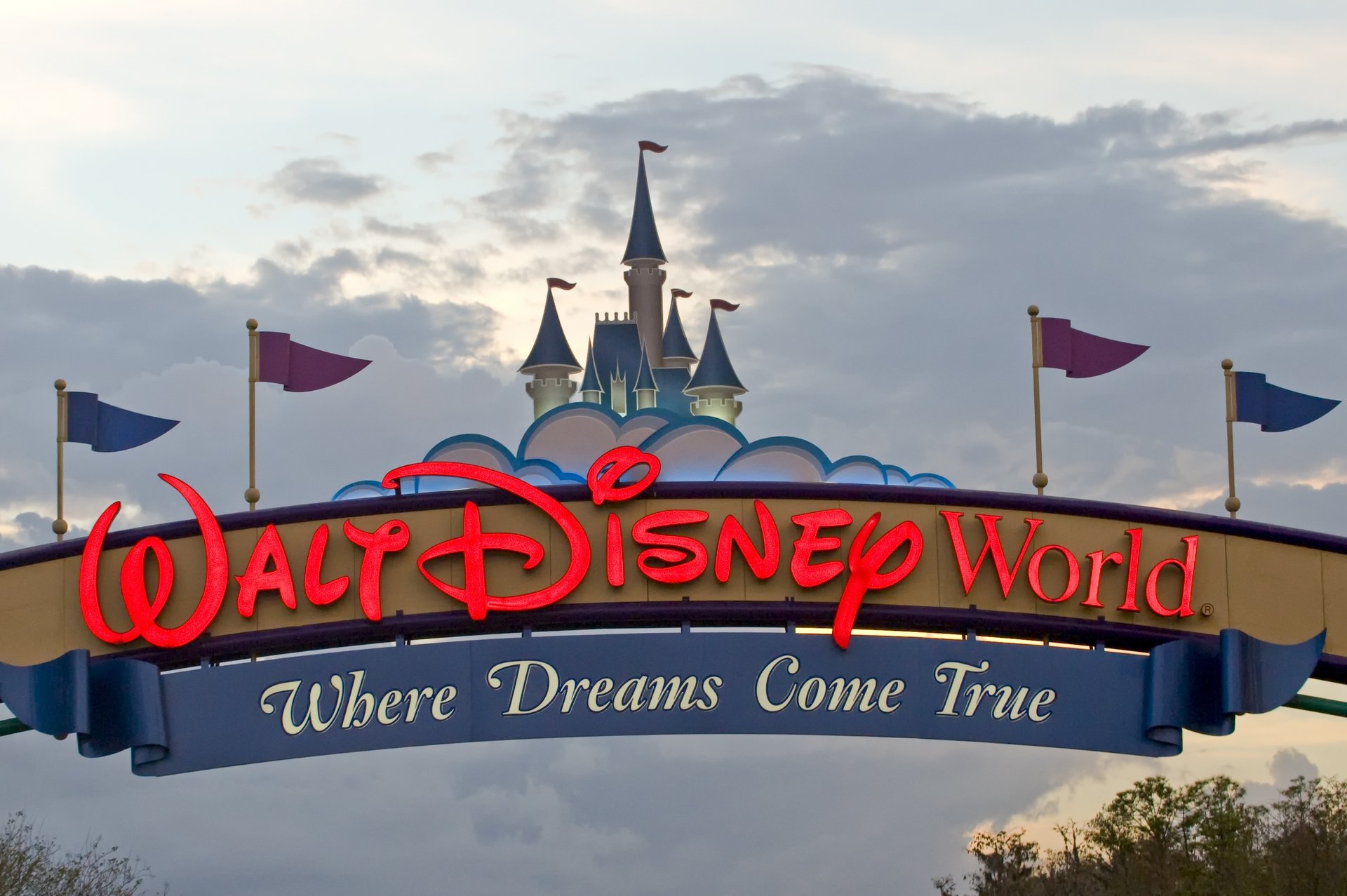
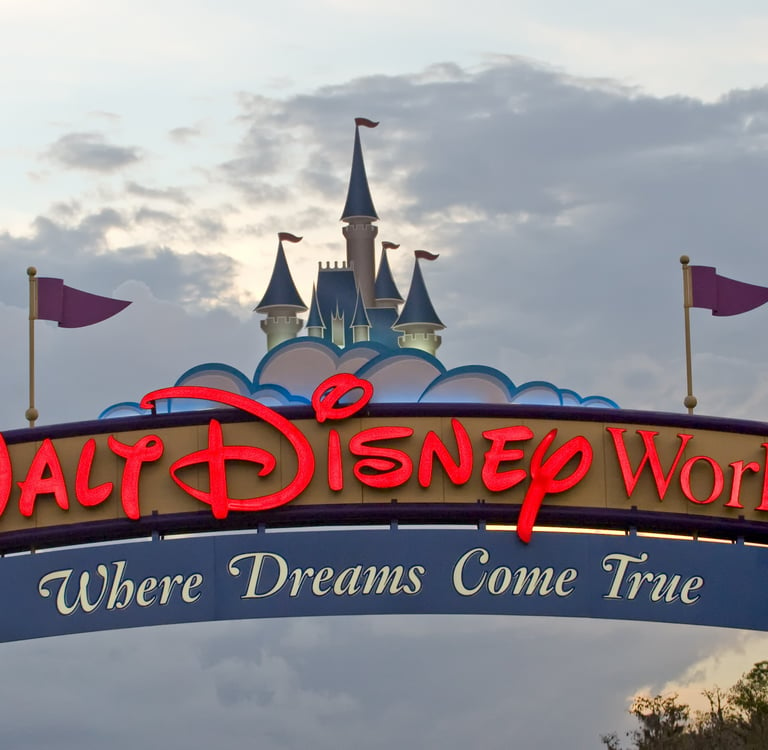
Quick Answer Walt Disney was born in Chicago and raised in Missouri — he was not a Florida native. He also died in 1966, five years before Walt Disney World opened its gates. And yet Walt Disney transformed Florida more profoundly than almost anyone who ever lived here. Beginning in the early 1960s, Disney secretly purchased roughly 27,440 acres of Central Florida swampland using shell companies and code names, then negotiated an unprecedented self-governing district from the state legislature. He never got to see what he built. Florida got it anyway.
Table of Contents
He Wasn't From Here — But Florida Would Never Be the Same Without Him
Let's be honest about the facts right up front: Walt Disney was born on December 5, 1901, in Chicago, Illinois. He grew up in Marceline, Missouri. He built his studio in Burbank, California. He opened Disneyland in Anaheim. He died in Los Angeles on December 15, 1966 — before a single orange grove had been cleared in what would become Walt Disney World.
And yet.
There is a strong argument to be made that no single individual has had a greater impact on the state of Florida than this man who never lived here. Walt Disney World Resort covers approximately 40 square miles in Central Florida — about twice the size of Manhattan. It draws roughly 58 million visitors per year, making it the most visited theme park destination on earth. It has directly created approximately 75,000 jobs. It generates tens of billions of dollars in economic activity for the state of Florida annually. The entire tourism infrastructure of Central Florida — the hotels, restaurants, highways, airports, attractions, and convention facilities that employ hundreds of thousands of people — exists in very large part because of what Walt Disney quietly set in motion in the early 1960s.
And he did it in secret, with a fake name, buying swampland that no one else wanted, using a plan so audacious that even his own employees weren't entirely sure what they were working on.
Florida Current Note Walt Disney's connection to Florida isn't just about a theme park. It's about vision on a scale that is genuinely rare in American history — and about what happens when someone refuses to repeat their own mistakes.
The Disneyland Problem: Why Walt Needed to Try Again
Disneyland opened on July 17, 1955, in Anaheim, California, and was an immediate phenomenon. But within a few years, Walt Disney had a problem — one that he watched play out from his office every day.
Disneyland occupied 160 acres. Around it, outside Disney's control, developers had built a dense ring of motels, fast food restaurants, souvenir shops, and parking lots. The area around the park was garish and chaotic, and there was nothing Disney could do about it. He owned the park. He didn't own the surrounding land. He hadn't moved fast enough, and now he was hemmed in.
Walt Disney was not a man who made the same mistake twice.
When he began thinking about a second park — a larger, grander project somewhere on the East Coast — the first requirement was land. Lots of it. Enough to build not just a theme park but an entire self-contained environment, with enough buffer on all sides that no one could ever pull the Anaheim move on him again. He wanted land he could control completely, with room to expand, room to breathe, and room to build the city he was already envisioning.
He also had specific criteria for the location. He wanted it within a day's drive of the major population centers of the East Coast. He wanted warm weather year-round. He wanted access to major highways. He wanted an airport nearby. He sent teams of researchers across twelve states.
In 1963, a small plane flew over the flat, swampy, undeveloped landscape of Central Florida, and the man looking out the window liked what he saw.


Project X: The Greatest Land Secret in Florida History
What happened next is one of the most remarkable stories in American real estate history.
Walt Disney did not want anyone to know he was buying land in Central Florida. The moment his name was attached to a purchase, land prices would skyrocket. He had seen it happen elsewhere. So he did not attach his name. He attached fake ones.
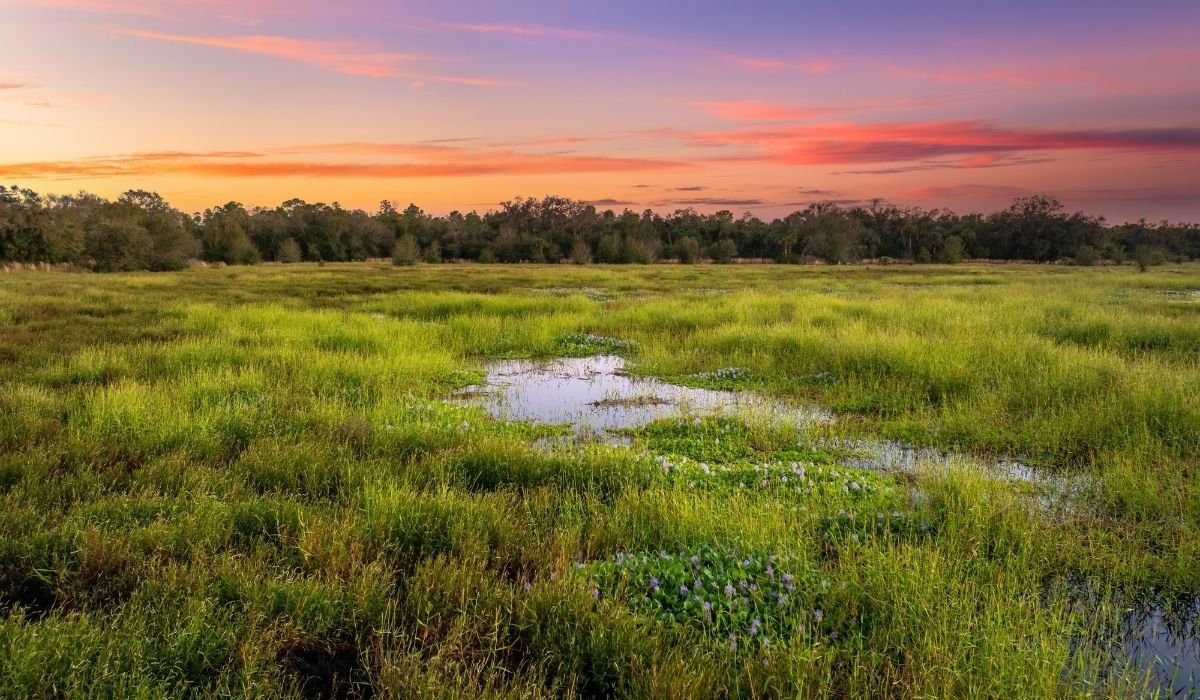
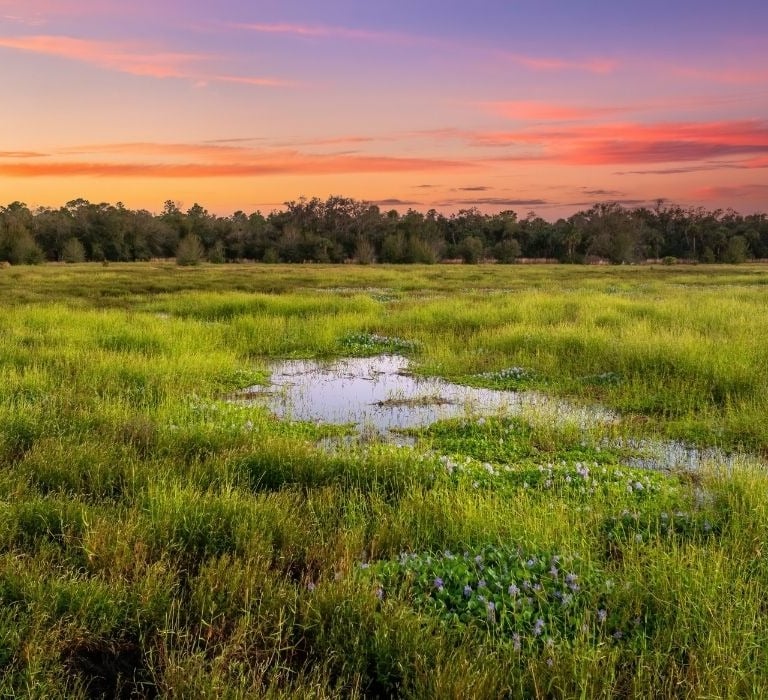
Beginning in late 1963 and accelerating through 1964 and 1965, Walt Disney Productions began buying land in Orange and Osceola Counties through a series of shell companies with innocuous, generic names. Bay Lake Properties. Reedy Creek Ranch Lands. Tomahawk Properties. Latin-American Development and Management Corporation. Each company bought separate parcels, and none of them appeared — on paper — to have anything to do with each other, or with anyone famous.
The operation, internally called "Project X" (and sometimes "Project Florida"), was run by a Disney executive named Robert Price Foster. Participants were given code names. Walt Disney himself was known, appropriately enough, as "the Principal." Meetings were held in secret. Documents were carefully managed. For approximately 18 months, Disney quietly assembled one of the largest private land purchases in Florida history — roughly 27,440 acres in total — at prices averaging around $180 to $200 per acre. The total cost was approximately $5 million.
For reference: that land today is worth billions.
The secret held until October 1965, when the Orlando Sentinel broke the story. Reporter Emily Bavar, suspicious of the strange pattern of land purchases by unknown corporations, began digging and eventually identified the buyer. When the story ran, land prices in the surrounding area shot up overnight. Disney had already bought what he needed.
On November 15, 1965, Walt Disney and his brother Roy held a press conference with Florida Governor Haydon Burns in Orlando. The $400 million project — later estimated to cost far more — was officially announced. The reaction in Florida was electric.
Florida Current Take The total land Disney purchased — 27,440 acres — is almost exactly the same size as San Francisco. Most of it is still undeveloped. Disney has consistently used undeveloped land as a buffer, and the company retains the right to build on it as needed. The orange groves and cypress swamps of 1965 are now partially a world-famous resort, partially wildlife preservation areas, and partially future development parcels that have been sitting there for six decades.
The Reedy Creek Deal: Disney's Own Government
Buying the land was only half of what Walt Disney needed. The other half was control — a level of governmental authority over his property that no private company in America had ever been granted before.
Disney did not want to be subject to the building codes, zoning restrictions, and regulatory approvals of Orange or Osceola County. He wanted to be able to build his own roads, his own utilities, his own water systems, his own transportation networks — without waiting for county approvals that might be slow, political, or subject to change with every election cycle. He wanted, in essence, his own government.
He got it.
In 1967, the Florida Legislature — persuaded by the economic development argument and by Disney's political leverage — created the Reedy Creek Improvement District (RCID). This special governmental entity gave Disney extraordinary powers: the ability to levy taxes, issue bonds, build roads and utilities, operate an airport if it chose to, and govern the land within the district boundaries with the kind of authority normally reserved for a municipality. It was — and remains — one of the most unusual governmental arrangements in American history.
The RCID allowed Disney to construct the entire infrastructure of Walt Disney World — the underground utility corridors beneath the Magic Kingdom, the network of roads and bus systems, the monorail, the drainage and water management systems — without the regulatory delays that would have paralyzed any other developer. It was extraordinarily efficient, and it built something that has never been fully replicated anywhere else.
In 2023, the Florida Legislature restructured the district in a political dispute between Governor DeSantis and the Disney company. The RCID was renamed the Central Florida Tourism Oversight District and its governing board was changed from Disney landowner-controlled to governor-appointed. Legal battles followed. The details of that chapter are still being written, but the physical and economic legacy of the original deal is permanent.

Walt's Death and the Dream His Brother Finished
Walt Disney died on December 15, 1966 — just over a year after the Florida project was announced publicly and while construction planning was still underway. He died of lung cancer at 65. He never saw so much as a steel beam go up in Central Florida.
His brother Roy, who had long been the financial half of the partnership while Walt was the creative half, came out of planned retirement to see the project through. Roy Disney oversaw the construction of what became the Magic Kingdom and the rest of the original Walt Disney World Resort. He insisted, over the suggestions of some colleagues, that the park be named "Walt Disney World" — not Florida Disney World, not Disney World, but Walt Disney World — to make sure his brother's name was on what his brother had imagined.
The Magic Kingdom opened on October 1, 1971. Roy Disney, who had dedicated the park at an opening ceremony on October 25, 1971, died on December 20, 1971 — just weeks later. Both Disney brothers gave the project their last years. Neither saw what it would become.
What it became is this: the most visited theme park destination on earth, an economic engine for the state of Florida, a community employer of 75,000 people, and a cultural landmark so embedded in the American experience that visiting it at some point feels less like a choice than an inevitability for most Florida families.
Florida Current Reminder Walt Disney World is in Lake Buena Vista, Florida — not Orlando, though Orlando is the nearest major city and the name most people use as a shorthand. The resort straddles the Orange-Osceola county line. The Magic Kingdom address is Lake Buena Vista, FL 32830.
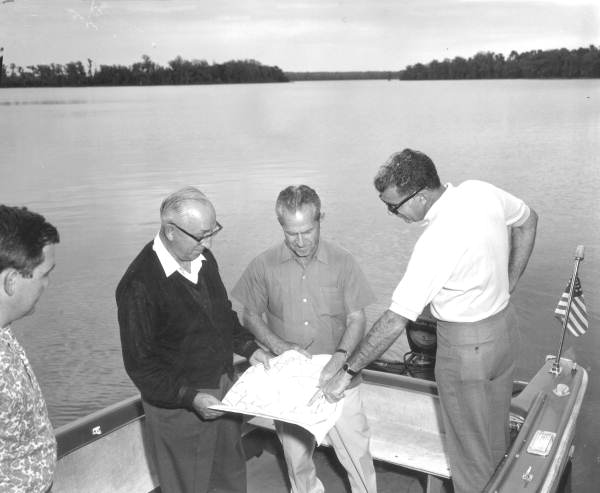
By Unknown photographerFlorida Memory - Roy Disney inspecting property in Florida
What Walt Disney Gave Florida: The Numbers
If you're planning a trip yourself, our Florida tourist safety guide covers what first-time visitors most need to know.
Walt Disney FAQ
Was Walt Disney born in Florida? No. Walt Disney was born on December 5, 1901, in Chicago, Illinois, and grew up in Marceline, Missouri. His connection to Florida was through Walt Disney World, which he conceptualized and set in motion but never lived to see open. He died on December 15, 1966, five years before the Magic Kingdom opened.
Did Walt Disney ever visit Florida? He visited during the planning stages and flew over the Central Florida site to evaluate it, but he died in December 1966 before construction was meaningfully underway. He never saw the resort being built. His brother Roy Disney oversaw the final construction and presided at the opening in 1971.
How did Disney buy so much Florida land in secret? Disney used a series of shell companies with generic names — Bay Lake Properties, Reedy Creek Ranch Lands, Tomahawk Properties, and others — to purchase approximately 27,440 acres without revealing the buyer. The operation was internally called "Project X" and used code names for participants. An Orlando Sentinel reporter broke the story in October 1965, shortly before Disney publicly announced the project. By then, Disney had already bought what he needed.
What was the Reedy Creek Improvement District? A special governmental entity created by the Florida Legislature in 1967 at Disney's request, giving Walt Disney Productions extraordinary governmental powers over the resort property — essentially functioning as its own municipality. It allowed Disney to build the resort infrastructure without typical county regulatory delays. In 2023, it was restructured by the Florida Legislature, renamed the Central Florida Tourism Oversight District, with a governor-appointed rather than Disney-controlled governing board.
How much land does Walt Disney World own in Florida? Approximately 40 square miles — roughly 25,000 to 30,000 acres in Orange and Osceola Counties. Only about a third of the land has been developed; the rest remains as buffer, conservation areas, or undeveloped parcels. The full property is approximately twice the size of Manhattan.
Who actually opened Walt Disney World since Walt had died? Walt's brother Roy O. Disney came out of planned retirement to oversee completion of the project. Roy insisted the park be named "Walt Disney World" — specifically including Walt's name — to honor his brother's vision. He presided at the dedication on October 25, 1971, and died on December 20, 1971, just weeks after the park opened.
What is Walt Disney World's economic impact on Florida? Approximately 75,000 direct Florida employees, roughly 58 million annual visitors across its four parks, and tens of billions of dollars in direct and indirect economic activity per year. The entire tourism infrastructure of Central Florida — hotels, highways, airports, attractions — exists in very large part because of what Disney built in what was once a swamp.
Sources
D23 (Official Disney Fan Club) — "How Walt Disney World Found Its Home in Florida" — d23.com
WDW Radio — "How to Buy 27,000 Acres of Land and No One Notice" — wdwradio.com
WESH 2 Orlando — "Walt Disney Used Code Names, Shell Corporations to Buy Land" — wesh.com
Tallahassee Democrat — Florida Legislature and Reedy Creek restructuring coverage
Orange County Regional History Center — ochistory.org
Florida Department of Commerce — economic impact data
Recommended Reading
Florida's Best Retirement Cities: Comparing Affordability, Healthcare, and Lifestyle
Tarpon Springs: Florida's Sponge Capital and the Greek Town That Time Forgot to Change
Information current as of June 2026.
Florida Current covers weather, lifestyle, outdoor life, and everything that comes with living in the Sunshine State. Browse our Florida Living section for regional guides, seasonal activity calendars, retirement guides and practical advice from people who actually live here.
Florida native Luana B. Gann brings more than 30 years of publishing, editing, and journalism experience to Florida Current. With a deep appreciation for the Sunshine State's culture, lifestyle, and ever-changing landscape, she is dedicated to helping readers discover what's new, noteworthy, and uniquely Florida.

CONTACT
Reach out for questions or feedback anytime.
contact@FLAcurrent.com
© 2026. All rights reserved.