Florida Driver's License & ID Requirements: Simplified
Luana B. Gann, Editor
6/5/2026


Quick Answer — Florida Driver's License Requirements To get a Florida driver's license for the first time, you'll need to pass a vision screening and a 50-question knowledge test (80% passing score), complete a state-approved Drug & Alcohol course, and pass a behind-the-wheel driving test. New residents with a valid out-of-state license must transfer to a Florida license within 30 days of establishing residency. REAL ID (marked with a gold star) requires additional documentation and has been required for domestic air travel since May 2025.
Table of Contents
Getting Your Learner's Permit: The First Step for New Drivers
From Permit to Full License: Tests, Requirements & GDL Rules
REAL ID vs. Standard License: Which One Do You Actually Need?
Whether you've just arrived from another state, you have a teenager who's desperate for their freedom (and their own set of wheels), or you simply need to sort out your official Florida ID situation — you've landed in the right place.
The Florida Department of Highway Safety and Motor Vehicles (FLHSMV) handles all driver licenses and state ID cards in the Sunshine State. The process is straightforward once you know what you're doing, but between the paperwork checklist, the knowledge test, the Drug & Alcohol course, and the REAL ID question (and oh yes — there is always a REAL ID question), it helps to have someone walk you through it before you show up at the tax collector's office holding the wrong documents.
That's us. Let's walk.
Who Needs a Florida Driver's License — and When
New to Florida? You Have 30 Days.
If you've recently moved to Florida and have a driver's license from another state, you don't get to coast on your old license forever. Florida law requires new residents to obtain a Florida driver's license within 30 days of establishing residency.
What counts as "establishing residency?" The FLHSMV considers you a Florida resident when you:
Register to vote in Florida
Register a vehicle in Florida
Enroll children in a Florida public school
File for a Florida Homestead Exemption
Accept employment in Florida
Live in Florida for more than 6 consecutive months
In other words: if Florida is your home, Florida wants you driving on a Florida license. And honestly, with the snowbird population, they've heard every creative interpretation of "temporary." Don't test it.
First-Time Drivers (Any Age)
If you've never held a driver's license anywhere — whether you're 16 or 46 — you'll go through Florida's full new driver process: the Drug & Alcohol Education course, the knowledge test, and the behind-the-wheel skills test. The steps are the same regardless of age; only the Graduated Driver License (GDL) restrictions differ for younger drivers.
Florida ID Cards (Non-Drivers)
Not everyone drives, and Florida has you covered. The Florida ID Card is available to any Florida resident who doesn't hold a Florida driver's license — seniors, non-drivers, minors, and anyone who needs official government-issued photo ID. The documentation requirements mirror those for a driver's license, and a REAL ID version is available (more on that below).
Florida Current note: If you have a teenager who isn't ready to drive but needs a government-issued photo ID for school trips, sports, or travel, the Florida ID card is your answer — and it's the same gold-star REAL ID process if you want one that works for domestic air travel.

Getting Your Learner's Permit: The First Step for New Drivers
The Florida Learner's License at a Glance
If you're under 18, or if you're an adult who has never held a driver's license before, a learner's license (learner's permit) is your starting point. Here's what's required:
Step 1: Complete the Drug & Alcohol (TLSAE) Course First
Before you do anything else — before the knowledge test, before you set foot in a tax collector's office — Florida requires first-time driver's license applicants of any age to complete the Traffic Law and Substance Abuse Education (TLSAE) course, commonly called the Drug & Alcohol course or DATA test.
Length: 4 hours (typically completed in one sitting)
Format: Available online through state-approved providers — you can do it from your couch in pajamas, which frankly seems like a reasonable reward for sitting through 4 hours of traffic law
Cost: Approximately $30–$50 through approved online providers
Certificate validity: 3 years from completion date
Where to find approved providers: flhsmv.gov → Driver Licenses → First Time Applicants
Keep your completion certificate — you'll need to present it when applying for your permit.
Step 2: Pass the Vision Screening
Florida requires a minimum of 20/40 vision in at least one eye (with or without correction) and a field of vision of at least 130 degrees. The vision screening is done at the tax collector's office when you apply.
If you wear glasses or contacts, bring them. If you have corrective lenses, your license will note that they're required.
Step 3: Pass the 50-Question Knowledge Test
The Florida knowledge test is a 50-question multiple-choice exam covering:
Florida traffic laws
Road signs and their meanings
Safe driving practices
DUI laws and consequences
Sharing the road with motorcycles, bicycles, and pedestrians
To pass: You must answer at least 40 questions correctly — an 80% score.
The test is divided into two parts:
Road Signs: 20 questions (must get 15 correct — 75%)
Traffic Laws: 30 questions (must get 25 correct — 83%)
Both parts must be passed. If you fail one section, you only retake that section (not the entire test) — but a retake fee applies.
Study resource: The Florida Driver's Handbook is your bible here. Download it free from flhsmv.gov. It covers everything on the test, organized by the same categories as the exam. Read it. Actually read it. Don't just skim it the night before.
Florida Current tip: The road signs section trips people up more than you'd expect. "I know what a yield sign looks like" is a confidence trap — Florida tests the meaning and required response, not just recognition. Know what you're legally required to do at each sign, not just what it looks like.
The test is available in multiple languages at FLHSMV-authorized offices. Spanish, Creole, Portuguese, and several others are offered — check with your specific location.
Step 4: Apply for Your Learner's License
Bring the following to your county's Tax Collector office (or an FLHSMV service center):
Proof of identity (see the Documents section below)
Social Security Number proof
Two proofs of Florida residential address
TLSAE/Drug & Alcohol course completion certificate
Payment for the permit fee (~$25)
If under 18: A parent or legal guardian must be present to sign the application
Minimum age for a learner's license in Florida: 15 years old.


From Permit to Full License: Tests, Requirements & GDL Rules
For Drivers Under 18: Florida's Graduated Driver License (GDL) System
Florida uses a Graduated Driver License (GDL) system for younger drivers — a structured approach that phases in full driving privileges as teens gain experience. It's not just bureaucracy; states with GDL systems consistently show lower teen traffic fatality rates. Here's how it works:
Phase 1: Learner's License (Age 15–16)
Once you have your permit, you must:
Requirement - Details
Minimum holding period
12 months — no exceptions, no shortcuts
Supervised driving hours
50 total hours
Nighttime driving (required)
10 of the 50 hours must be at night
Supervision
Must be accompanied by a licensed driver age 21+ at all times
Driving restrictions
No driving between 10 PM – 6 AM (unsupervised)
Parents must certify the 50 hours in writing. The FLHSMV does not verify these hours independently, but falsifying the certification carries legal consequences — and honestly, 50 hours of practice makes for a dramatically safer new driver. The night driving requirement exists because nighttime driving is genuinely a different skill.
Phase 2: Restricted License (Age 16–18)
After holding your permit for 12 months and completing the 50 supervised hours, you can apply for a Class E license — Florida's standard passenger vehicle license — with some restrictions still in place:
Drivers age 16–17:
No driving between 11 PM and 6 AM (unsupervised) — with exceptions for going to/from work or school, or if accompanied by a licensed adult 21+
Passenger restriction (first 12 months after licensing): No more than one passenger under age 18 in the vehicle who is not a family member
Drivers age 17 (after 12 months with restricted license):
Nighttime restriction changes: no driving between 1 AM and 5 AM (unless with parent/guardian or going to/from work
These restrictions lift progressively as the driver ages into the full unrestricted license at 18.
The Behind-the-Wheel Skills Test
To earn your Class E license, you must pass a driving skills test administered by a licensed FLHSMV examiner. The examiner will test your ability to:
Start, stop, and steer safely
Make turns (left and right)
Change lanes
Back up in a straight line
Parallel park (or three-point turn, depending on test location)
Respond appropriately to traffic signs, signals, and road markings
Drive at appropriate speeds
Before the test, the examiner will inspect your vehicle. It must have:
Valid registration
Current Florida insurance
Working horn, headlights, turn signals, brake lights, and windshield wipers
Working emergency brake
If your vehicle fails the safety inspection, the test will be rescheduled. Not delayed — rescheduled. Don't show up in a car with a busted tail light.
Common reasons people fail the Florida driving test:
Rolling stops at stop signs (a complete stop means completely stopped, not "mostly stopped")
Failure to check mirrors and blind spots before lane changes
Improper speed management
Not yielding properly to pedestrians
Drifting out of lane during turns
For First-Time Adult Applicants (18+)
If you're 18 or older and have never held a driver's license, you'll complete the same process — TLSAE course, knowledge test, and behind-the-wheel skills test — but without the GDL holding period or hour requirements. You can move from permit to license as soon as you're ready to test.

Transferring Your Out-of-State License to Florida
The 30-Day Clock Is Real
This is the section for the 847,000+ people who move to Florida every year. Welcome — now let's get you legal.
You have 30 days from establishing Florida residency to transfer your out-of-state driver's license to a Florida license. This is not a recommendation. It's state law.
The good news: if you have a valid license from another U.S. state, the transfer process is streamlined. In most cases, you will NOT need to:
Retake the knowledge test
Retake the behind-the-wheel driving test
Complete the Drug & Alcohol/TLSAE course
You WILL need to:
Pass a vision screening
Present the required documentation (see below)
Surrender your out-of-state license
Pay the applicable fee
Decide whether you want a standard or REAL ID license (see next section)
What If My Out-of-State License Is Expired?
If your license expired less than 12 months ago from another U.S. state, Florida typically still allows a direct exchange without requiring tests — but contact your local Tax Collector's office to confirm, as policies can vary by circumstance.
If your license has been expired for more than 12 months, you may be required to complete the full knowledge and/or skills testing process. Check with FLHSMV before your appointment.
International Licenses
If you hold a driver's license from a foreign country:
A valid foreign license may allow you to drive in Florida temporarily as a visitor
To become a Florida resident with a foreign license, you will generally need to pass the full knowledge test and may need to take the behind-the-wheel skills test
Certain countries have reciprocity agreements — Canada, for example, has a fairly smooth transfer process
Contact FLHSMV directly for country-specific guidance
Commercial Driver's Licenses (CDL)
Florida CDL transfers follow federal guidelines and have additional medical requirements, endorsement testing, and skills test components not covered in this article. If you're transferring a CDL from another state, visit flhsmv.gov → Commercial Driver Licenses for the specific requirements.


REAL ID vs. Standard License: Which One Do You Actually Need?
The Short Answer
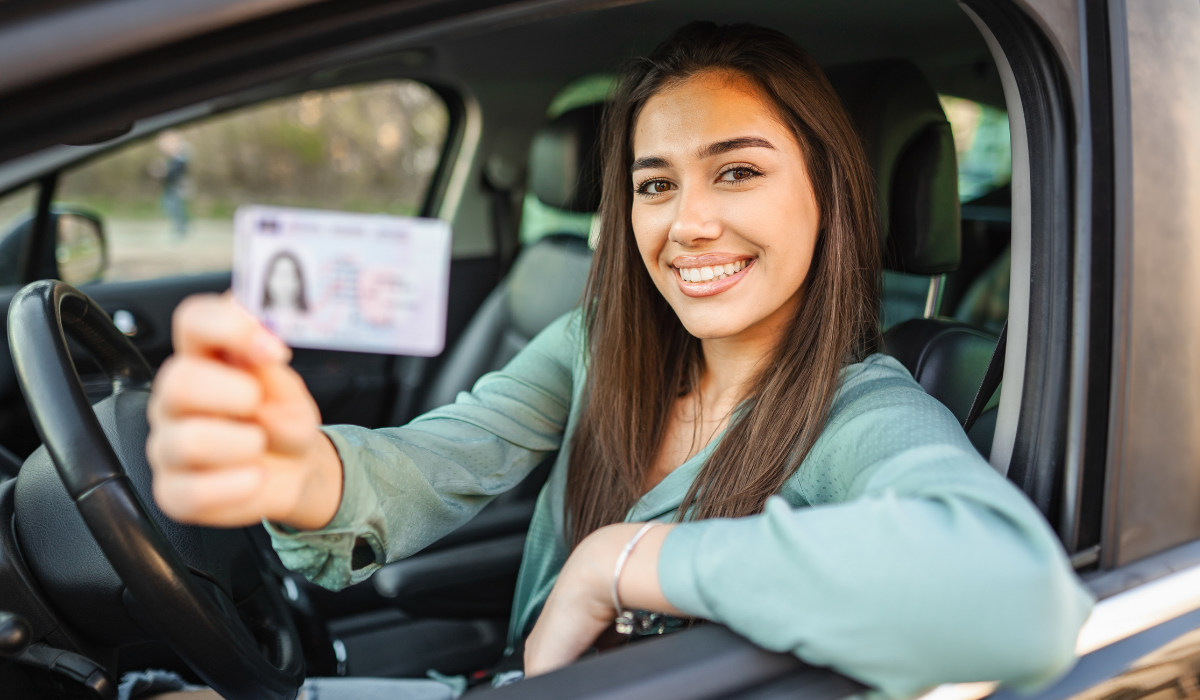
If you ever fly domestically within the United States, you need a REAL ID — or a U.S. passport. As of May 7, 2025, TSA requires REAL ID-compliant identification at airport security checkpoints for domestic flights. The days of breezing through with a standard state ID on domestic routes are over.
Florida REAL IDs are marked with a gold star in the upper right corner of the card. If your Florida driver's license doesn't have the gold star, it is not REAL ID-compliant.
Documents Required for a REAL ID in Florida
REAL ID requires stricter proof of who you are. Here's exactly what to bring:
1. Proof of Identity (ONE of the following):
U.S. birth certificate (original or certified copy — a photocopy will NOT be accepted)
U.S. passport or passport card (valid or expired up to 5 years)
Certificate of Naturalization or Certificate of Citizenship
Permanent Resident Card (Green Card)
Employment Authorization Document
Valid foreign passport with valid U.S. visa and I-94
2. Proof of Social Security Number (ONE of the following):
Social Security card
W-2 form showing your full SSN
SSA-1099 form
Pay stub with full SSN (most pay stubs only show last 4 — must be the full number)
3. Two Proofs of Florida Residential Address (TWO documents, each from different sources): Acceptable documents include:
Florida vehicle registration
Florida voter registration card
Utility bill (electric, water, gas, cable — dated within 60 days)
Bank or credit card statement (dated within 60 days)
Mortgage documents or deed
Lease agreement (signed)
Florida Medicaid/Medicare statement
Official mail from a government agency addressed to you at your Florida address
Florida Current heads-up: If you just moved to Florida and your utility bills aren't in your name yet, you can sometimes use a combination of a signed lease agreement plus any piece of official mail sent to your address. Call your local Tax Collector's office ahead of time to confirm what they'll accept — the two-proof requirement is the one that most frequently sends people back home empty-handed.
Can I Upgrade My Standard License to REAL ID Later?
Yes. You can upgrade to a REAL ID at any time during your regular renewal cycle (Florida licenses renew every 8 years) or by going in person to a Tax Collector's office or FLHSMV service center before renewal. You'll bring the same documentation and pay no additional fee beyond any applicable renewal costs.
Fees, Documents & What to Bring to the DMV
Where to Go in Florida
Unlike many states where the DMV handles everything, most Florida driver's license transactions are processed through your county Tax Collector's office, not FLHSMV directly. This surprises a lot of newcomers. Check flhsmv.gov for your county's specific Tax Collector locations and hours.
Pro tip: Most Tax Collector offices allow — and strongly encourage — you to schedule an appointment online. Walk-ins are accepted but wait times can be significant, particularly at month-end and on Mondays. Schedule in advance. You'll be happier.
Florida Driver's License Fee Schedule (as of article date)
ServiceApproximate Fee
Learner's license (permit)
$25
Class E license — 6-year term
$48
Class E license — 8-year term
$48
License renewal
$48
Knowledge test (each attempt)
$10 – $15
Behind-the-wheel skills test
$20 – $50 (varies by county/provider)
Florida ID card
$25
Duplicate license/ID
$25
TLSAE / Drug & Alcohol course
$30 – $50 (approved providers)
Fees are set by the state but may include minor county administrative adjustments. Confirm current fees with your specific Tax Collector's office.
The Master Document Checklist
Before you go, print this. Check off each item. Seriously.
For a Standard Florida Driver's License (New Resident Transfer or First Time):
Document - What's Accepted
☐ Proof of Identity
U.S. birth certificate, U.S. passport, Certificate of Citizenship/Naturalization, Permanent Resident Card
☐ Social Security Number
Social Security card, W-2, 1099 showing full SSN
☐ Proof of FL Address #1
Utility bill, bank statement, voter registration (dated within 60 days)
☐ Proof of FL Address #2
Vehicle registration, lease, mortgage documents, government mail
☐ Out-of-state license
If transferring — you'll surrender this
☐ TLSAE certificate
First-time applicants only
☐ Payment
Cash, check, or card (accepted methods vary by Tax Collector)
☐ Parent/guardian
Required in person if applicant is under 18
For a REAL ID, add:
Original/certified birth certificate OR valid U.S. passport
Social Security card or W-2 with full SSN (stricter than standard)
Florida Driver's License Renewal
Florida driver's licenses are issued for 8-year terms (with a reduced term for drivers over certain ages). You can renew:
Online (if eligible — no change of address, valid vision records on file)
By mail (limited eligibility)
In person at a Tax Collector's office or FLHSMV service center
Florida does not require a vision or knowledge retest at routine renewal unless there's a specific medical or safety concern on your record.
Florida Current reminder: Your Florida license may not expire on your birthday. Check the expiration date printed on your card and set a reminder — Florida does not send automatic renewal notices to everyone, and a lapsed license creates problems with insurance, vehicle registration, and (obviously) driving legally.
Frequently Asked Questions: Florida Driver's License & ID
How long does it take to get a Florida driver's license after moving from another state? If you have all your documents ready, the in-office transaction typically takes 30–60 minutes (plus any wait time). Your physical license card is usually mailed within 7–10 business days. In the meantime, you'll receive a paper temporary license that's valid for 30 days.
Can I take the Florida knowledge test online? As of 2026, the official FLHSMV knowledge test must be taken in person at an authorized testing location. Some third-party driving schools offer practice tests online, but the official licensing test is administered in person.
What happens if I fail the Florida knowledge test? You can retake it — but a fee applies for each attempt (approximately $10–$15). There is no waiting period between attempts, though most FLHSMV offices limit you to one attempt per day. If you fail three times, you must wait 30 days before testing again.
Does Florida accept an out-of-country driver's license? As a visitor, your valid foreign license is generally accepted for driving in Florida. As a new Florida resident with a foreign license, you'll likely need to pass the knowledge test and may need the behind-the-wheel skills test. Requirements vary by country — contact FLHSMV for specifics.
What is the Drug & Alcohol test (TLSAE) and is it really required? Yes — it's required for all first-time driver's license applicants in Florida regardless of age. It's a 4-hour Traffic Law and Substance Abuse Education course, available online through state-approved providers for approximately $30–$50. You'll receive a certificate upon completion that you present when applying for your permit or license.
Can a 15-year-old drive alone with a learner's permit in Florida? No. A learner's license holder must be accompanied by a licensed driver who is 21 years of age or older at all times — no exceptions. A parent doesn't have to be the licensed driver, but someone 21+ must be in the vehicle.
How many hours of driving does a Florida teen need before getting a license? Florida requires 50 total hours of supervised driving, of which at least 10 hours must be at night. These hours must be completed during the 12-month minimum permit holding period. A parent or guardian certifies the hours in writing.
What is the difference between a Florida REAL ID and a regular Florida driver's license? Both are valid for driving in Florida. The REAL ID (marked with a gold star) is additionally accepted for domestic air travel, access to federal buildings, and military bases. Since May 2025, TSA requires REAL ID-compliant ID for domestic flights. A standard Florida license cannot be used for domestic air travel — you'd need a U.S. passport instead.
My Florida driver's license expired. What do I need to renew it? For a standard renewal, visit a Tax Collector's office or FLHSMV service center with your expired license. You may also be eligible to renew online or by mail depending on your situation and how long ago it expired. If your license has been expired more than 1 year, additional requirements may apply. Contact your local Tax Collector's office to confirm before your visit.
Is Florida a "no-fault" state, and does that affect my license requirements? Yes, Florida is a no-fault insurance state, which means your own insurance covers your injuries in most accidents regardless of who's at fault. This affects your insurance requirements but not your licensing requirements directly. However, driving without the required minimum Florida insurance — PIP ($10,000) and Property Damage Liability ($10,000) — can result in license suspension.
📚 More From Florida Current
Getting your Florida driver's license is just one piece of the new-resident puzzle. Here's where to go next:
Cost of Living in Florida 2026: What You'll Actually Spend — Real budget numbers for housing, insurance, utilities, and everything else
Everyday Life in Florida: What It Truly Feels Like to Live Here — The honest, friendly guide to daily Florida living from people who actually live here
Best Places to Retire in Florida: A Genuine Guide for Real People — City-by-city comparison for retirees weighing their Florida options
Sources: Florida Department of Highway Safety and Motor Vehicles (flhsmv.gov), Florida Driver's Handbook (2026 edition), Florida Statutes Chapter 322, TSA.gov (REAL ID requirements), StateofFlorida.com, Florida Tax Collectors Association. Information current as of June 2026. Requirements may change — verify current requirements at flhsmv.gov before your appointment.
Florida Current covers weather, lifestyle, outdoor life, and everything that comes with living in the Sunshine State. Browse our Florida Living section for regional guides, seasonal activity calendars, retirement guides and practical advice from people who actually live here.
Florida native Luana B. Gann brings more than 30 years of publishing, editing, and journalism experience to Florida Current. With a deep appreciation for the Sunshine State’s culture, lifestyle, and ever-changing landscape, she is dedicated to helping readers discover what’s new, noteworthy, and uniquely Florida.


CONTACT
Reach out for questions or feedback anytime.
contact@FLAcurrent.com
© 2026. All rights reserved.