South Florida Culture: Loud, Layered, and Like Nowhere Else on Earth
Luana B. Gann, Editor
6/17/2026


Quick Answer South Florida's culture is unlike anywhere else in America — part Latin American metropolis, part Caribbean crossroads, part Northeast transplant colony, part sun-soaked beach civilization. It's internationally minded, food-obsessed, art-serious, and completely unapologetic about all of it. To call it diverse doesn't begin to cover it. South Florida is a place where dozens of cultures don't just coexist side by side — they actively blend into something new that belongs entirely to itself.
Table of Contents
The Latin Heartbeat: Cuban Roots and a Hemisphere of Influence
The Locals, the Transplants, and the Beautiful Chaos Between Them
South Florida Is Not One Culture — It's Many, Living Out Loud
Ask someone what South Florida's culture is like and brace yourself, because there is no short answer and anyone who gives you one is leaving out most of the story.
South Florida — which for this conversation means Miami-Dade, Broward, and Palm Beach counties — is home to roughly six million people who collectively represent more than 70 nationalities. Spanish is spoken so widely in Miami-Dade that entire neighborhoods function primarily in it, and that's not an exaggeration or a complaint from either direction — it's just the reality of a city where the majority of residents were born outside the United States. Haitian Creole is the first language in pockets of Miami and Broward. Portuguese drifts through certain Brickell high-rises. Hebrew and Yiddish are heard in Aventura delis. Russian in Sunny Isles Beach. Colombian Spanish has a different music than Cuban Spanish, and anyone who's spent enough time here can tell the difference.
This is not a melting pot in the old Ellis Island sense, where cultures blend until they're indistinguishable. South Florida is more of a layered thing — a place where cultures maintain their identities and traditions and foods and music while also rubbing up against each other daily in ways that produce something genuinely new. Miami is the result of that friction, and it's one of the most interesting cities in the Western Hemisphere because of it.
What's important to understand before diving in: South Florida is not one place. Miami Beach and Coral Gables and Little Haiti and Hialeah and Wynwood and Boca Raton all occupy the same geographic region and they are not remotely the same experience. This is a region of microclimates — cultural ones.
The Latin Heartbeat: Cuban Roots and a Hemisphere of Influence
The Cuban Foundation
To understand South Florida, you have to understand what happened in 1959. When Fidel Castro came to power in Cuba, hundreds of thousands of Cubans fled — most of them to Miami, which was 90 miles and a world away. They didn't come to visit. They came to rebuild.
What followed is one of the most remarkable stories of cultural transplantation in American history. Cuban exiles didn't just survive in Miami — they transformed it. They built businesses, elected politicians, established cultural institutions, and created entire neighborhoods that functioned as a living Cuba in exile. The community they built is now in its third and fourth generation, and its fingerprints are on everything from Miami's political culture to its restaurant menus to the sound of its music to the coffee in the window of every corner shop.
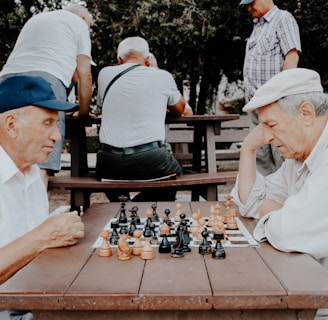
Little Havana, the neighborhood along Calle Ocho (Southwest 8th Street), is the cultural heart of that story. Domino Park — officially Máximo Gómez Park — is where older Cuban men have gathered to play dominoes and argue politics for decades, and the conversations there carry a weight and a specificity that you don't find anywhere else. Versailles Restaurant on Calle Ocho is not just a restaurant — it's a cultural institution that has fed every Cuban politician, exile leader, and Miami notable who has passed through since 1971. Order the ropa vieja. Drink the cafecito standing at the ventanita. This is the window into that world.
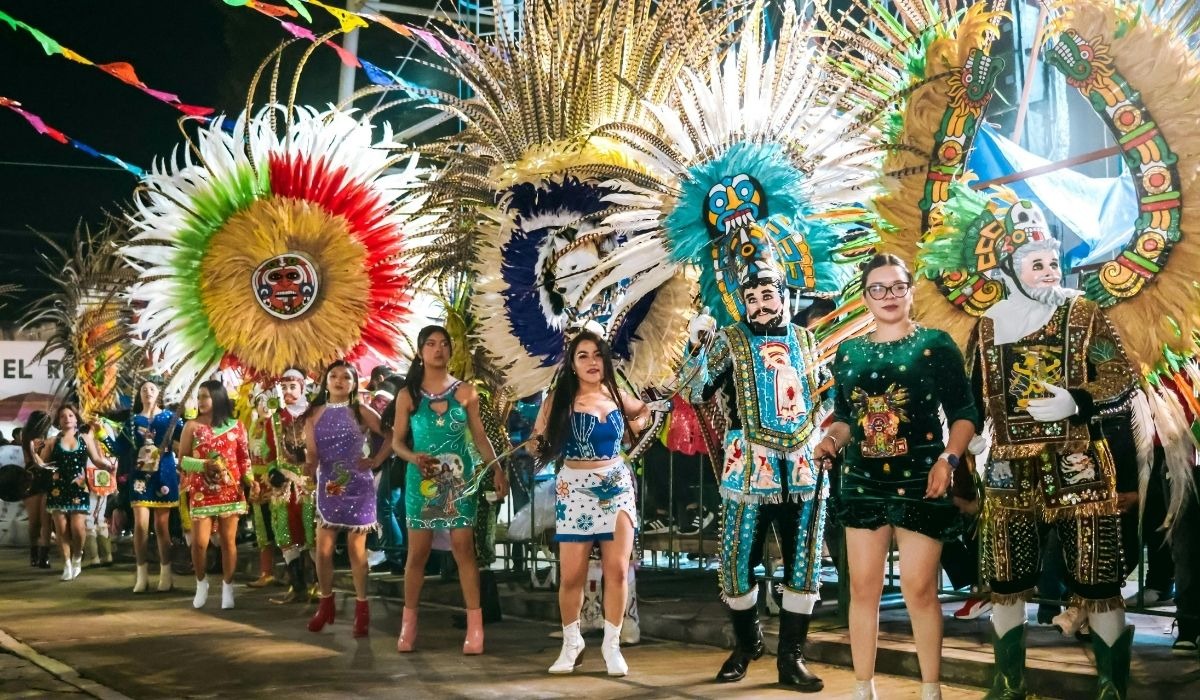
The Calle Ocho Festival every March transforms the neighborhood into one of the largest street festivals in the country — music, food, dancing, and an energy that is impossible to replicate in a theme park setting.
Beyond Cuba: A Hemisphere Has Arrived
The Cuban community remains the cultural anchor of Miami-Dade, but South Florida has become home to waves of immigration from across Latin America and the Caribbean that have layered new dimensions onto that foundation.
Venezuelan professionals and entrepreneurs — many fleeing the economic collapse and political repression of the past decade — have arrived in significant numbers, particularly in Doral, Weston, and Brickell. They've brought a different energy: educated, entrepreneurial, often with resources, building businesses and buying real estate with a determination that mirrors what the Cuban generation did in the 1960s.
Colombian, Argentinian, Brazilian, Peruvian, and Nicaraguan communities have established deep roots across the region. Each brings its own food traditions, music, religious practices, and family culture. The result is a Latin America in miniature that makes South Florida genuinely different from any other region in the United States.
The Haitian Community
Any honest accounting of South Florida's culture includes the Haitian-American community, which has been here since the 1970s and has made enormous contributions to the region's character. Little Haiti in Miami — centered around Northeast 2nd Avenue — is a neighborhood of vibrant murals, Haitian restaurants serving griot and diri ak pwa, Kompa music drifting from open doors, and a creative energy that has increasingly attracted artists and entrepreneurs.
Little Haiti Cultural Complex anchors the neighborhood and hosts cultural events, markets, and performances year-round. The Haitian community's influence on South Florida's visual art, music, and food culture is significant and often underappreciated by visitors who never make it north of the Art Deco district.
Florida Current Take South Florida's Latin and Caribbean cultures aren't a backdrop for the region — they are the region. If you're moving here and expecting a generic American city experience, you will be surprised, possibly delighted, possibly disoriented, and ultimately richer for the exposure. Give it time. Let the cafecito work on you.
The Neighborhoods That Tell the Real Story
Miami Beach / South Beach
South Beach is what most people picture when they hear "Miami" — the Art Deco architecture along Ocean Drive, the beach umbrellas, the nightclubs, the beautiful people, the scene. It's all real. It's also genuinely only one piece of a very large puzzle, and full-time locals have a complicated relationship with it. The tourist version of South Beach is not the local's Miami Beach, but both exist simultaneously and that coexistence is part of the texture.
The Art Deco Historic District is legitimately one of the architectural treasures of the United States — a concentration of 1920s and 1930s Mediterranean Revival and Art Deco buildings that was largely saved from demolition by preservation advocates in the 1980s. Walking it in the early morning, before the crowds arrive, is a genuinely beautiful experience.
Wynwood
If South Beach is South Florida's showroom, Wynwood is its living room — a former warehouse district north of downtown Miami that was transformed starting around 2009 by Wynwood Walls, an outdoor museum of large-scale murals by internationally recognized street artists. What began as an art project became a neighborhood that now hosts galleries, restaurants, breweries, boutiques, and one of the most photographed streetscapes in the country.
Wynwood during Art Basel week in December is genuinely electric — the galleries throw open their doors, the streets fill with collectors, curators, artists, and people who just want to be near the energy of something happening. Art Basel Miami Beach, held at the Miami Beach Convention Center each December, is one of the three most important contemporary art fairs in the world. It brings the global art market to South Florida for a week and changes the feel of the entire city. Plan around it or plan for it — there's no ignoring it.
Coral Gables
Ten minutes from Brickell and a different century. Coral Gables was designed in the 1920s as a planned "City Beautiful" community — Mediterranean Revival architecture, banyan-lined streets, the famous Venetian Pool (a public swimming pool carved from a coral rock quarry, genuinely unlike anything you've seen), and Miracle Mile as its commercial heart. It's where old South Florida money settled and where the University of Miami gives the neighborhood its intellectual pulse. Vizcaya Museum and Gardens — a 1916 Italian Renaissance-style villa on Biscayne Bay — belongs in the same sentence as any great American historic house museum.
Brickell and Downtown Miami
Brickell is Miami's financial district, and in the past decade it has transformed from an office-tower corridor into a walkable, residential neighborhood that functions as a genuine urban core. The Brickell City Centre development brought upscale retail. The restaurant and cocktail bar scene rivals anything in the country. Young professionals, Latin American investors, and remote workers from the Northeast have flooded in. It feels like a city that has just figured out how to be a real city, and there's a particular excitement in that.
Palm Beach
Ninety minutes north of Miami and a completely different world. Palm Beach — the island, not Palm Beach County — is old American money at its most concentrated and least apologetic. Worth Avenue is where serious luxury retail operates without irony. The Breakers is one of the great American resort hotels, built in 1895 and still very much itself. The aesthetic here is traditional, conservative, and manicured in a way that Miami would find claustrophobic. Both can be right.
Florida Current Note If you want to understand South Florida's range, spend one afternoon in Little Havana and one afternoon in Palm Beach. The distance between them is about 75 miles. The cultural distance is considerably more. Both are authentically South Florida. That range is the point.


Food, Art, and a Nightlife That Doesn't Apologize
The Food
South Florida's food scene is one of the most underrated in the country, partly because the national conversation about it gets distracted by the nightlife conversation. But the food here is serious.
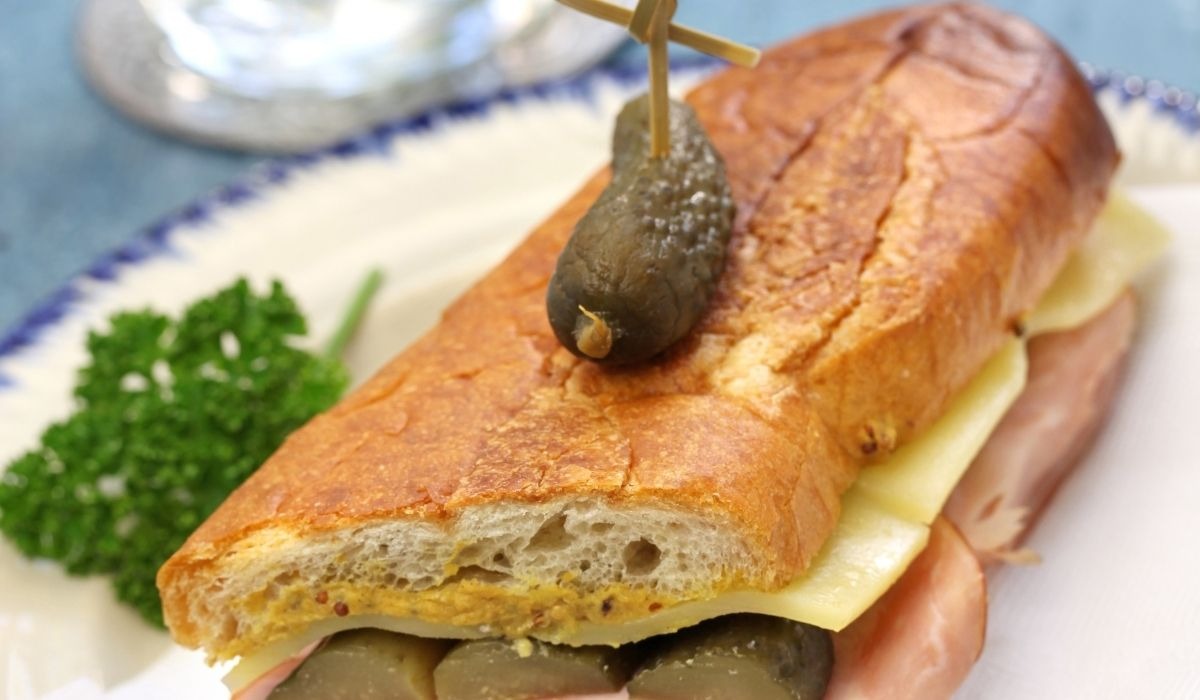
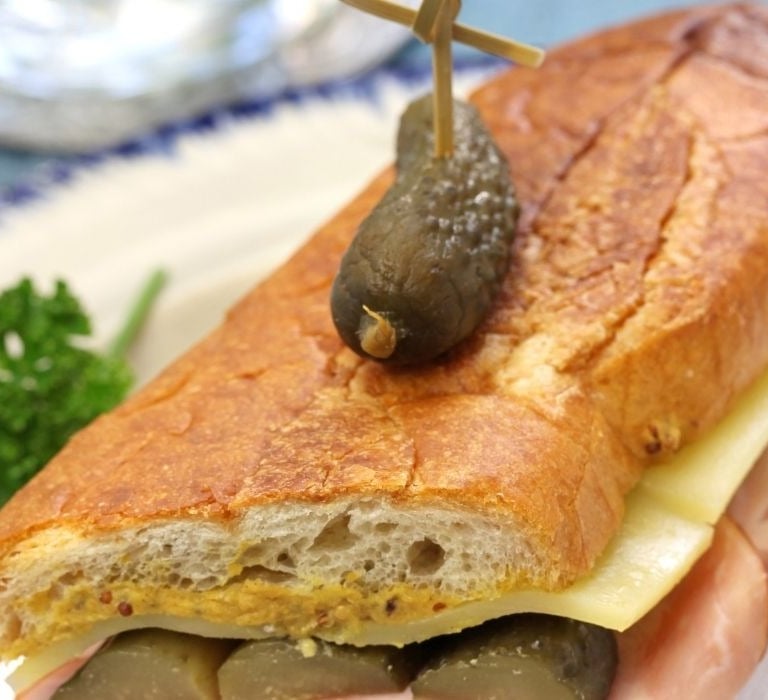
Cuban cuisine is the foundation — and if you haven't had a proper Cuban sandwich (not the Tampa version, an argument that starts immediately when you raise the subject), croquetas de jamón, ropa vieja, or picadillo at a family-run spot in Hialeah or Little Havana, you have not eaten in South Florida. The cortadito — a shot of Cuban espresso with steamed milk — is fuel, ritual, and social glue all at once.
Beyond Cuban: Colombian restaurants serving bandeja paisa and arepas in Doral. Peruvian ceviche in Coral Gables. Haitian food in Little Haiti. Venezuelan arepas everywhere. Brazilian churrascaria in multiple neighborhoods. A Jewish deli tradition — particularly in Broward County — that is taken seriously by people who remember what a real deli looks like.
Stone crab season, October 15 through May 15, is a genuine cultural event. Joe's Stone Crab in South Beach has been serving them since 1913. The line is part of the experience.
The restaurant scene in Wynwood, Brickell, Design District, and Miami Beach has attracted James Beard-recognized chefs and serious culinary investment. South Florida is no longer a place serious food people overlook.
The Art Scene
Beyond Art Basel and Wynwood, South Florida has a robust working art scene that operates year-round. The Pérez Art Museum Miami (PAMM), on Biscayne Bay near downtown, is a world-class institution with a collection that reflects the region's cultural priorities — Latin American and Caribbean art prominently represented alongside international contemporary work. The building itself, designed by Herzog & de Meuron, is worth visiting on architecture grounds alone.
The Institute of Contemporary Art Miami (ICA Miami), the Bass Museum of Art in Miami Beach, and the Frost Museum of Science are all within reach and all punching above their weight. South Florida takes its cultural institutions seriously in a way that surprises people who expected only beaches and nightclubs.
The Music
South Florida's music scene is layered in exactly the way its culture is. Salsa and merengue from open restaurant doors in Hialeah. Reggaeton everywhere. Kompa from Little Haiti. Brazilian samba and bossa nova finding their audiences. Hip hop with a Miami accent — Miami bass has its own history and its own legends.
Ultra Music Festival every March at Bayfront Park is one of the world's largest electronic music events and draws 160,000+ people. It is a genuine spectacle and it tells you something about the city that hosts it — Miami's relationship with music and nightlife is not performative. It is constitutive.
The nightlife itself — South Beach's clubs, Wynwood's bars, Brickell's rooftop scene — is real and it runs late. Not "late for a Tuesday" late. Actually late. This is a city where dinner at 10 p.m. is normal and people are still deciding which party to go to at midnight. If you're not a night person, South Florida has plenty of beautiful daylight hours and you'll be fine. But you should know what you're walking into.

Seasons, Snowbirds, and the Social Calendar
In South Florida, "season" is not a weather term. It is a social one.
Season runs roughly from October through April — the months when the humidity breaks, the weather is genuinely perfect, and several hundred thousand seasonal residents arrive from the Northeast and Midwest to reclaim their condos, fill the restaurants, and remind locals why traffic is a spiritual test. This is when South Florida operates at full social capacity. Restaurants require reservations. The beaches fill. The events calendar is stacked. The energy is high.
Summer — June through September — is when South Florida belongs to the people who live there year-round. The snowbirds have gone home, the humidity has returned, the afternoon thunderstorms roll in with Swiss watch regularity, and the locals reclaim their favorite spots with visible relief. Many restaurants offer quieter tables and better service. Museums are less crowded. The beach on a Tuesday morning in July, before the heat peaks, is one of the genuinely underrated pleasures of living in South Florida.
For visitors, the calculus is personal. December through April offers perfect weather and a fully operational social scene. May through September offers lower prices, smaller crowds, and a more authentic picture of how South Floridians actually live — at the cost of heat that is genuinely formidable and humidity that requires adjustment.
Florida Current Tip Miami Spice — the restaurant promotion that runs every August and September — offers prix-fixe menus at hundreds of the city's best restaurants at a fraction of regular prices. This is how locals eat well during the off-season, and it's worth planning a visit around if your budget has opinions. The Greater Miami Convention and Visitors Bureau maintains the full list each year.

The Locals, the Transplants, and the Beautiful Chaos Between Them
Here is a piece of South Florida culture that visitors consistently find surprising: almost nobody is from here.
Miami is one of the few major American cities where "Where are you from?" is a genuine icebreaker and not a mildly rude question — because the honest answer, most of the time, is somewhere else. Cuban exiles. Venezuelan entrepreneurs. New York retirees. Colombian families. New Yorkers who came for a long weekend in 1987 and never left. Tech workers who relocated during the pandemic and stayed. Haitians who built a community from almost nothing. Argentinians who came for the weather and the steak. Second-generation immigrants who grew up here and are proudly, specifically Miamians in a way that their parents never quite felt entitled to be.
This perpetual-newcomer quality gives South Florida an energy that is genuinely different from cities with deep, settled identities. There's less of the "this is how we've always done it" conservatism of place. There's more hustle, more reinvention, more openness to the next thing — because most of the people here are in the process of building something, whether that's a business, a life, or a version of home they couldn't find where they started.
The Florida Current Take on South Florida
South Florida can be a lot. The traffic is genuinely painful — Miami's congestion is in a tier of its own among American cities, and that's not hyperbole. The cost of living, particularly housing and insurance, is serious and getting more serious. The image-consciousness of certain circles — the designer labels, the status cars, the Instagram-optimized everything — can feel exhausting if you're not wired for it.
And then the sun comes up over the Atlantic and turns the water every shade of blue and green that doesn't have a name yet, and you're eating a stone crab claw at a table that smells like salt air, and the conversation next to you is happening in three languages at once, and someone nearby is playing salsa on a phone they're not apologizing for, and you think: there is genuinely nowhere else on earth that is quite like this. That feeling is not manufactured. It's the reason six million people live here and more are coming every year.
Our Best Cities to Live in South Florida article goes deeper on individual neighborhoods and communities if you're thinking about this becoming your home base — because as this article hopefully makes clear, "South Florida" contains entire worlds within it.
Florida Current Reminder If South Florida's culture intrigues you but the cost of living gives you pause — it should, and you should read the numbers clearly. Our Florida Cost of Living article has the full breakdown of what housing, insurance, and day-to-day expenses actually look like across the region. Eyes open is the only way to make a good decision about a place this specific.


South Florida Culture FAQ
Is South Florida friendly to non-Spanish speakers? Yes — English is widely spoken throughout South Florida and you can navigate the region comfortably as an English-only speaker. That said, Spanish is genuinely the first language in many Miami-Dade neighborhoods and workplaces, and Miami-Dade is officially bilingual. Learning even basic Spanish is appreciated and opens doors. In Hialeah, Spanish is the primary operating language of daily life. Knowing that going in helps.
What is the best neighborhood to experience South Florida's culture? No single neighborhood tells the whole story. For Cuban culture: Little Havana and Calle Ocho. For art and nightlife: Wynwood. For Art Deco architecture and the beach scene: South Beach. For Haitian creativity and food: Little Haiti. For upscale cosmopolitan Miami: Brickell and Coral Gables. For a completely different South Florida — old American money, manicured and quiet: Palm Beach. The culture lives in all of them simultaneously and they are all worth your time.
What food should you absolutely try in South Florida? A proper Cuban sandwich and croquetas de jamón in Little Havana or Hialeah. A cortadito at a ventanita window. Stone crab claws in season. Haitian griot and fried plantains in Little Haiti. Colombian arepas in Doral. And at least one meal at a restaurant that's been there thirty years and doesn't need a publicist. South Florida's food is the most honest expression of its culture and you should eat your way through it.
What makes Miami's culture different from the rest of Florida? Miami is one of the most internationally diverse cities in the Western Hemisphere — majority foreign-born population, Spanish as a primary operating language in many neighborhoods, and cultural influences from across Latin America and the Caribbean at the center of daily life. The rest of Florida is diverse but not in this concentrated, globally-oriented way. Miami feels closer to a world city than to a Sun Belt metro, which is both its challenge and its genuine distinction.
When is the best time to visit South Florida for culture and events? November through April is peak season — perfect weather, full event calendar, restaurants and venues running at capacity. December brings Art Basel. February brings the South Beach Wine and Food Festival. March brings Calle Ocho and Ultra Music Festival. For a more local, affordable experience, August and September offer Miami Spice restaurant month and genuinely smaller crowds — at the honest cost of heat and humidity that require respect.
Is South Florida's culture a good fit for families? Yes, depending on which corner of it. Miami Beach's nightlife-heavy environment suits adults better. Coral Gables, Pinecrest, Weston, and Boca Raton are deeply family-oriented communities with excellent schools and outdoor life. Palm Beach County offers a quieter, suburban family environment. The cultural richness of South Florida — the food, the languages, the art, the festivals — is a genuine asset for raising children with a broad, international worldview. There's a reason families stay.
Sources
Greater Miami Convention and Visitors Bureau — miamiandbeaches.com
Pérez Art Museum Miami — pamm.org
Art Basel Miami Beach — artbasel.com/miami-beach
Wynwood Walls — thewynwoodwalls.com
Vizcaya Museum and Gardens — vizcaya.org
Little Haiti Cultural Complex, Miami-Dade County — miamidade.gov
Ultra Music Festival — ultramusicfestival.com
Carnaval Miami / Calle Ocho Festival — carnavalmiami.com
U.S. Census Bureau, American Community Survey, Miami-Dade County — data.census.gov
Florida Fish and Wildlife Conservation Commission (stone crab season) — myfwc.com
Recommended Reading
Best Cities to Live in South Florida: A Neighborhood-by-Neighborhood Breakdown
Cost of Living in Florida: What It Really Costs to Live Here
Information current as of June 2026.
Florida Current covers weather, lifestyle, outdoor life, and everything that comes with living in the Sunshine State. Browse our Florida Living section for regional guides, seasonal activity calendars, retirement guides and practical advice from people who actually live here.
Florida native Luana B. Gann brings more than 30 years of publishing, editing, and journalism experience to Florida Current. With a deep appreciation for the Sunshine State's culture, lifestyle, and ever-changing landscape, she is dedicated to helping readers discover what's new, noteworthy, and uniquely Florida.
CONTACT
Reach out for questions or feedback anytime.
contact@FLAcurrent.com
© 2026. All rights reserved.