
Why Are Fire Ants So Aggressive in Florida?
Luana B. Gann, Editor
7/2/2026
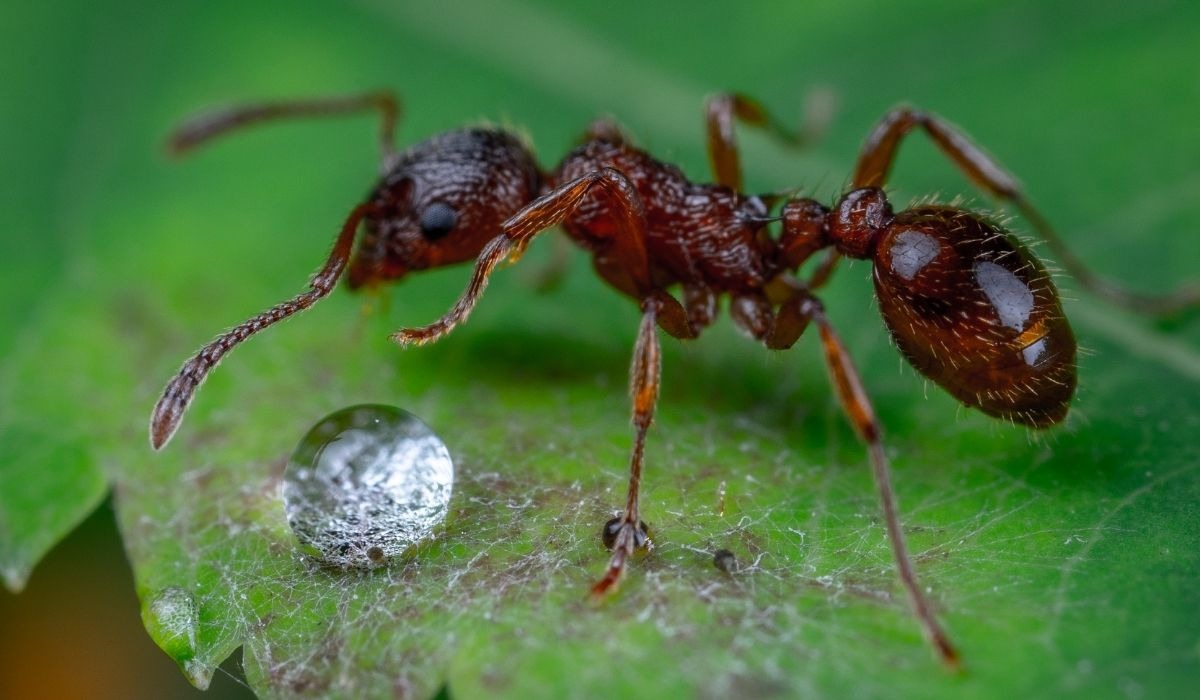
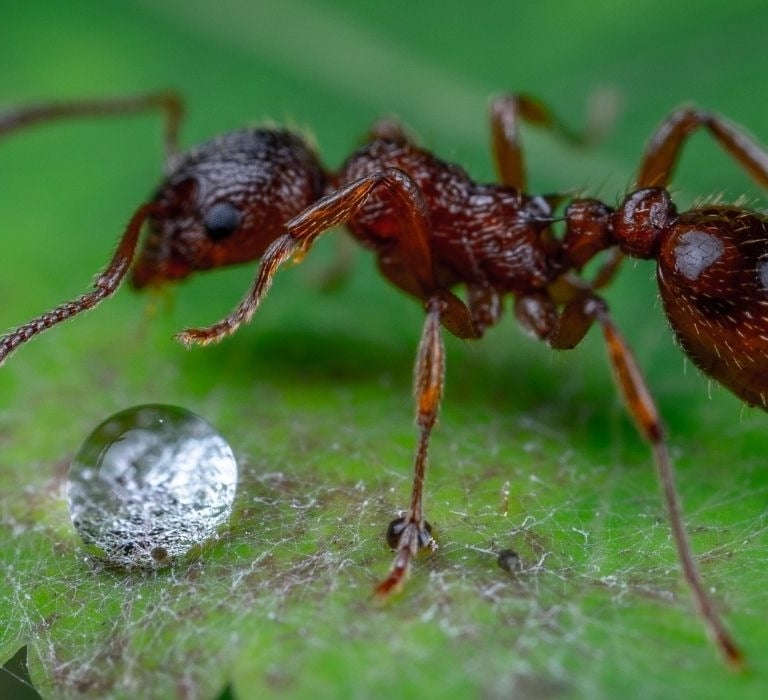
Why Are Fire Ants So Aggressive in Florida?
Quick Answer: Fire ants aren't just aggressive by personality — they're aggressive by design. Red imported fire ants (Solenopsis invicta) arrived in the United States from South America nearly a century ago, without any of the natural predators or competitors that kept them in check back home. Their venom is a unique cocktail of piperidine alkaloids that causes genuine burning pain, they attack in coordinated swarms rather than individually, and a single colony can contain up to 300,000 workers defending territory with zero hesitation. Florida's warm climate, sandy soil, and open landscapes happen to be close to perfect for them — which is exactly why they've thrived here for nearly a century with no real end in sight.
In This Article
Not From Here: How Fire Ants Got to Florida in the First Place
The Venom Is the Point — Why the Sting Actually Burns
Swarm Tactics: Why Fire Ants Attack as a Unit
Why Florida Is Basically Paradise for Fire Ants
Do Fire Ants Actually Damage Anything Beyond Your Ankles?
What Actually Works (and What's a Waste of Time)
Frequently Asked Questions
Not From Here: How Fire Ants Got to Florida in the First Place
Here's the part most Floridians don't know: fire ants are not Florida natives. They're not even American natives. The red imported fire ant is originally from the floodplains of northern Argentina and Brazil, and it hitched a ride to the United States sometime between 1933 and 1945, most likely arriving as an uninvited passenger in the soil ballast of cargo ships docking at the port of Mobile, Alabama.
From that single point of entry, fire ants have since spread across more than 260 million acres in nine southeastern states, according to research compiled by Texas A&M University's fire ant research program. Florida, with its warm year-round climate and sandy soil, turned out to be one of the most hospitable places in the country for them to settle in and stay.
Here is the part that actually explains the aggression: back in South America, fire ants exist in a natural ecosystem alongside predators, competing ant species, parasites, and diseases that have evolved right alongside them for millions of years — all of which keep their numbers and behavior in check. None of that came along on the boat. Florida's fire ants arrived to a landscape with essentially no natural enemies, no evolutionary rivals, and no population control mechanisms. It is the ecological equivalent of showing up to a fight where nobody else knows the sport exists. Early eradication efforts in the 1960s and 1970s failed for exactly this reason — the ants had no natural checks, reproduced explosively, and dispersed faster than pesticide programs could contain them.
🐜 By the Numbers: The Cost of an Uninvited Guest The National Invasive Species Information Center estimates that red imported fire ants cause approximately $8 billion in damages, medical treatment, and control costs annually across the United States — a staggering figure for an insect most people can barely see without looking closely. Other estimates from the University of Florida put agricultural and economic losses closer to $5 billion. Either way, this is not a minor lawn nuisance. It's a genuine, ongoing economic event.
The Venom Is the Point — Why the Sting Actually Burns
Anyone who has stepped in a fire ant mound barefoot knows the sting has a very particular character — a sharp, burning pain that's genuinely different from a mosquito bite or a bee sting. That's not your imagination. It's chemistry.
Fire ant venom is composed primarily of piperidine alkaloids — a class of compounds that is unusual among stinging insects, most of which rely on protein-based venom. According to research published in the National Institutes of Health's PubMed Central archive, these alkaloids have genuine insecticidal, antimicrobial, antifungal, and antiprotozoal properties — meaning the venom isn't just a defensive weapon, it's a multi-purpose biological tool the ants also use to sterilize their nests and kill competing organisms.
The sting itself is technically a two-part process: fire ants bite first to anchor themselves with their mandibles, then sting repeatedly in a small circular pattern while pivoting around that bite point — which is why fire ant stings on skin often appear in tight clusters rather than single isolated marks. Each ant can sting multiple times in rapid succession, injecting venom with every strike.
On the Schmidt Sting Pain Index — a genuinely real, if slightly unusual, scientific scale developed by entomologist Justin Schmidt to rank the pain of insect stings — fire ants register at roughly 1.2 out of 4, more painful than a typical ant sting but less severe than a honeybee. That said, the real danger with fire ants isn't the pain of any single sting — it's the sheer number of stings delivered simultaneously by a swarming colony, and the potential for allergic reactions in sensitive individuals. According to data compiled by fire ant researchers in Australia (where the species is also now a serious invasive problem), roughly 7.5% of sting victims require some form of medical attention, and up to 2% experience life-threatening allergic reactions.
Swarm Tactics: Why Fire Ants Attack as a Unit
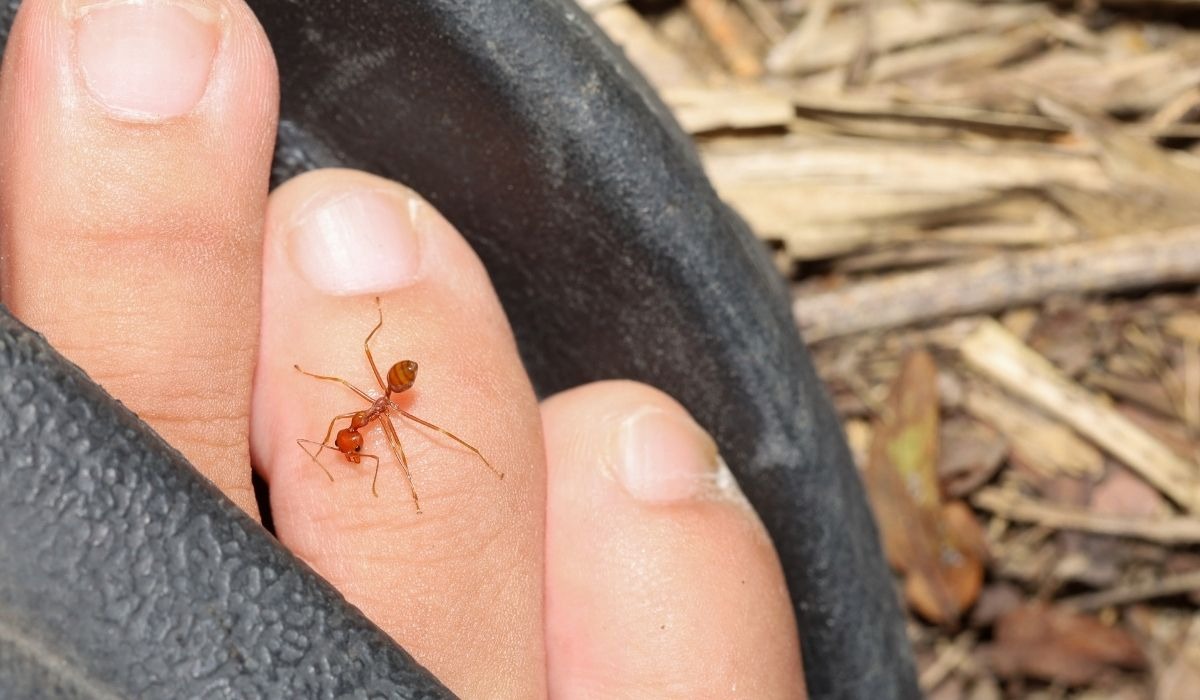
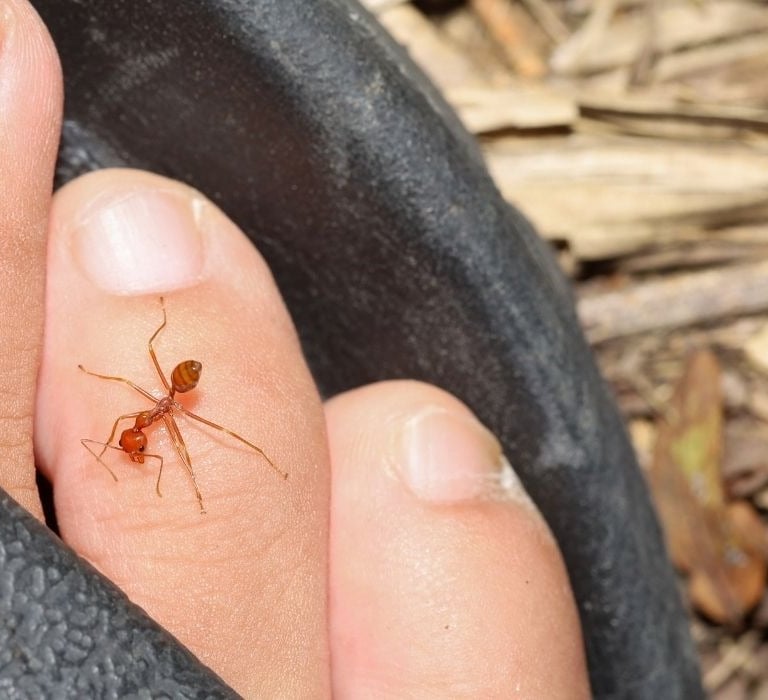
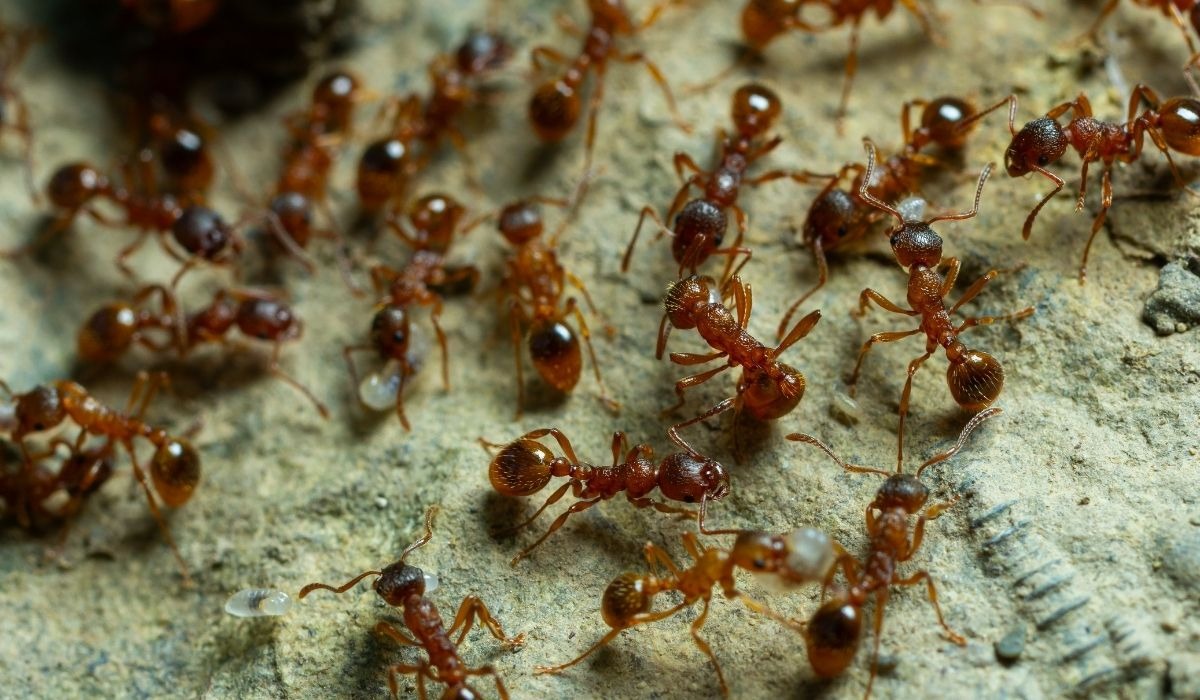
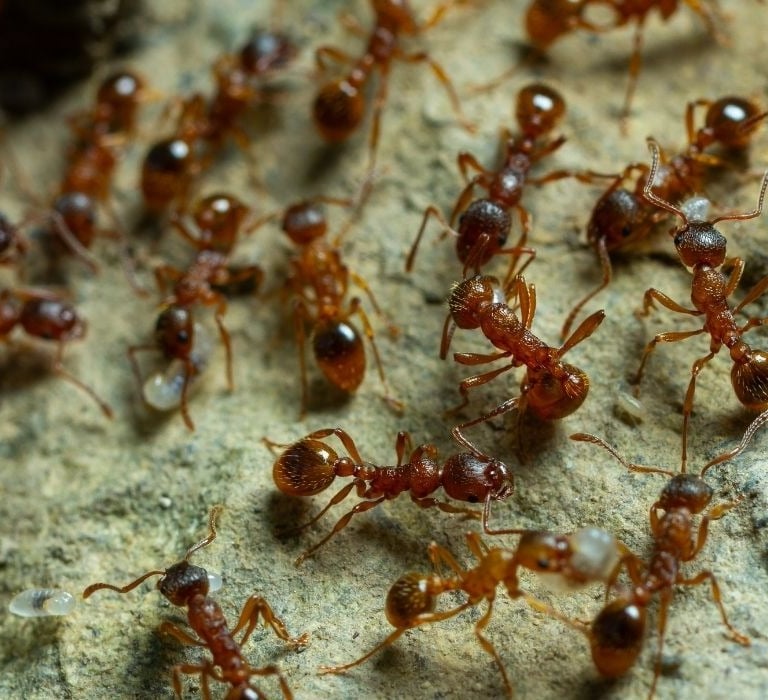
Individually, a single fire ant is not particularly threatening — small, slow, and easy to avoid. The genuine danger is behavioral: fire ants operate as a coordinated colony, and when a nest is disturbed, dozens or even hundreds of workers will emerge and attack simultaneously, in what looks less like a chaotic scramble and more like an organized assault.
This coordination isn't accidental. Fire ant colonies communicate through pheromone trails, and when a mound is disturbed, an alarm pheromone triggers a mass response — worker ants swarm up whatever disturbed the nest (a foot, a garden tool, a curious dog) in genuine numbers within seconds. A single colony can contain up to 300,000 worker ants, according to entomology research from NC State University, and in areas with multiple-queen colonies — a variant common in Florida — interconnected supercolonies can span numerous mounds and collectively number in the millions.
This is also why fire ant stings so often appear in clusters covering a significant patch of skin, rather than a single isolated mark. Step on or near a mound, and you're not dealing with one ant's defensive response — you're dealing with a coordinated colony-wide reaction, executed by an insect that evolved this exact defense strategy over millions of years in South America, long before it ever set foot (so to speak) on Florida soil.
Why Florida Is Basically Paradise for Fire Ants
Florida didn't just fail to stop fire ants — the state's natural conditions are close to ideal for them, which is a big part of why they've thrived here longer and more successfully than in almost any other part of the country.
Warm climate, year-round. Fire ants are most active in warm soil, and Florida rarely gives them a reason to slow down. States with harsh winters see fire ant activity drop significantly during cold months. Florida colonies barely pause.
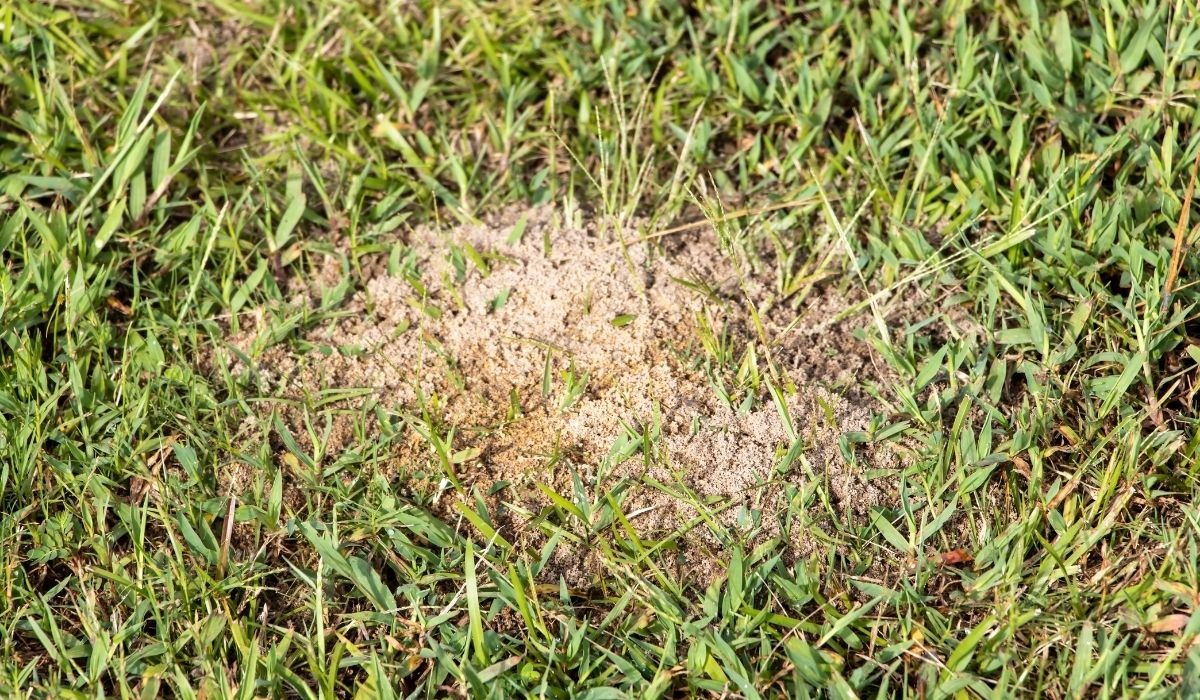
Sandy, well-drained soil. Fire ants strongly prefer sandy soils for mound-building, according to UF/IFAS Gardening Solutions — and Florida's sandy statewide soil composition happens to be almost exactly what they're looking for.
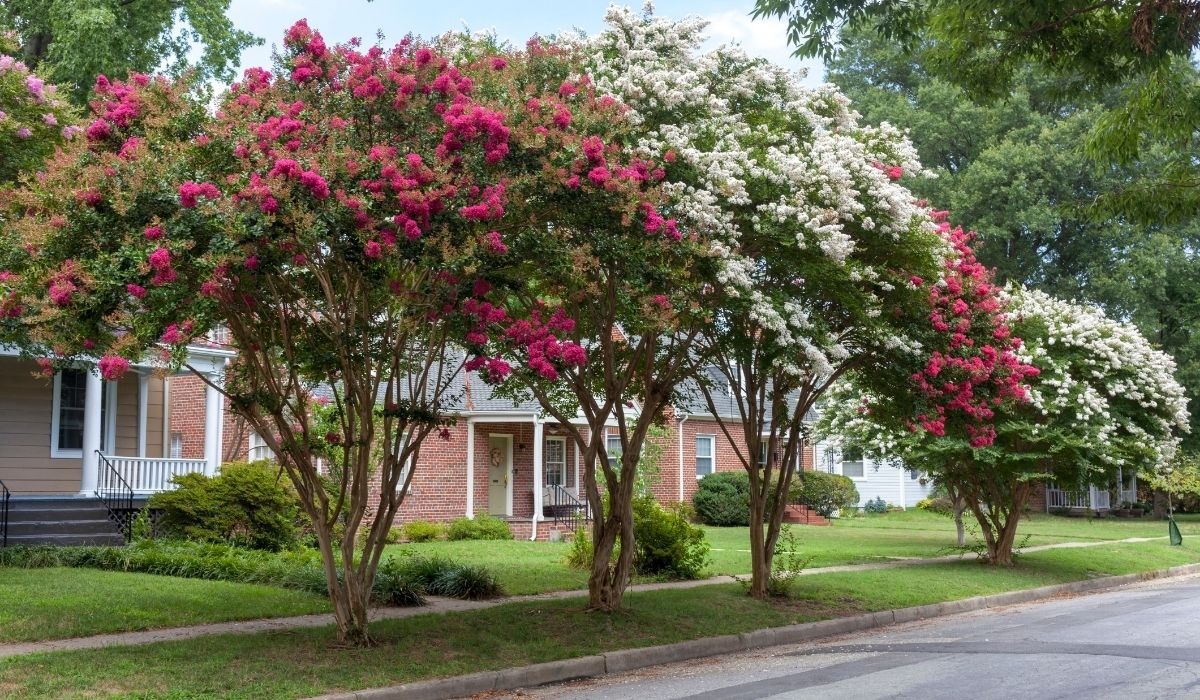
Sunny, open landscapes. Fire ants prefer sunny, disturbed ground — lawns, pastures, roadsides, golf courses, and the endless expanse of suburban Florida landscaping. Florida's rapid development over the past several decades has, inadvertently, created enormous amounts of exactly the terrain fire ants prefer.
No natural predators or competitors. As covered above, this is the real structural reason fire ants have never been meaningfully controlled in Florida the way they might be kept in check in their native range.
🪰 Nature's Weird Solution: The Decapitating Fly One of the more genuinely fascinating biological control efforts against fire ants involves a parasitic fly (genus Pseudacteon) that lays its eggs directly inside a fire ant's body. The larva migrates to the ant's head, consumes it from the inside, and eventually causes the head to detach entirely — hence the fly's common name, the "decapitating fly." Researchers, including teams at UF/IFAS, have been studying and releasing these flies as a biological control measure since the 1990s. It sounds like something out of a horror movie, and it more or less is one — just an extremely small-scale, ant-specific one. It hasn't eliminated fire ants, but in some studied areas it has meaningfully reduced colony activity.
Do Fire Ants Actually Damage Anything Beyond Your Ankles?
Yes — genuinely, and in ways that go well beyond an itchy afternoon. Fire ants are omnivorous and will forage more than 100 feet from their nest, feeding on seeds, insects, small vertebrates, and agricultural crops. They are a documented threat to:
Agriculture — damaging crops directly and interfering with mechanical harvesting equipment when large mounds are struck by farm machinery.
Electrical equipment — fire ants are inexplicably attracted to electrical fields and have been documented chewing into and nesting inside air conditioning units, traffic signal boxes, and electrical junction boxes, sometimes causing genuine equipment failures.
Wildlife and ground-nesting birds — fire ants prey on the eggs and hatchlings of ground-nesting species, including some sea turtle nests along Florida beaches, adding another layer of concern for Florida's conservation efforts.
Property values — a documented, if less dramatic, consequence noted in UF/IFAS's official guide to managing fire ants in urban areas, which notes that heavy infestations can measurably affect how buyers perceive a property.


What Actually Works (and What's a Waste of Time)
If you've lived in Florida for any length of time, you've probably received at least one confident piece of fire ant advice from a well-meaning neighbor. Here's what the University of Florida's own pest management research actually supports — and what doesn't hold up.
What works:
Broadcast baits, applied across the whole lawn rather than just individual mounds, are the most effective long-term approach according to UF/IFAS. The active ingredients (commonly hydramethylnon or sulfluramid) are carried back into the colony by foraging workers and eventually reach the queen — the only ant whose death actually collapses the colony. UF/IFAS's recommended schedule is roughly three to four broadcast treatments per year — timed loosely around Easter, Independence Day, and Labor Day — to keep populations consistently suppressed.
Individual mound treatments, used alongside broadcast baiting (not instead of it), for particularly troublesome or high-traffic mounds.
Biological controls, including the decapitating fly and a Microsporidium pathogen that specifically targets fire ant queens, are actively being studied and released by researchers, though they work as a long-term population suppression tool rather than an instant fix.
What doesn't work — despite the folklore:
Club soda. A persistent Florida myth holds that pouring club soda into a mound will suffocate the colony with carbon dioxide. UF/IFAS research explicitly lists this among ineffective home remedies — it may disturb the mound without killing the colony, which can actually cause the ants to simply relocate the nest elsewhere on your property.
Grits. The old claim that fire ants eat dry grits, can't digest them, and explode is a genuinely charming piece of Florida folklore with essentially no scientific support. UF/IFAS lists it plainly among the unproven methods that don't work.
Boiling water, while not a myth exactly, is only partially effective — UF/IFAS notes that pouring water heated to 190–212°F directly into a mound eliminates roughly 20% to 60% of colonies, meaning it fails on nearly half of the mounds it's used on, and carries an obvious burn risk to whoever's pouring it.
Florida Fire Ants FAQ
Are fire ants native to Florida? No. Red imported fire ants are native to South America — specifically the floodplains of northern Argentina and Brazil — and arrived in the United States sometime between 1933 and 1945 through cargo ship ballast at the port of Mobile, Alabama. They are not native to Florida or anywhere else in the U.S., which is a significant part of why they've spread so aggressively without the natural population checks present in their home range.
Why does a fire ant sting hurt so much? Fire ant venom is composed primarily of piperidine alkaloids, a chemical class that's unusual among stinging insects — most rely on protein-based venom instead. The sting itself is a two-part process: the ant bites first to anchor itself, then stings repeatedly in a circular pattern while pivoting around that bite point, which is why fire ant stings often appear in tight clusters. On the Schmidt Sting Pain Index, fire ants rate around 1.2 out of 4 — more painful than most ants, though less severe than a honeybee sting.
How many ants are in a typical Florida fire ant colony? A single fire ant colony can contain up to 300,000 workers. In Florida, where multiple-queen colonies are common, interconnected supercolonies spanning numerous mounds can collectively number in the millions of individual ants.
Do club soda or grits actually kill fire ants? No — both are widely repeated Florida folklore with no real scientific backing. University of Florida IFAS research explicitly lists both among ineffective home remedies. Club soda may disturb a mound without killing the colony, sometimes causing the ants to simply relocate elsewhere on the property. The grits myth — that ants eat them, can't digest them, and die — has never been supported by research.
What actually gets rid of fire ants in a Florida yard? UF/IFAS recommends broadcast bait treatments applied across the entire lawn three to four times per year, timed roughly around Easter, Independence Day, and Labor Day. Baits work because foraging worker ants carry the active ingredient back to the colony, eventually reaching and killing the queen — the only ant whose death collapses the colony. Individual mound treatments can supplement broadcast baiting for particularly troublesome mounds, but shouldn't replace it.
Are fire ant stings dangerous? For most people, fire ant stings cause temporary burning pain and itchy pustules that resolve within a week or two. However, according to research on fire ant sting reactions, roughly 7.5% of sting victims require some medical attention, and up to 2% experience serious allergic reactions, including potential anaphylaxis. Anyone experiencing difficulty breathing, swelling beyond the sting site, dizziness, or hives after a fire ant encounter should seek medical attention immediately.
Sources
University of Florida IFAS — Invasive Species Spotlight: Red Imported Fire Ants: onlineentomology.ifas.ufl.edu
University of Florida IFAS — Sustainable Fire Ant Control and Fire Ants in Florida: sfyl.ifas.ufl.edu
University of Florida IFAS — Managing Imported Fire Ants in Urban Areas (ENY226/LH059): ask.ifas.ufl.edu
UF/IFAS Gardening Solutions — Fire Ants: gardeningsolutions.ifas.ufl.edu
National Invasive Species Information Center — Red Imported Fire Ant: invasivespeciesinfo.gov
Texas A&M University — History of the Red Imported Fire Ant: fireant.tamu.edu
NC State University News — What's in Fire Ant Venom? And How Can I Get Rid of Them? (2025)
PubMed Central (NIH) — Biological Activities and Ecological Significance of Fire Ant Venom Alkaloids
Fire Ants Australia — Ever Wondered How Painful a Fire Ant Sting Really Is? (Schmidt Sting Pain Index)
Recommended Reading
Pros and Cons of Living in an HOA in Florida
Information current as of July 2026.
Florida Current covers lifestyle, weather, outdoor life, and everything that comes with living in the Sunshine State. Browse our Florida Living section for regional guides, seasonal activity calendars, retirement guides and practical advice from people who actually live here.
Florida native Luana B. Gann brings more than 30 years of publishing, editing, and journalism experience to Florida Current. With a deep appreciation for the Sunshine State's culture, lifestyle, and ever-changing landscape, she is dedicated to helping readers discover what's new, noteworthy, and uniquely Florida.

CONTACT
Reach out for questions or feedback anytime.
contact@FLAcurrent.com
© 2026. All rights reserved.