Why Is NASCAR So Closely Tied to Daytona Beach?
Luana B. Gann, Editor
7/10/2026
Quick Answer: NASCAR isn't just associated with Daytona Beach — it was born there, literally on the sand. Racers ran cars directly on the hard-packed beach as early as 1903, stock car racing on that same sand began in earnest by 1936, and the sport's founding meeting took place at Daytona Beach's Streamline Hotel in December 1947. When beachfront development finally made racing on the actual coastline impractical, NASCAR founder Bill France Sr. built Daytona International Speedway just inland, opening in 1959. The town didn't adopt NASCAR as a marketing angle — NASCAR is functionally a Daytona Beach invention that happened to grow into a national sport.
In This Article
Racing on Actual Sand: How It Started
Racing on Actual Sand: How It Started
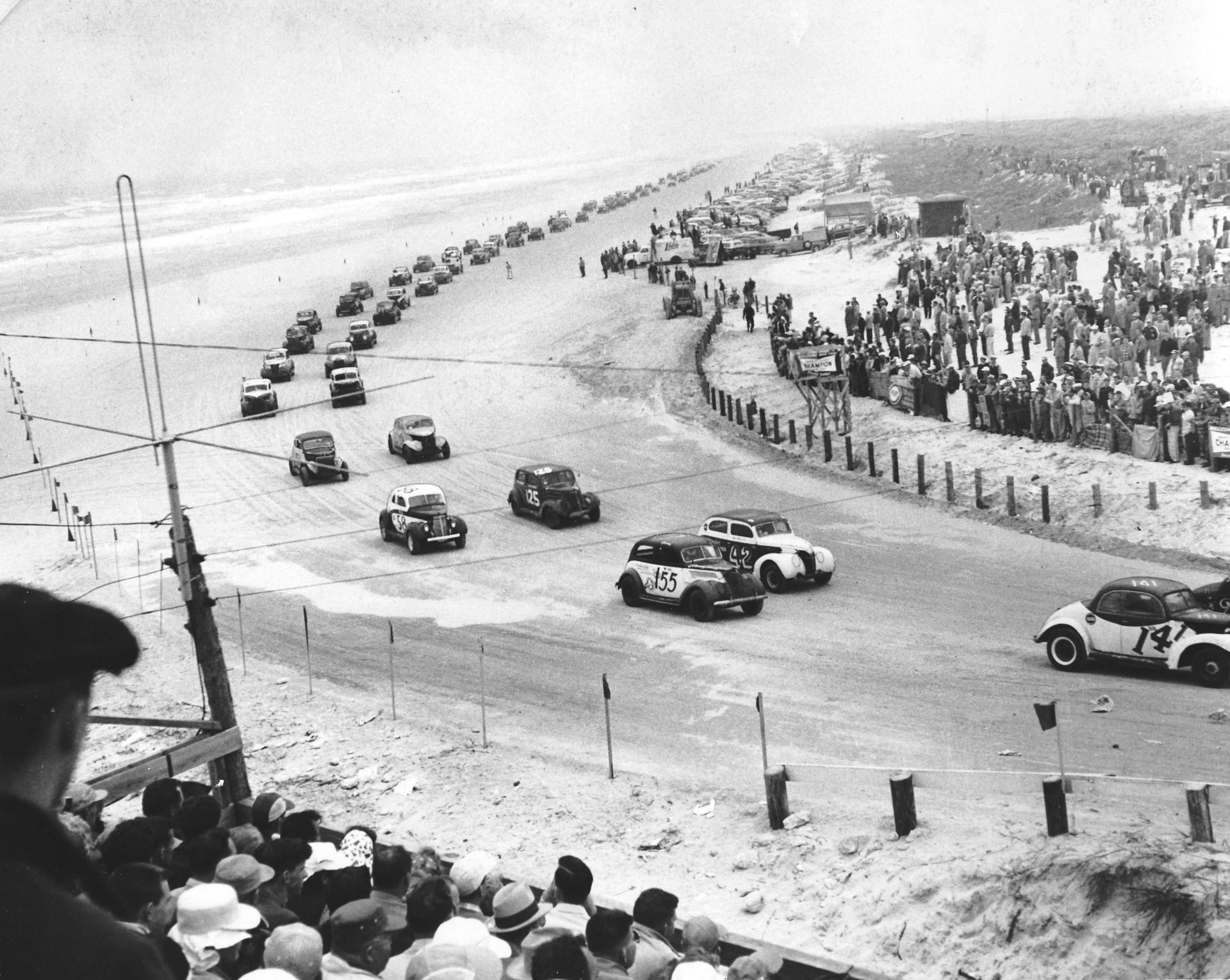
Daytona Beach earned the nickname "the birthplace of speed" for a genuinely literal reason — racing began on its hard-packed sand as early as 1903, decades before anyone had conceived of NASCAR as an organization. The beach's unusually firm, flat sand made it one of the best natural surfaces in the country for high-speed automobile testing, and it became a magnet for land speed record attempts throughout the early 20th century.
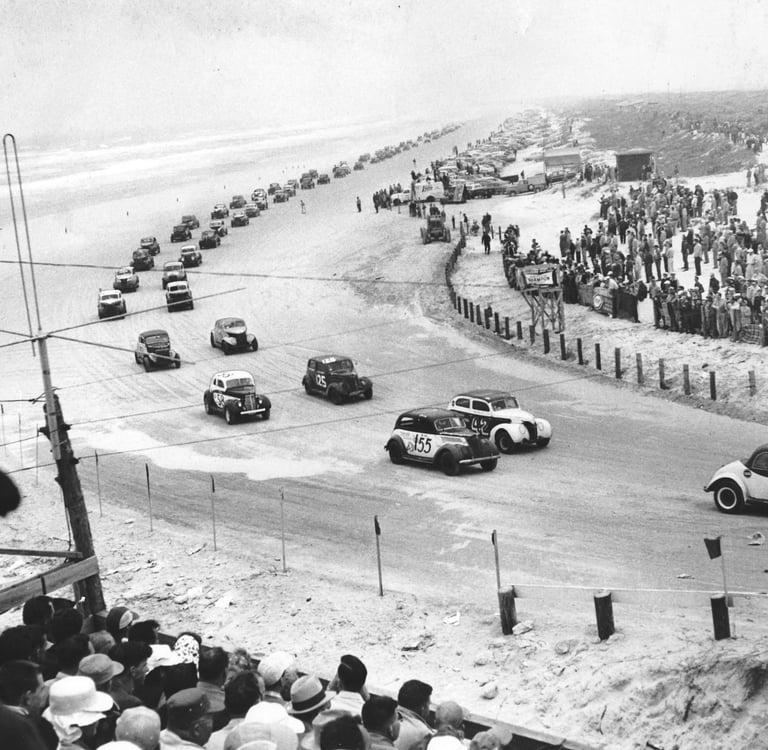
The Daytona Beach and Road Course — a genuinely unusual track that combined the paved coastal highway with the beach itself — hosted major motorsport events from 1902 all the way until 1958, according to its detailed Wikipedia history. The course measured somewhere between 3.1 and 4.2 miles depending on the exact layout used in a given year, and it set 15 land speed records during its run — a genuinely staggering number for a stretch of Florida coastline.
By 1936, stock car racing specifically had taken hold on that same sand, according to reporting from the Associated Press on the Daytona 500's history on Florida's "Fun Coast". These weren't polished professional exhibitions — they were genuinely rough, loosely organized races involving cars that, in many cases, were driven straight off the street and onto the beach course. That informality is exactly what set the stage for the next chapter of the story.
🏖️ Racing on Sand Was Genuinely Dangerous Beach racing wasn't a quaint historical footnote — it was legitimately hazardous. Tides shifted the racing surface. Sand conditions varied by the hour. Spectators lined the course with essentially no barriers between themselves and cars moving at speed. The eventual move to a purpose-built, banked speedway wasn't just about development pressure on the beachfront — it was also, quite simply, a lot safer.
The Meeting That Created NASCAR — At a Hotel, Not a Track
Here's the detail that surprises even a lot of longtime NASCAR fans: the organization wasn't founded at a racetrack at all. It was founded in a hotel bar.
On December 14, 1947, mechanic and racer Bill France Sr. — universally known in racing circles as "Big Bill" — convened a meeting at the Streamline Hotel in Daytona Beach, gathering nearly 40 of the sport's most important drivers, promoters, and mechanics. According to the NASCAR Hall of Fame's own account of the meeting, France's pitch was straightforward and genuinely visionary: stock car racing at the time was chaotic, inconsistently regulated, and financially unstable for the drivers and promoters involved. France proposed a unified governing body with consistent rules, an official national champion, and a cooperative business structure that would make the sport legitimate and, crucially, profitable for everyone involved.
The meeting worked. NASCAR was formally incorporated the following year, in 1948, and its first sanctioned race was held that same year — on the Daytona Beach and Road Course, naturally, won by driver Red Byron. The Streamline Hotel still stands in Daytona Beach today, a genuinely significant piece of American sports history housed in an unassuming Art Deco building a short walk from the beach that started it all.
From Beach to Speedway: Why the Racing Had to Move
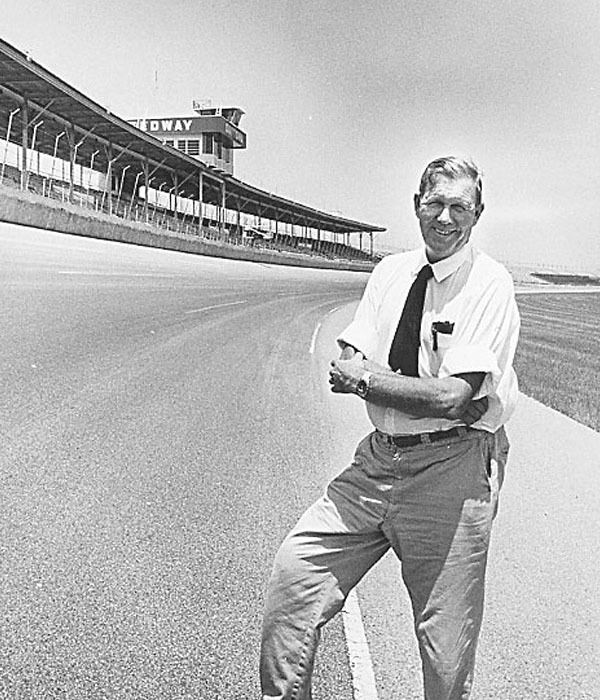
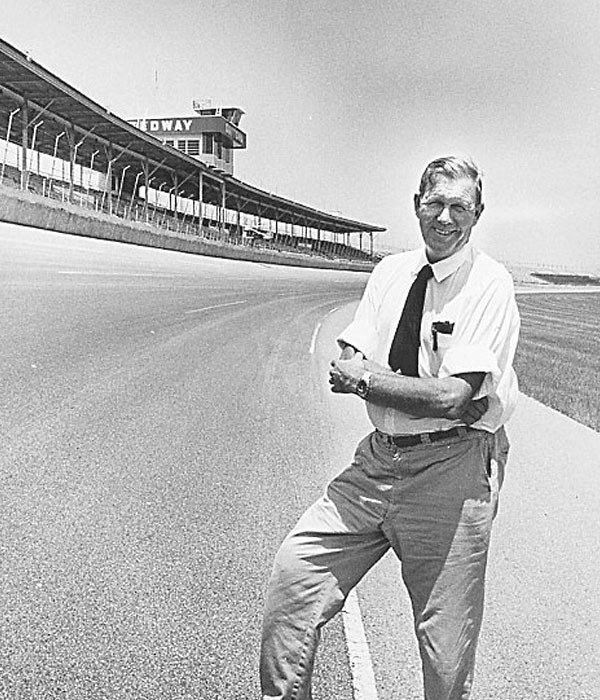
By the early 1950s, Bill France Sr. saw the writing on the wall: Daytona Beach was developing rapidly as a tourist destination, and racing directly on the sand — always a somewhat improvised arrangement — was becoming increasingly incompatible with a growing beachfront community. According to the Daytona International Speedway's own history, France proposed building a permanent, purpose-built speedway as early as 1953.
Groundbreaking on Daytona International Speedway occurred in 1958, and the track opened the following year. It was engineered specifically to be faster and more spectator-friendly than anything else in the country at the time — a 2.5-mile tri-oval with steeply banked turns designed to let drivers maintain higher speeds through the corners than a flat track would allow, and sightlines built around actually watching the race rather than the makeshift viewing conditions the beach course had offered.
The last race on the actual beach course was held in 1958, and the first Daytona 500 took place in 1959 at the new speedway — a genuinely dramatic beginning, decided by a photo finish so close that officials needed several days to review film and confirm Lee Petty as the winner over Johnny Beauchamp. It remains one of the closest finishes in the race's history, and it happened in the very first running.
🏁 By the Numbers: Daytona International Speedway 2.5 miles — length of the tri-oval track
101,500 to 167,785 — seating capacity, depending on configuration
$400 million — cost of the "DAYTONA Rising" renovation completed in 2016
500 acres — total size of the modern speedway complex, which also hosts concerts, track tours, and the Motorsports Hall of Fame

The Daytona 500 Becomes "The Great American Race"
The Daytona 500 didn't just become NASCAR's most prestigious race — it became one of the defining events in American motorsport, widely nicknamed "The Great American Race." It's traditionally held every February and functions as the season-opening centerpiece of NASCAR's entire annual calendar, a genuinely unusual scheduling choice that puts the sport's biggest single event first rather than as a season finale.
Richard Petty holds the record for the most Daytona 500 wins, with seven — an almost unthinkable number of victories in the sport's marquee race. Cale Yarborough follows with four wins of his own. The race has produced some of NASCAR's most consequential historic moments: Wendell Scott became the first Black driver to win a NASCAR race in 1963, and Janet Guthrie became the first woman to compete in the Daytona 500 in 1976, according to NASCAR's own official history timeline.
The race has also carried real weight and real tragedy. Dale Earnhardt, one of the sport's most beloved and successful drivers, died in a crash on the final lap of the 2001 Daytona 500 — a moment widely described, including by the Associated Press, as a genuine turning point that accelerated major safety reforms across the entire sport, including changes to car design, track barriers, and driver safety equipment that remain in effect today.

Daytona Beach Today: Still the Sport's Spiritual Home
Even with NASCAR's headquarters and business operations now spread across the country — and the sport's popularity extending to tracks from California to New Hampshire — Daytona Beach retains a genuinely unmatched symbolic and historical status within NASCAR. It's where the sport was conceived, where the first sanctioned race happened, and where the season still traditionally begins each February with the Daytona 500.
The modern Daytona International Speedway complex has grown well beyond stock car racing alone. It hosts the Rolex 24 at Daytona, a prestigious 24-hour sports car endurance race, the Daytona 200 motorcycle race, and a wide range of concerts and non-racing events throughout the year. The 2013–2016 "DAYTONA Rising" renovation, a $400 million project, substantially modernized the facility's fan experience while preserving its status as one of the most recognizable venues in American motorsport.
For a Florida beach town, that's a genuinely remarkable legacy — a stretch of sand that started attracting speed-obsessed tinkerers in 1903 is directly, traceably responsible for a sport that now draws tens of millions of fans nationwide, more than a century later.


Daytona Beach NASCAR History FAQ
Did NASCAR races actually take place on the sand at Daytona Beach? Yes, literally. Racing on Daytona Beach's hard-packed sand dates back to 1903, and organized stock car racing on the Daytona Beach and Road Course — which combined the paved coastal highway with the beach itself — began by 1936 and continued until 1958. NASCAR's first sanctioned race in 1948 was held on that same beach course.
Where was NASCAR actually founded? NASCAR was founded at a meeting held at the Streamline Hotel in Daytona Beach on December 14, 1947, organized by mechanic and racer Bill France Sr. Nearly 40 drivers, promoters, and mechanics attended. The organization was formally incorporated in 1948, and its first sanctioned race took place that same year on the Daytona Beach and Road Course.
When did NASCAR racing move from the beach to a permanent speedway? Bill France Sr. proposed building a permanent speedway as early as 1953, as Daytona Beach's growing tourism development made continued beach racing increasingly impractical. Groundbreaking on Daytona International Speedway occurred in 1958, and the track opened in 1959, hosting the first Daytona 500 that same year.
Who won the first Daytona 500? Lee Petty won the inaugural Daytona 500 in 1959 in a finish so close that officials needed several days to review film before confirming the result over runner-up Johnny Beauchamp. It remains one of the closest finishes in the race's long history.
Why is the Daytona 500 held at the start of the NASCAR season instead of the end? This scheduling tradition dates back to the race's origins and has become one of NASCAR's most distinctive features — rather than building toward a season finale, NASCAR opens its year with its single most prestigious event, widely nicknamed "The Great American Race."
How did Dale Earnhardt's death affect NASCAR? Dale Earnhardt died in a crash on the final lap of the 2001 Daytona 500. His death is widely regarded as a turning point that accelerated major safety reforms across NASCAR, including changes to car design, track safety barriers, and driver safety equipment that remain standard practice in the sport today.
Sources
NASCAR Hall of Fame — NASCAR Was Born in a Daytona Beach Hotel
NASCAR.com — NASCAR History (official timeline)
Daytona International Speedway — About Daytona International Speedway
Wikipedia — Daytona Beach and Road Course; Daytona International Speedway
Associated Press — Daytona 500: A Rich, Storied History on the Fun Coast
Britannica — Daytona 500 | Winners, Results, NASCAR Race, & Facts
NASCAR.com — Daytona International Speedway Through the Years




Florida Current covers lifestyle, weather, outdoor life, and everything that comes with living in the Sunshine State. Browse our Florida Living section for regional guides, seasonal activity calendars, retirement guides and practical advice from people who actually live here.
Florida native Luana B. Gann brings more than 30 years of publishing, editing, and journalism experience to Florida Current. With a deep appreciation for the Sunshine State's culture, lifestyle, and ever-changing landscape, she is dedicated to helping readers discover what's new, noteworthy, and uniquely Florida.
CONTACT
Reach out for questions or feedback anytime.
contact@FLAcurrent.com
© 2026. All rights reserved.