Tampa Gets Invaded by Pirates Every January — Meet the Pirate Who Probably Never Existed
Luana B. Gann, Editor
6/23/2026
Gasparilla: Tampa's Pirate Invasion Festival and the Legend Behind It
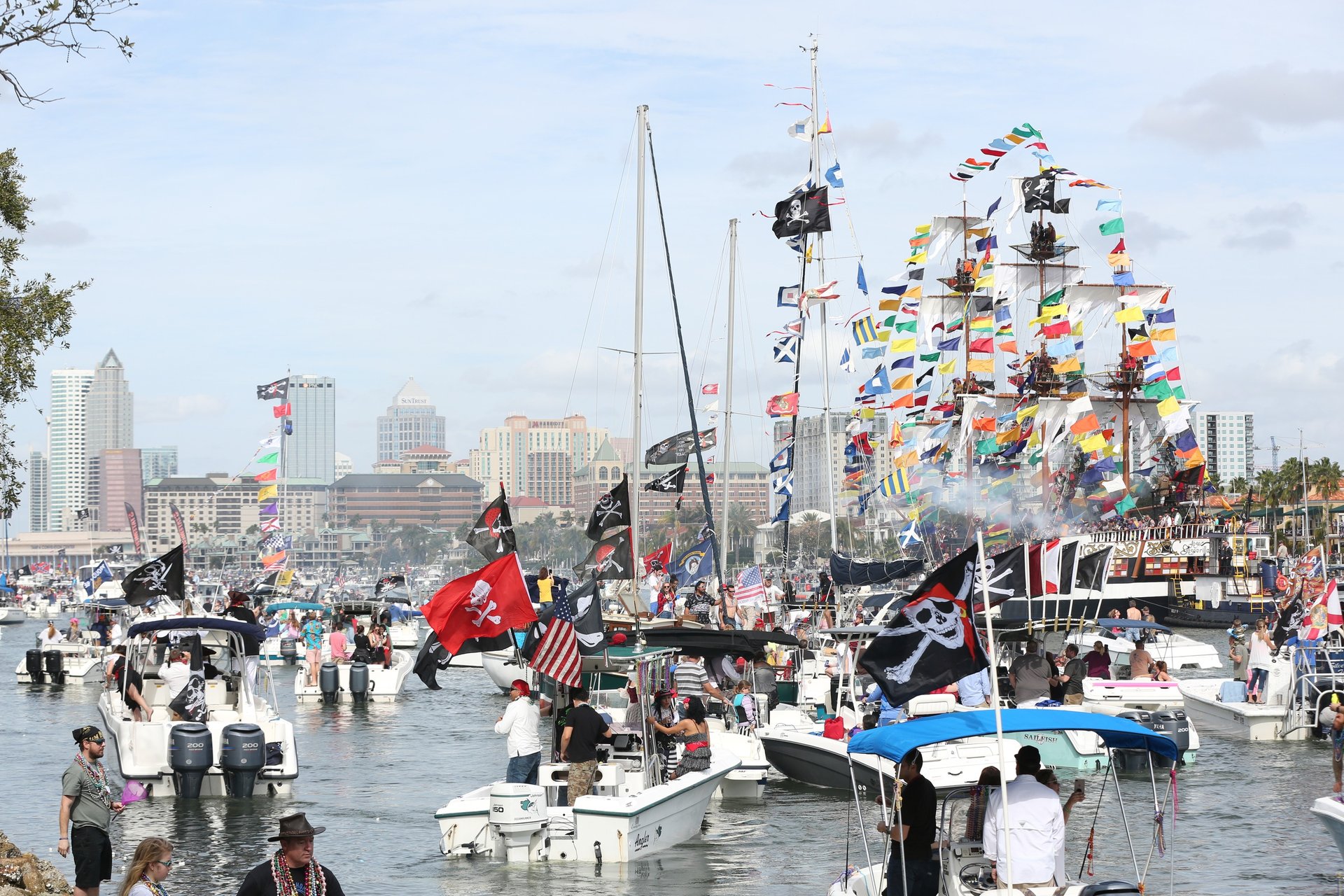
Quick Answer Gasparilla is Tampa's annual pirate-themed festival, held every January since 1904, in which a fully rigged pirate ship sails into Tampa Bay, hundreds of costumed pirates come ashore, the mayor formally surrenders the city keys, and a 4.5-mile parade through downtown draws more than 300,000 people — making it the third-largest parade in the United States. It is all staged in honor of a legendary pirate named José Gaspar, also called Gasparilla. There is just one wrinkle, and it is a delightful one: historians have found no credible evidence that José Gaspar ever actually existed. Tampa built one of the greatest parties in Florida history around a man a promotional brochure probably invented. And Tampa has absolutely no regrets.
Table of Contents
How Tampa's Businessmen Turned a Legend Into a Tradition in 1904
The José Gasparilla Ship: One of a Kind in the United States
The Legend of José Gaspar — "The Last of the Buccaneers"
The legend goes like this: sometime in the late 1700s, a decorated Spanish naval officer named José Gaspar — brilliant, handsome, and deeply aggrieved — went rogue. Depending on which version you hear, he was passed over for promotion, wrongly accused of a crime, or simply decided that piracy was more interesting than the Spanish navy. He rechristened himself Gasparilla, "Little Gaspar," commandeered a vessel, and headed for the Gulf Coast of Florida.
For the better part of three decades, Gasparilla supposedly terrorized shipping lanes in the Gulf of Mexico from a base on what is now Gasparilla Island near Charlotte Harbor — which is how the island got its name, and how nearby Captiva Island allegedly got its name, from the female captives he kept there. He amassed treasure, outran navies, and lived the full theatrical pirate biography. His end, as the legend has it, came in 1821 when a U.S. Navy vessel cornered him in the Gulf. Rather than surrender, he wrapped himself in anchor chain and leaped into the sea. As exits go, it has flair.
It is the kind of story that practically writes itself — which, as it turns out, may be exactly what happened.
The Historical Wrinkle: Was He Real?
Florida has a well-established tradition of spectacular legends built on shakier-than-advertised historical ground. We have covered how historians believe Ponce de León was probably never searching for a Fountain of Youth — that story was attached to him after his death by writers who found it entertaining. Gasparilla is the same category of legend, only more recent and more thoroughly documented as fiction.
Historians at the University of South Florida and researchers who have examined Florida's historical record have found no credible documentation that José Gaspar existed — no Spanish naval records, no court documents, no ship logs, no contemporary accounts of his raids, no U.S. Navy records of the confrontation that supposedly ended his life. Nothing. For a pirate who allegedly terrorized Gulf shipping for thirty years and died in battle with the U.S. Navy, that is a conspicuous absence of paperwork.
The legend appears to trace primarily to a promotional brochure published in the early 1900s for the Gasparilla Inn, a resort on Gasparilla Island. The brochure included a colorful biographical account of the pirate, conveniently connecting him to local place names and making the area sound historically interesting to tourists. The story circulated, grew, picked up embellishments, and by the time Tampa's businessmen were looking for a civic tradition to build around, Gasparilla was already a local legend rich enough to use.
This is not a scandal. It is actually a very Florida story: someone needed a narrative, someone wrote a good one, and eventually the narrative became more real than the reality. Tampa knows perfectly well that its pirate is probably fictional. Tampa has made its peace with this. Tampa throws the party anyway — and a magnificent party it is.

How Tampa's Businessmen Turned a Legend Into a Tradition in 1904
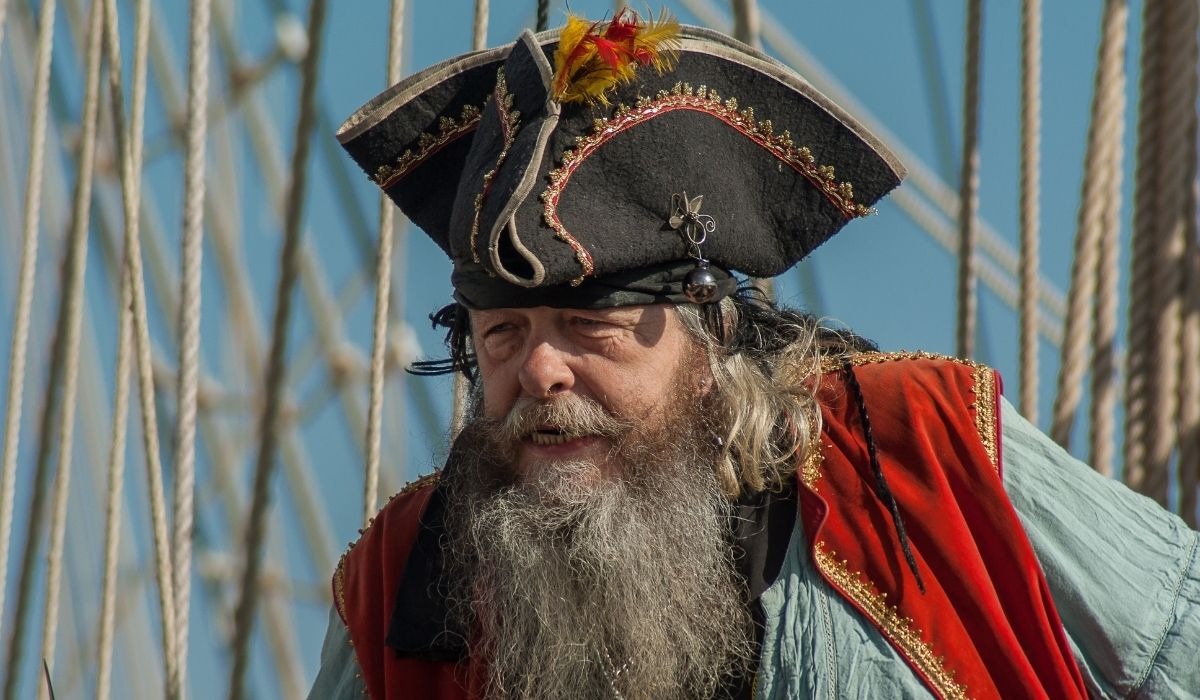
In the early 1900s, Tampa was a growing but relatively unknown port city, working hard to establish itself as a destination. A group of prominent Tampa businessmen and civic leaders — the kind of people who understood that a city needs stories to attract visitors — formed Ye Mystic Krewe of Gasparilla in 1904 with the explicit purpose of creating a memorable annual event.
The first Gasparilla was a May Day celebration. The "invasion" was conducted on horseback, which, if you stop and think about it, is a genuinely strange way to invade a coastal city — but it was the beginning of something. The maritime element arrived in 1911, when the Krewe first staged the invasion from the water using actual vessels. Once the pirate ship sailed into Tampa Bay and the costumed krewe came ashore to "capture" the city, something clicked. The event grew. It moved to January, a better month for outdoor celebrations in Tampa's climate. The parade expanded. The crowds swelled.
The festival was suspended during World War II — the city did not feel a mock invasion was quite the right tone during an actual war — and briefly modified during the COVID-19 pandemic. Otherwise, it has run continuously for over 120 years, making it one of the longest-running civic festivals in the American South.
Ye Mystic Krewe today has approximately 750 members, functions as a non-profit organization, has awarded over $1.1 million in scholarships through its Community Fund, visits hospitals and schools in pirate costume, and hosts the Annual Coronation Ball — all while maintaining the annual tradition their predecessors invented to put Tampa on the map. It worked. Tampa is very much on the map.

What Actually Happens During the Gasparilla Invasion
The invasion is not metaphorical. It is staged with genuine spectacle, and if you have never seen it, the description does not fully prepare you for the experience.
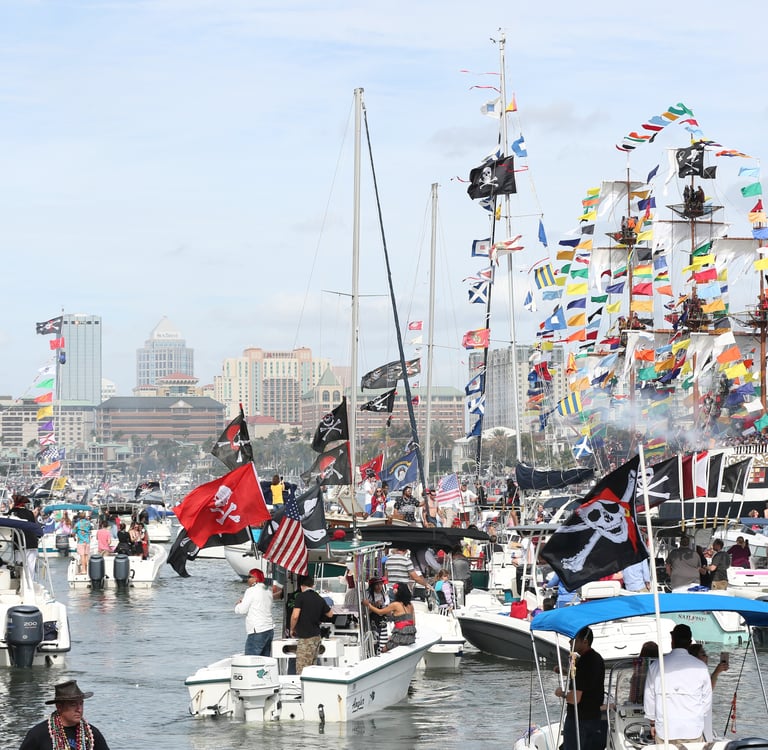
On the morning of the main event, the José Gasparilla — a fully rigged pirate ship, one of the only functional fully rigged tall ships of its kind in the United States — appears on Tampa Bay, approaching the city under full sail. Behind it follows a flotilla of hundreds of private boats, many decorated with pirate flags and packed with costumed revelers, forming a waterborne escort fleet that stretches across the bay. For a state with a deeply embedded boating culture, the sight of that fleet moving toward downtown Tampa is the visual center of the whole celebration.
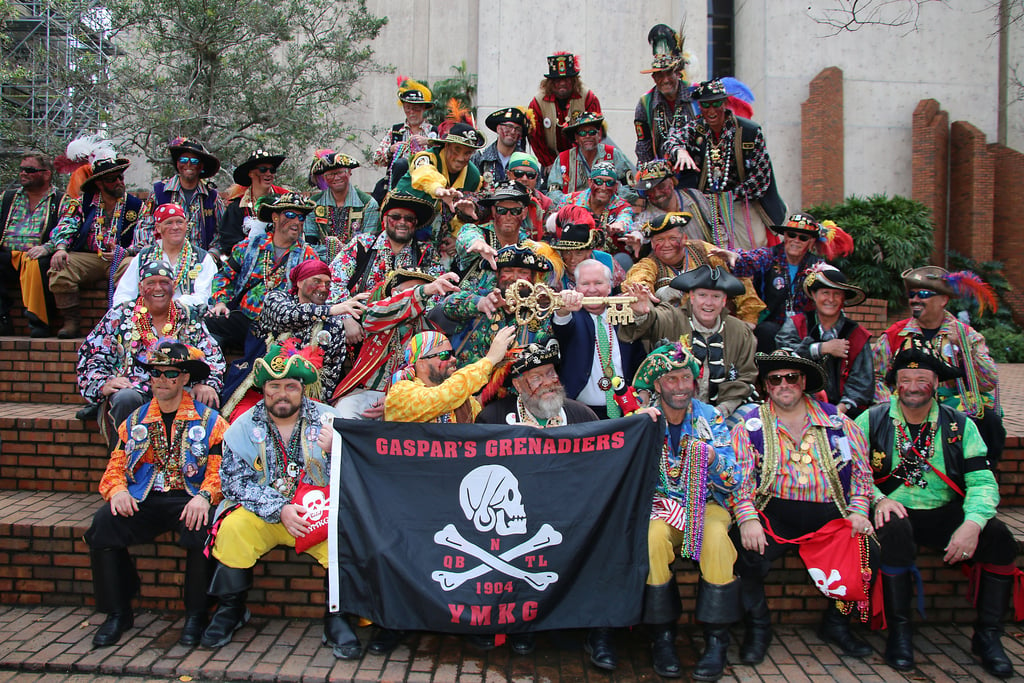
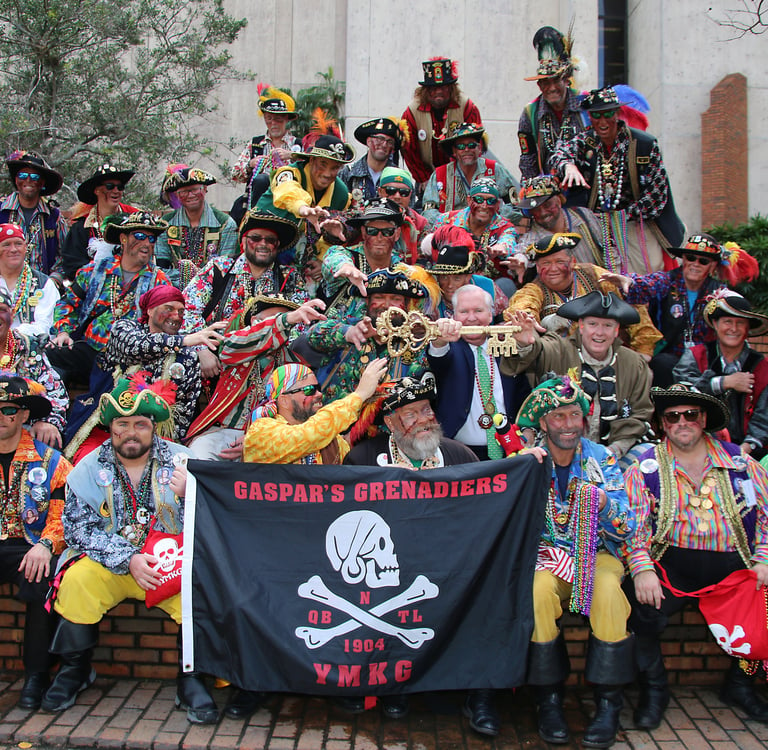
The ship docks at the Tampa Convention Center waterfront. The krewe members come ashore. Cannon fire. There is always cannon fire. The krewe then marches on City Hall, where the sitting mayor of Tampa — in a tradition observed every year since 1904 — formally surrenders the keys to the city to the Krewe's captain, who serves as the "Pirate King" for the year. The city is officially, ceremonially, captured.
Then the parade begins.
The Gasparilla Parade of Pirates runs 4.5 miles along Bayshore Boulevard and into downtown Tampa. More than 100 floats. Marching bands. Costumed pirate crews from the krewe and dozens of affiliated organizations. Enormous crowds along the route. And beads — enormous quantities of beads, doubloons, and trinkets thrown from floats in a tradition borrowed directly from Mardi Gras in spirit and scaled up in enthusiasm. More than 300,000 people line the parade route, making it the third-largest parade in the United States — behind only the Mardi Gras parade in New Orleans and the Macy's Thanksgiving Day Parade in New York.
Tampa's character has always had a particular flavor — the Cuban cigar-rolling legacy of Ybor City, the port city energy, the Spanish and Southern mix that makes it feel distinct from Miami's gloss or Orlando's theme park orbit. Gasparilla is that character amplified to its fullest expression for one glorious January weekend. If you want to understand what makes Tampa Tampa, this is the most concentrated version of it available. Our piece on authentic Cuban food in Tampa vs. Miami captures another dimension of what makes this city genuinely different — and the two articles together give you a pretty good picture.
The José Gasparilla Ship: One of a Kind in the United States
The ship deserves its own mention because it is genuinely remarkable.
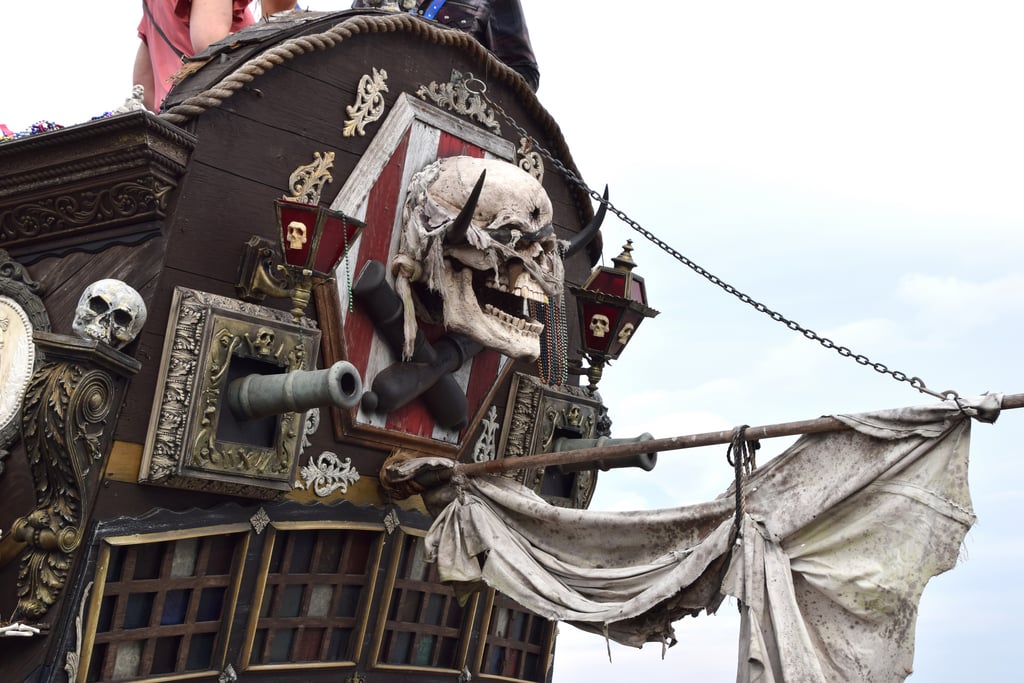
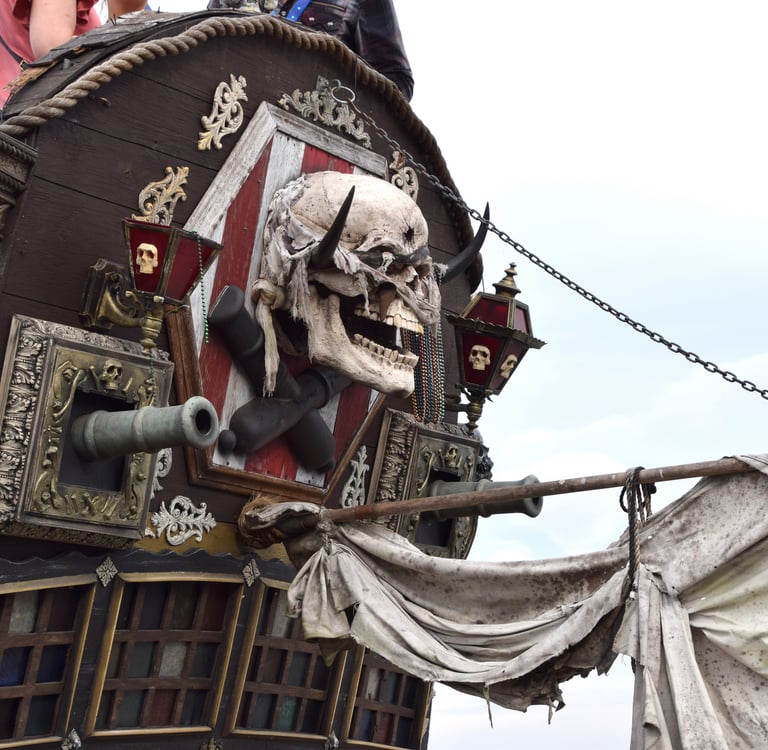
The José Gasparilla is a fully rigged pirate ship — meaning it carries traditional square-rigged sails on all masts — and it is one of the only functional vessels of its type in the country. The current ship was commissioned by Ye Mystic Krewe in 1954 and is owned and maintained by the organization. It is 165 feet long, carries a crew of krewe members, and is capable of actual sailing — not just harbor decoration.
Outside of Gasparilla season, the José Gasparilla serves as a Tampa tourist attraction and is available for viewing when in port. It is the physical anchor of the whole celebration — the thing that makes the "invasion" feel real rather than merely theatrical. When that ship appears on the horizon of Tampa Bay in January, something shifts. Even people who know perfectly well that the pirate was fictional and the invasion is staged find themselves watching the approach with genuine anticipation. That is good storytelling doing its work.
Gasparilla Season: It's More Than One Day
The main invasion event is the centerpiece, but Tampa builds an extended Gasparilla season around it that gives families and visitors options throughout he first part of the year.
The full calendar is available at gasparillapiratefest.com and visittampabay.com. Dates shift slightly year to year, so always verify before booking travel.
What to Know Before You Go
Get there early. Bayshore Boulevard fills fast on invasion day. The best viewing spots — the stretches closest to the water with unobstructed parade views — go to people who arrive hours ahead. Bring a folding chair, sunscreen, and a spirit of patience. January in Tampa is typically beautiful — mild temperatures, low humidity by Florida standards — but it is Florida and it is outdoors, so dress in layers you can shed.
Plan for crowds on a different scale than you're imagining. More than 300,000 people is not a figure that translates easily until you are standing in it. Parking near Bayshore disappears early. HART bus service expands significantly for Gasparilla and is genuinely the smarter option for getting downtown. Ride-share pickup zones fill and surge in pricing predictably; if you are using a rideshare, build extra time into your return.
The Children's Parade on January 24 is a different experience. If you are visiting with young children or simply prefer a more contained, family-oriented event, the Children's Gasparilla on the Saturday prior to the main event is the right choice. Same parade route, same pirate energy, significantly less adult rowdiness, and purpose-built for families. It is genuinely delightful and often underrated precisely because the main event gets all the attention.
If you are visiting Tampa for the first time for Gasparilla, pair it with a visit to Ybor City — the historic neighborhood that was once the cigar capital of the world and remains Tampa's most distinctive cultural district. The two experiences together give you the full picture of what makes Tampa unlike anywhere else in Florida. Our authentic Cuban food in Tampa vs. Miami article will point you toward exactly where to eat while you're there.
Hotels book fast. Gasparilla weekend is Tampa's biggest hotel demand event of the year. If you are planning to attend, book accommodations as soon as dates are announced — typically several months ahead. The main event is held the last Saturday of January. For everything you need to know about visiting Florida as a first-timer, our Florida tourist guide covers logistics, safety, and what to expect across the state.
Florida Current Note Gasparilla beads are one of those things that seem trivial until you are standing at the parade and suddenly understand why people bring bags and make detailed bead-catching strategy. Thousands of strings are thrown from floats at high enthusiasm and low accuracy. Wear something you can move in. Children positioned at the front of the crowd have a structural advantage. This is useful information.


Tampa's Gasparilla FAQ
Was José Gaspar a real pirate? Almost certainly not. Historians have found no documentary evidence — no naval records, no ship logs, no contemporary accounts. The story traces primarily to a promotional brochure written in the early 1900s. Tampa is aware of this. Tampa parties anyway. This is, honestly, a very Tampa thing to do.
When is Gasparilla 2027? Gasparilla Pirate Fest is held on the last Saturday of January each year. The 2026 main invasion is January 31, 2026. For 2027 confirmed dates, check gasparillapiratefest.com as the season approaches — dates are typically announced several months ahead.
What is Ye Mystic Krewe of Gasparilla? The non-profit founded in 1904 that produces the entire festival. About 750 members dress as pirates for the invasion and parade. They also visit hospitals and schools in pirate costume year-round, and their Community Fund has distributed over $1.1 million in scholarships. They own the José Gasparilla ship. The Krewe is the institutional backbone of a 120-year tradition.
What is the José Gasparilla ship? A 165-foot, fully rigged pirate ship — one of the only functional tall ships of its kind in the country, commissioned by the Krewe in 1954. It leads the invasion flotilla into Tampa Bay each January and serves as a Tampa tourist attraction the rest of the year.
Is Gasparilla family-friendly? The main event has a boisterous adult crowd. Families with young children have a better time at the Ashley Children's Gasparilla one week prior — same parade route, alcohol-free, purpose-built for kids, and genuinely excellent.
Where is the best place to watch the parade? Anywhere along Bayshore Boulevard — arrive two to three hours early for a good spot. Take HART transit. Parking is gone early, and ride-share prices surge. Bring a chair, sunscreen, and a bag for the beads.
How long has Gasparilla been running? Since 1904 — over 120 years, with brief interruptions for World War II and COVID-19. It began as a May Day celebration, got the maritime invasion element in 1911, and has grown into the third-largest parade in the United States.
Sources
Visit Tampa Bay — Gasparilla Season — visittampabay.com
Gasparilla Pirate Fest — Official Site — gasparillapiratefest.com
Ye Mystic Krewe of Gasparilla — ymkg.com
City of Tampa — Gasparilla Official Page — tampa.gov
University of South Florida Digital Collections — "Pirates and Parades" — digitalcommons.usf.edu
WJTV — "Why Does Florida Celebrate a Fictional Pirate?" — wjtv.com
Wikipedia — José Gaspar — en.wikipedia.org
HART Public Transit — gohart.org
Recommended Reading
One State, Two Cuban Kitchens: Where to Find the Real Thing in Tampa and Miami
Fort Lauderdale: Boating Capital of the World — and Florida's Most Waterlogged Bragging Right
Information current as of June 2026. Gasparilla event dates, schedules, and details shift annually — verify the current year's confirmed lineup at gasparillapiratefest.com and visittampabay.com before making travel plans.
Florida Current covers weather, lifestyle, outdoor life, and everything that comes with living in the Sunshine State. Browse our Florida Living section for regional guides, seasonal activity calendars, retirement guides and practical advice from people who actually live here.
Florida native Luana B. Gann brings more than 30 years of publishing, editing, and journalism experience to Florida Current. With a deep appreciation for the Sunshine State's culture, lifestyle, and ever-changing landscape, she is dedicated to helping readers discover what's new, noteworthy, and uniquely Florida.
CONTACT
Reach out for questions or feedback anytime.
contact@FLAcurrent.com
© 2026. All rights reserved.