Cyclosporiasis in Florida: What This Summer's Outbreak Means and How to Protect Yourself
Luana B. Gann, Editor
7/13/2026

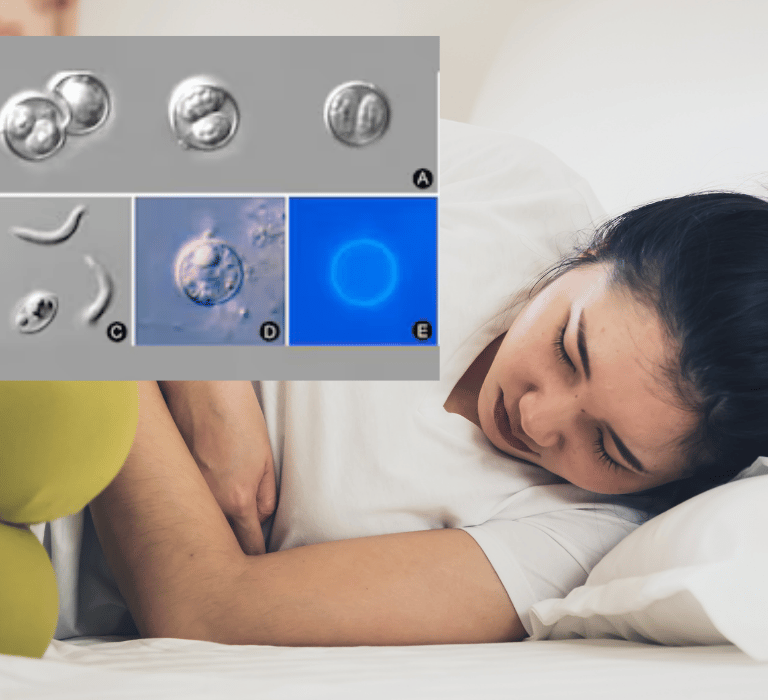
Quick Answer: Cyclosporiasis is a gastrointestinal illness caused by a microscopic parasite called Cyclospora cayetanensis, spread through food or water contaminated with human fecal matter — most often via fresh produce like cilantro, basil, and berries. As of July 9, 2026, the CDC has confirmed 843 cases across 31 states, with more than 50 confirmed cases in Florida between May and early July alone. This isn't a one-time event — cyclosporiasis has a recurring, predictable summer season every year, and Florida's warm, humid climate and produce supply chains make it a state worth watching every single year, not just this one.
In This Article
What's Happening Right Now: The 2026 Outbreak
How to Actually Protect Yourself (Because "Wash Your Produce" Isn't Enough)
What's Happening Right Now: The 2026 Outbreak
As of the CDC's most recent surveillance update on July 9, 2026, there have been 843 confirmed cyclosporiasis cases across 31 U.S. states since the current outbreak season began on May 1 — a season that officially runs through August 31 each year. According to the CDC's official surveillance dashboard, 86 people have required hospitalization, though no deaths have been reported. The median age of those infected is 44, and the agency has explicitly noted that actual case counts are likely higher, since many people recover at home without ever being tested.
Florida's numbers are part of this national picture. According to Fox 35 Orlando's county-by-county breakdown, Florida had recorded roughly 50 confirmed cases between May 1 and July 4, 2026, with most of those infections acquired within the state itself rather than during travel. CBS Miami reported that Broward County had 5 confirmed cases and Miami-Dade County had 6, as of their reporting in early July — a real but genuinely modest number relative to Florida's population, which is worth keeping in perspective before anyone panics.
The much larger story this year is actually unfolding outside Florida: Michigan has become the epicenter of the 2026 outbreak, with confirmed cases surging past 1,251 — a staggering jump from the state's typical average of around 50 cases per year, according to reporting from the University of Minnesota's Center for Infectious Disease Research and Policy (CIDRAP). Ohio has also seen a significant spike, with 177 confirmed cases, according to Forbes' coverage of the ongoing investigation. As of this writing, health officials have not confirmed a specific contaminated food source for this year's outbreak — a genuinely frustrating gap that reflects a real, ongoing limitation in how this particular parasite gets tracked.
📊 Why "No Known Source" Is More Common Than You'd Expect Unlike some foodborne pathogens, Cyclospora is notoriously difficult to trace back to a specific product because there's historically been a lack of validated molecular typing tools to definitively link cases to one another or to a specific farm or supplier. The CDC is actively developing better molecular tools for case-linking, but as of the 2026 outbreak, investigators are still working with real limitations in pinpointing exactly where contamination originated.
What Exactly Is Cyclospora, and How Does It Spread?
Cyclospora cayetanensis is a microscopic, single-celled parasite that causes cyclosporiasis — an intestinal illness spread almost exclusively through food or water that has been contaminated with human feces. According to the CDC's official overview of the disease, the parasite is most common in tropical and subtropical regions of the world, which is part of why imported produce from certain regions has historically been a recurring source of U.S. outbreaks.
Here's the detail that surprises most people, including plenty of Floridians who've heard the word "outbreak" and assumed it works like a stomach flu: Cyclospora does not spread from person to person. You cannot catch it from someone who's sick, shaking hands, or sharing a meal with an infected person in the way you might catch a cold or norovirus. The parasite has to pass through a fairly specific contamination cycle — it's shed in an infected person's stool, and it needs time in the environment to become infectious before it can make someone else sick. That means contaminated water used for irrigation, or poor hygiene somewhere in the food supply chain, is almost always the actual mechanism — not casual contact.
Fresh produce is, historically, the single most common vehicle. Past U.S. outbreaks have been linked to fresh cilantro, basil, prepackaged salad mixes, spinach, and various berries — particularly raspberries — much of it imported. Cooking food thoroughly kills the parasite, but here's the uncomfortable truth the CDC itself acknowledges: washing produce does not reliably remove Cyclospora. The parasite's outer shell is genuinely resistant to standard produce washing in a way that a lot of other contaminants aren't.

Why Summer, Every Summer? The History Behind This Pattern
This is the part of the story that makes cyclosporiasis a genuinely useful topic to understand once and remember for years — because this isn't a random, one-off health scare. It's a recurring seasonal pattern, and it has been for decades.
The CDC's own surveillance data shows the outbreak season runs consistently from May 1 to August 31 every single year, and case counts have varied dramatically year to year: 174 cases in 2016, 623 in 2017, and a genuinely major spike to 2,299 confirmed cases across 33 states in 2018, according to the CDC's own 2018 Morbidity and Mortality Weekly Report on the outbreak. That 2018 outbreak included two major multistate clusters linked specifically to prepackaged vegetable trays and salads sold at convenience stores and fast food chains, resulting in 761 confirmed illnesses on their own — plus smaller clusters tied to fresh basil and cilantro.
A peer-reviewed review published in the National Institutes of Health's PubMed Central archive confirms this isn't a new or emerging phenomenon at all — major cyclosporiasis outbreaks tied to ready-to-eat fresh produce have been increasing over the last two decades, driven substantially by the growing global supply chain for fresh herbs and produce that gets shipped internationally, often from regions where the parasite is more endemic in the environment.
Why does the seasonal pattern hold so consistently? A combination of factors: warm-weather growing seasons that align with peak U.S. produce demand, increased consumption of fresh salads and herbs during summer months, and — critically for a state like Florida — climate conditions genuinely favorable to the parasite's survival and transmission in warm, humid environments. This is a pattern Florida should expect to see recur every summer, not a strange one-time anomaly.


Symptoms: What to Watch For and When to See a Doctor
Cyclosporiasis has a genuinely distinctive symptom profile that's worth recognizing, especially if you or a family member develops it during peak season.
Incubation period: Symptoms typically begin about 7 to 10 days after ingesting the parasite — a genuinely long delay that makes it difficult for most people to connect their illness back to a specific meal.
Primary symptoms, according to the Cleveland Clinic's clinical overview, include watery, sometimes explosive diarrhea, loss of appetite, bloating, fatigue, low-grade fever, stomach cramps, nausea, and vomiting.
Duration: Without treatment, symptoms can persist anywhere from several days to more than a month, and — genuinely unusual for a gastrointestinal illness — symptoms can actually recur or relapse even after seeming to improve.
Who's at higher risk for severe illness: Most healthy adults recover without treatment, though it can be a genuinely miserable few weeks. People with weakened immune systems, young children, and elderly individuals face a higher risk of complications, primarily from dehydration associated with prolonged diarrhea.
Treatment: The standard treatment is the antibiotic trimethoprim-sulfamethoxazole (commonly known as Bactrim or Septra), with alternative options available for people with sulfa drug allergies. Diagnosis requires a specific stool test — this parasite doesn't show up on a standard stool culture, so if you suspect cyclosporiasis, tell your doctor directly so they order the correct test.
When to see a doctor: If you develop watery diarrhea lasting more than a few days, especially alongside fatigue and cramping during Florida's May–August outbreak season, it's genuinely worth mentioning cyclosporiasis specifically to your physician — awareness among some healthcare providers has lagged behind the parasite's actual prevalence, and a specific mention can speed up correct diagnosis.

How to Actually Protect Yourself (Because "Wash Your Produce" Isn't Enough)
This is the section that makes this topic genuinely evergreen — useful reading whether you're checking it during an active outbreak headline or reading it cold three summers from now. A few real, actionable steps:
Cook produce when you can, especially herbs. Since Cyclospora is resistant to normal washing, cooking is the most reliable way to kill the parasite. Fresh basil and cilantro used raw in salsas, garnishes, and salads are exactly the kind of items that have repeatedly been linked to past outbreaks.
Wash produce anyway — it still matters, just don't rely on it exclusively. Washing reduces surface contamination generally and remains genuinely good practice, even though it won't reliably eliminate this specific parasite on its own.
Be aware of pre-cut and pre-washed convenience produce during peak season. The 2018 outbreak's largest clusters were tied specifically to prepackaged vegetable trays and salads sold at convenience stores and fast food chains — precisely the "grab and go, someone else already washed it" products that feel safest but have a documented history with this parasite.
Practice good hand hygiene around food preparation, particularly if anyone in your household has recently traveled internationally or is experiencing gastrointestinal symptoms — proper handwashing genuinely reduces the risk of environmental contamination spreading further.
Avoid untreated water, especially while traveling internationally in tropical or subtropical regions where the parasite is more endemic in the environment.
Report unexplained, prolonged watery diarrhea to your doctor during May–August, and specifically ask about Cyclospora testing if standard treatments aren't resolving your symptoms — this directly helps public health officials track outbreaks in real time, which is exactly the surveillance gap the CDC has cited as a genuine challenge this year.
Keep an eye on Florida Department of Health advisories during summer months. Given the state's warm climate and produce supply chains, Florida residents have a genuine reason to check in on seasonal food safety alerts every year, not just during headline-making outbreak years like 2026.

Cyclosporiasis in Florida FAQ
Is cyclosporiasis contagious from person to person? No. Cyclospora does not spread through casual contact, coughing, or sharing food with an infected person the way a cold or flu would. The parasite requires time in the environment after being shed in an infected person's stool before it becomes infectious to someone else — meaning contaminated food or water, not person-to-person contact, is almost always the actual transmission route.
Does washing produce remove Cyclospora? Not reliably. The CDC explicitly notes that thorough washing of fresh produce, while still generally good practice, does not reliably eliminate Cyclospora cayetanensis. Cooking produce thoroughly is a much more effective way to kill the parasite, which is one reason raw herbs like cilantro and basil have repeatedly been linked to past outbreaks.
How many cyclosporiasis cases has Florida had in 2026? As of early July 2026, Florida had recorded roughly 50 confirmed cases since the outbreak season began on May 1, with most infections acquired within the state. Broward County reported 5 cases and Miami-Dade County reported 6, according to early July reporting. This is a modest number relative to the national outbreak, which has been concentrated most heavily in Michigan.
What are the symptoms of cyclosporiasis, and how long do they last? Symptoms typically begin 7 to 10 days after exposure and include watery, sometimes explosive diarrhea, loss of appetite, bloating, fatigue, low-grade fever, stomach cramps, nausea, and vomiting. Without treatment, symptoms can last from several days to more than a month, and can recur even after apparent improvement.
Is cyclosporiasis dangerous? For most healthy adults, it's unpleasant but not life-threatening, and no deaths have been reported in the 2026 outbreak. People with weakened immune systems, young children, and elderly individuals face a higher risk of complications, primarily from dehydration caused by prolonged diarrhea. Anyone in a higher-risk group experiencing symptoms should seek medical care promptly.
Is this outbreak a new or unusual event? Not really — cyclosporiasis has a well-documented, recurring seasonal pattern in the U.S. from May through August every year, with case counts varying significantly year to year. A major outbreak in 2018 produced 2,299 confirmed cases across 33 states. What's genuinely notable about 2026 is Michigan's unusually large surge, not the existence of a summer outbreak itself.
Sources
CDC — Surveillance of Cyclosporiasis (updated July 9, 2026): cdc.gov
CDC — About Cyclosporiasis: cdc.gov
CDC MMWR — Notes from the Field: Multiple Cyclosporiasis Outbreaks, 2018: cdc.gov
Fox 35 Orlando — Cyclosporiasis Cases in Florida: County-by-County Reports
CBS News Miami — Florida Cyclospora Cases Are Growing
CIDRAP (University of Minnesota) — US Cyclospora Cases Mount as CDC Lags on Tracking
Forbes — What We Know About Cyclosporiasis Outbreak With No Known Source (July 2026)
Cleveland Clinic — Cyclosporiasis: Transmission, Symptoms & Treatment
PubMed Central (NIH) — Cyclospora Cayetanensis — Major Outbreaks from Ready-to-Eat Fresh Produce
PBS NewsHour — What You Need to Know About the Cyclosporiasis Outbreak




Florida Current covers lifestyle, weather, outdoor life, and everything that comes with living in the Sunshine State. Browse our Florida Living section for regional guides, seasonal activity calendars, retirement guides and practical advice from people who actually live here.
Florida native Luana B. Gann brings more than 30 years of publishing, editing, and journalism experience to Florida Current. With a deep appreciation for the Sunshine State's culture, lifestyle, and ever-changing landscape, she is dedicated to helping readers discover what's new, noteworthy, and uniquely Florida.
CONTACT
Reach out for questions or feedback anytime.
contact@FLAcurrent.com
© 2026. All rights reserved.